

Developing Glazes- ‘Potters Palette’ Book
Alongside challenging the way I create texture & surface design on my pieces, I feel glaze also has an important role to play in terms of sealing the final effect of the piece. Glaze can also be directly informed through the texture I find in my primary research. It has an element of no control, alike the way nature grows. I find there are similarities between how glaze fires and how texture transforms within nature.
I managed to get my hands on a copy of the ‘Potters Palette’ book by Christine Constant & Steve Ogden. It’s incredibly useful when you’re clueless about glazes and need a place to start!
Therefore, I had a look through the book and decided created base glaze C was a good place to begin. Below are my test tiles using this base glaze, alongside a variation of oxides. Check out my Technical Page for a live working document of what I used exactly on these test tiles.
Once I could see the results of these test tiles, I used my bisque vessels as a place to explore combinations in different firings. The reduction tiles definitely hold more visually pleasing features but I explored both on my vessels. See my Portfolio page to see the final results of these pieces!
I also wanted to explore texture within glaze. I looked in the ‘Special effect glazes’ book by Linda Bloomfield and took out a couple of recipes of volcanic and crawling glazes- I had a couple of successful results! I look forward to using these on my next set of bisque fired pieces and try a few combinations of previous test tile results too
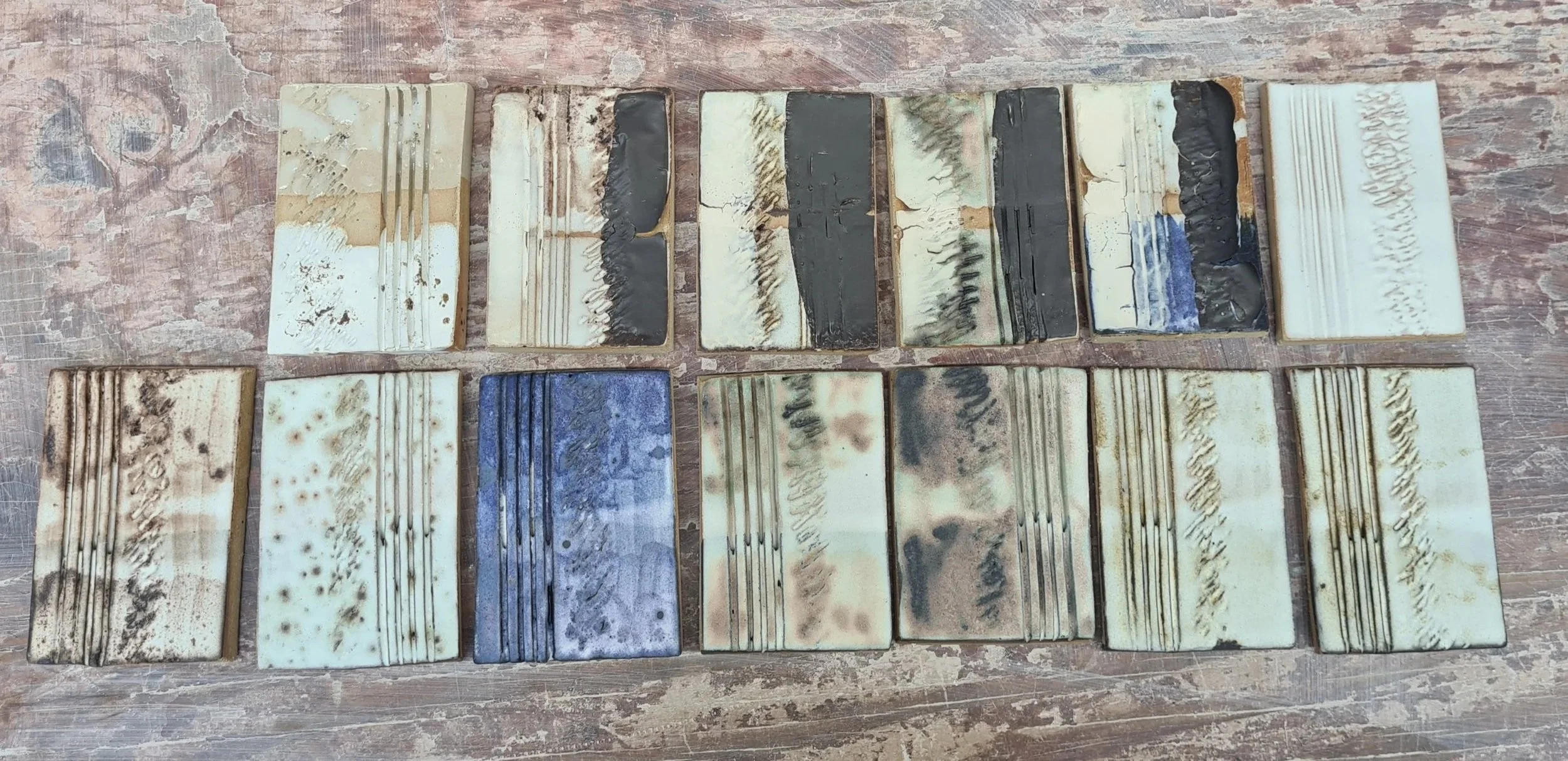
Oxidation results using a variation of glazes using oxides and base glaze recipe C
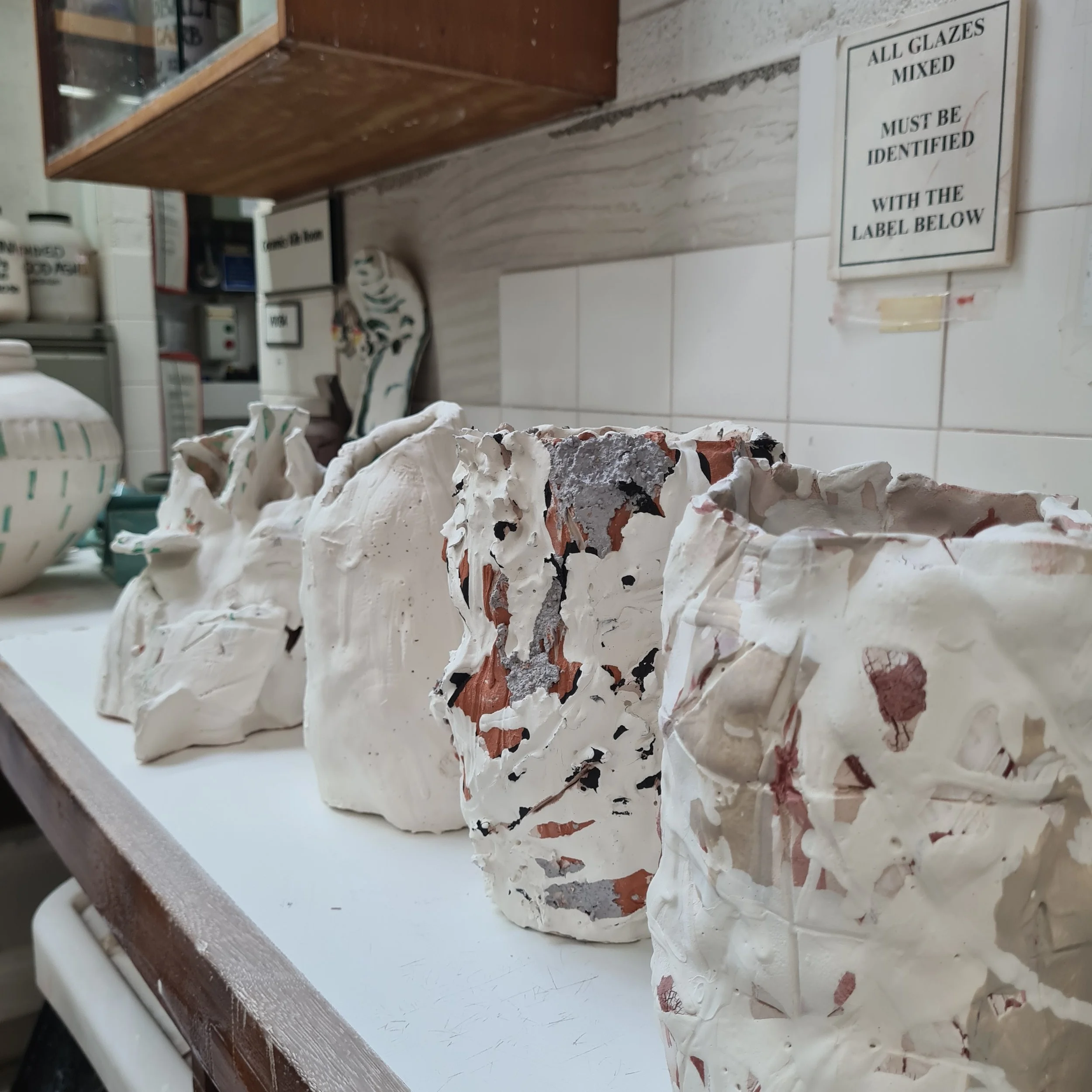
My pieces glazed- I also used transparent glaze with the base glaze and oxides in some areas. You can see how I applied the glaze, poured over in an expressive manner
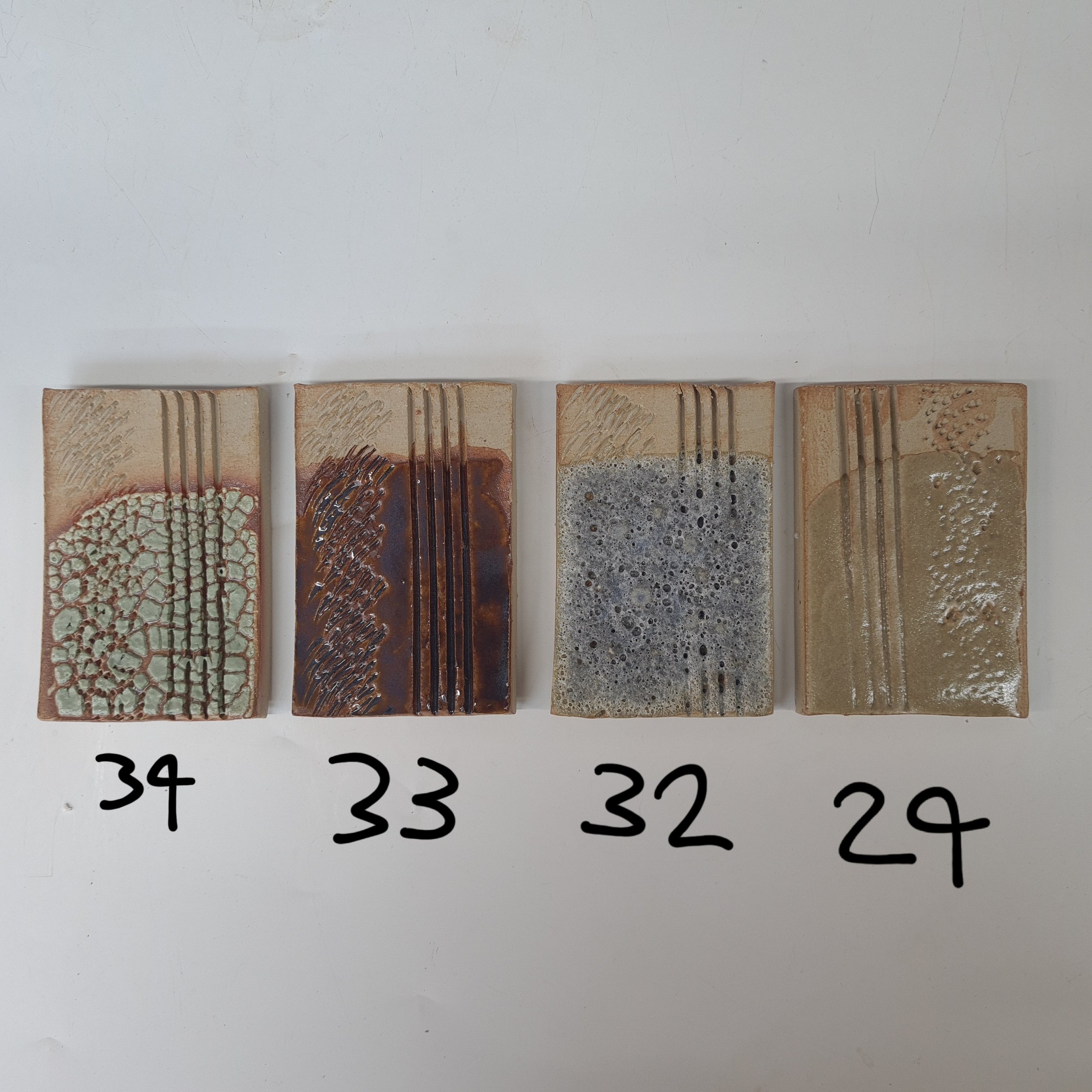
The outcome of my volcanic and crawling glaze recipe tests!
Super thrilled with 34, the lichen crawling glaze- I can’t wait to apply this to some of my forms
32 was also a success! This was a volcanic glaze
33 & 24 not so successful but still created a new result I’ve not made before so win win
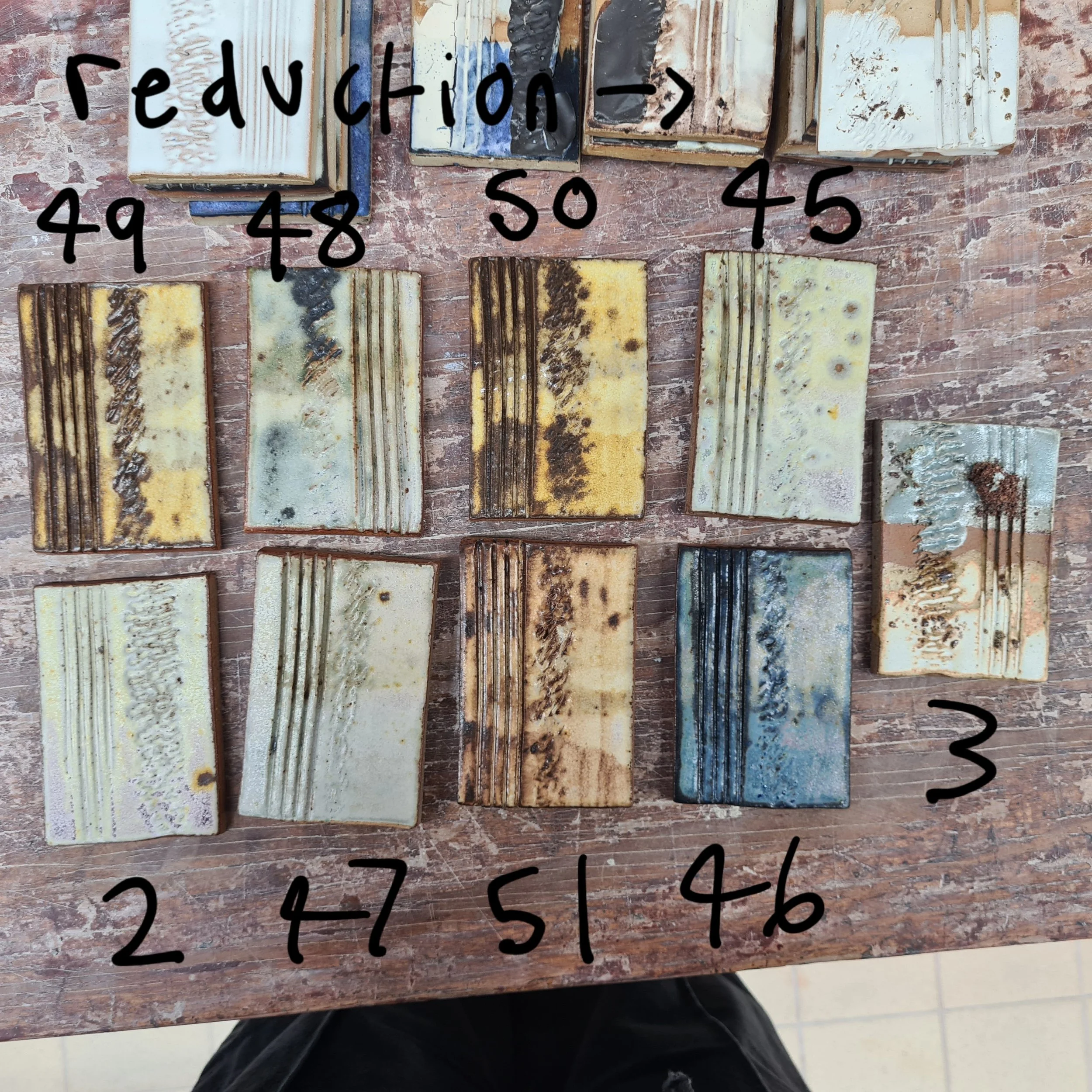
Reduction fired test tiles using oxides and base glaze recipe C
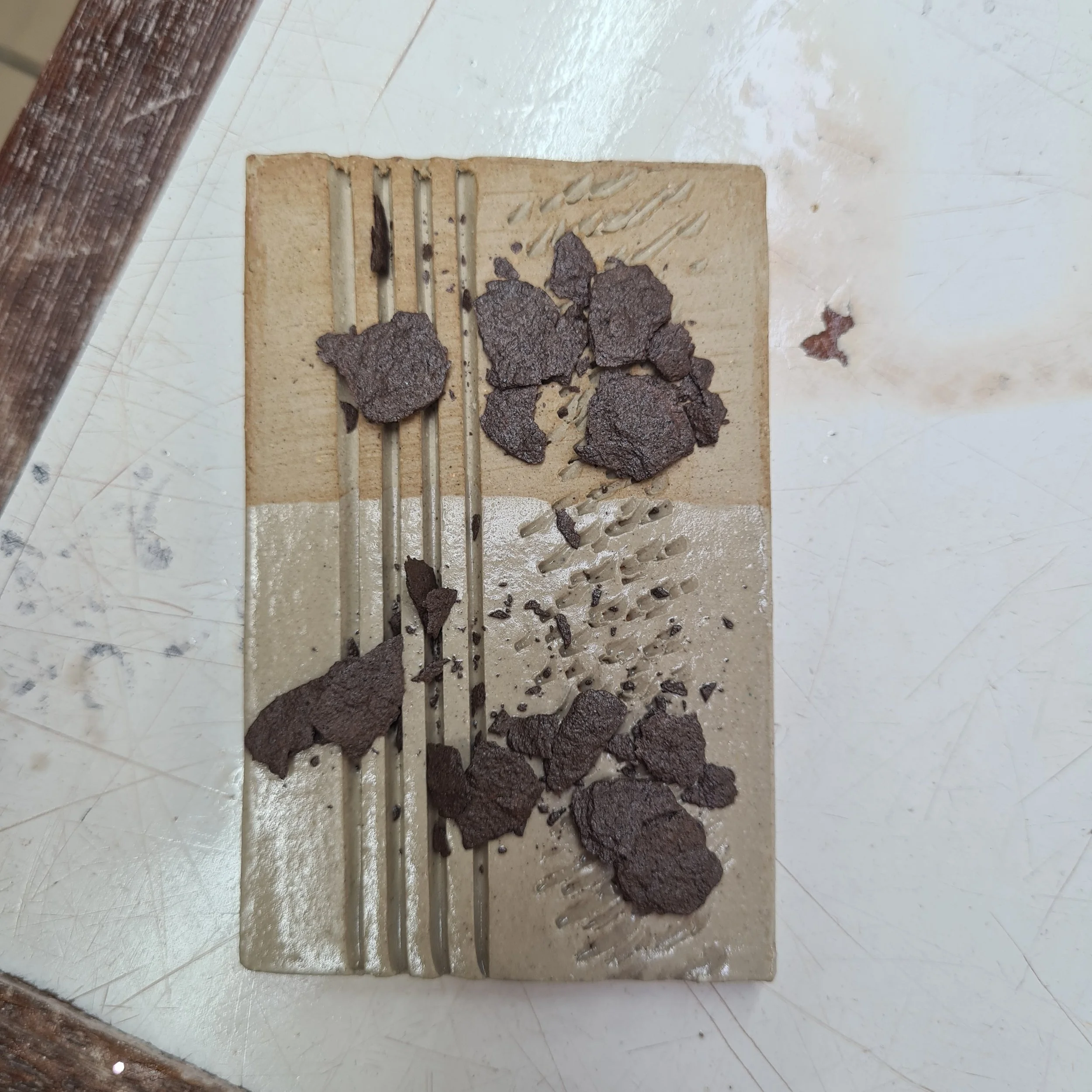
Some slate I foraged from my garden- This was in the oxidation firing
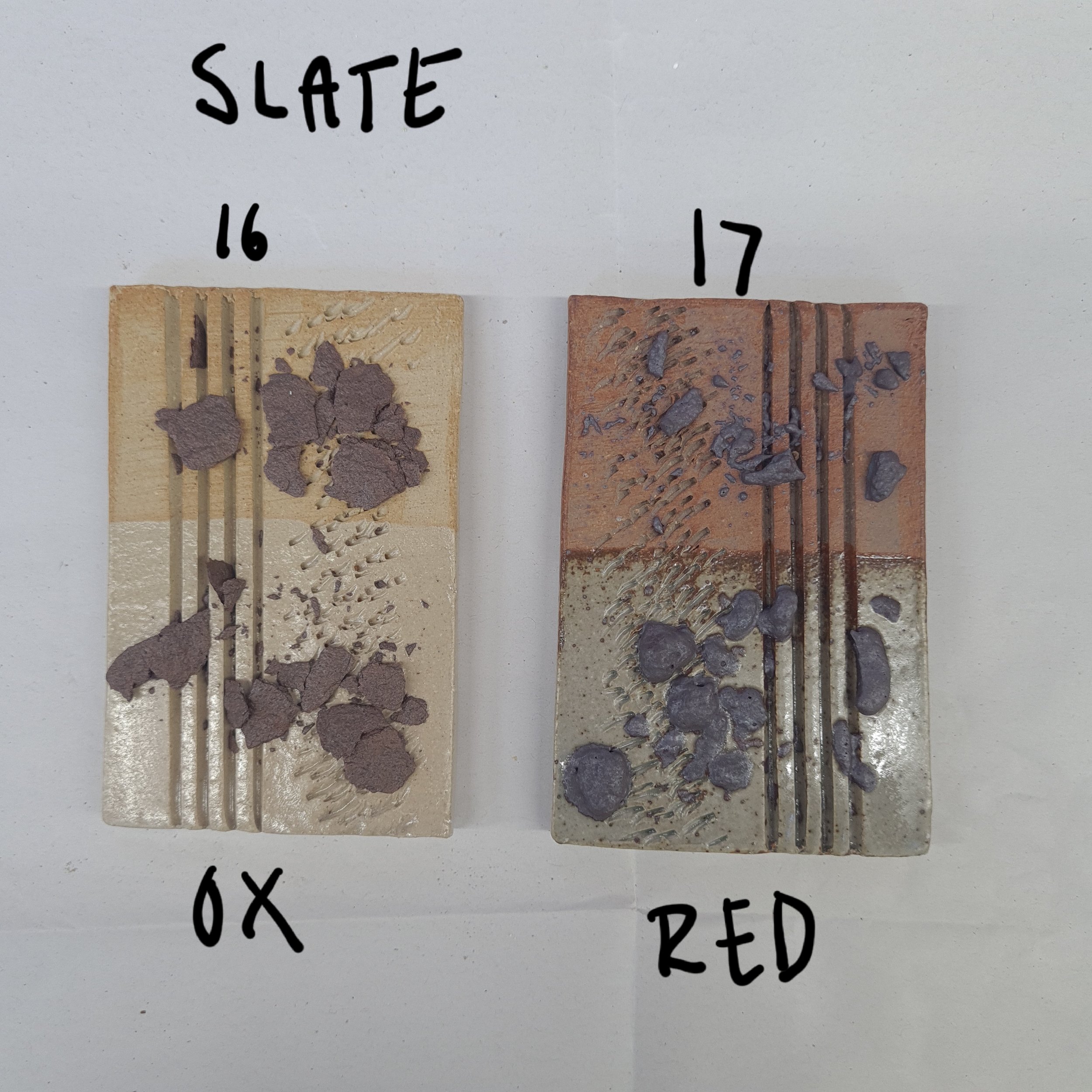
You can see the difference between the slate in the oxidation firing vs the reduction- it reached more of a melting point in the reduction and began to bubble, which is super fascinating!
I’d like to trying throwing some forms with the inclusion of slate to see how it could disturb the form in the firing process.