

A selection of Ceramic Artists
Below are a selection of ceramic artists discovered across the April-August 2026 semester three period.
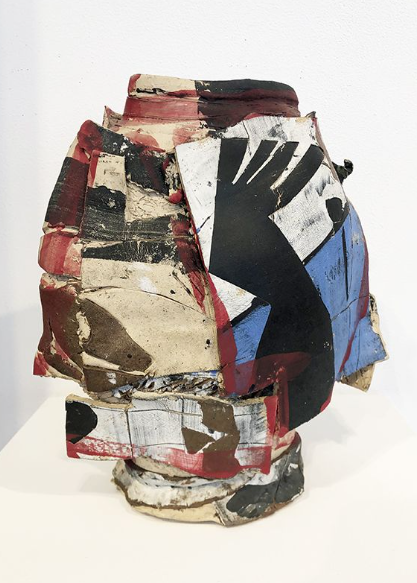
JEFF WENZEL
I admire the way the slabbed fragments are energetically connected together, sliced after surface decoration of slips, slashes and tears. The potential use of stencils also create a bold visual, and the introduction of vibrant additions of colour.
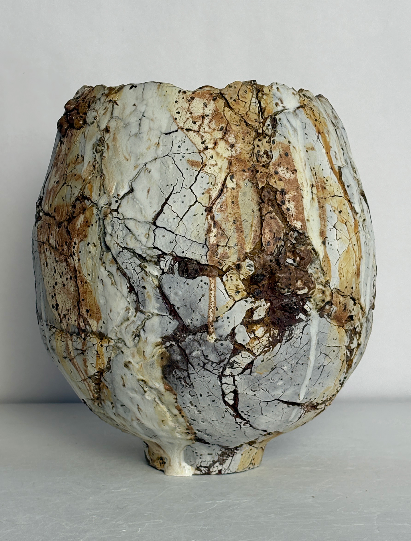
REBECCAH PAILES-FRIEDMAN
I originally discovered her work through a video, when I saw her apply oxides with a slip trailer, so it enabled her to get into the deep cracks within her form. Since then, I’ve been drawn to the cracked surfaces within her work. This piece is made from stoneware, porcelain, glaze and oxides. I’m presuming the cracked surface is from porcelain slip, dried and cracked with a heat gun.
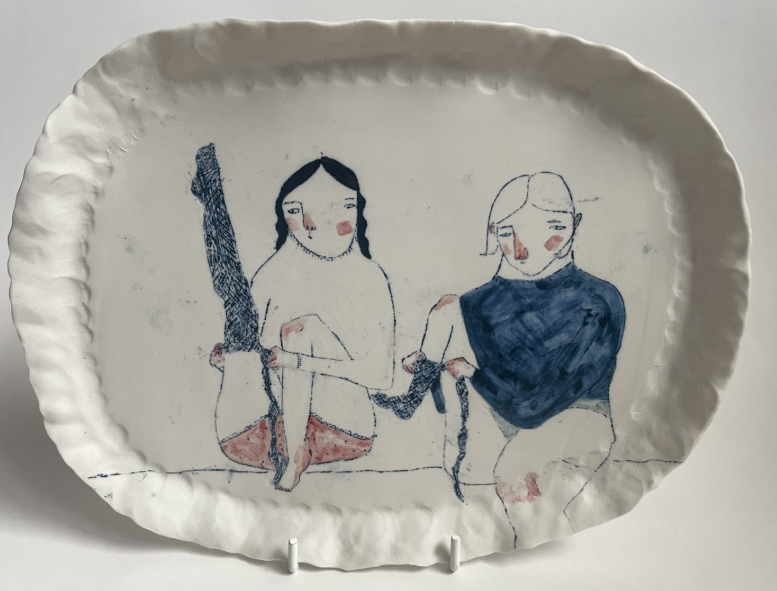
BECCA BROWN
Since seeing her work at Ceramic Art London 2026, I’ve been dying to figure out how she creates the delicate, fine line drawings on her work! - I’ve made multiple ink’s and non quite have the same effect. Perhaps the porcelain clay she uses, even paper clay, has an effect on how the ink is applied too. Either way, I love the delicacy of her drawings and the watercolour style use of the underglazes.
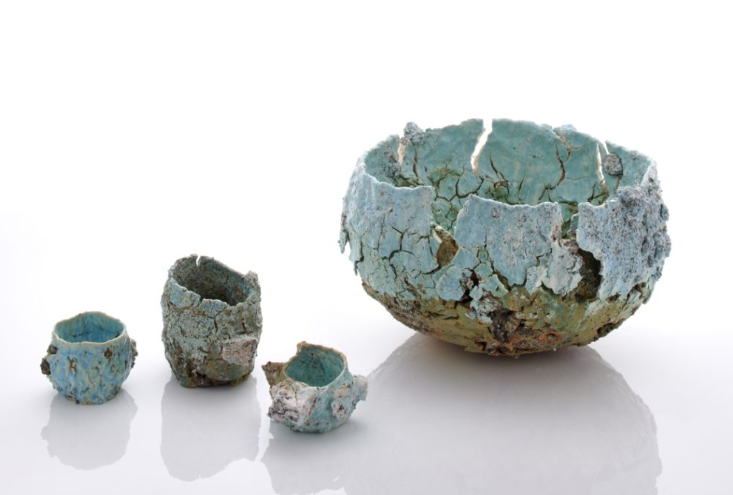
ANETA REGEL
Her work is created from layers of stoneware, porcelain and foraged volcanic rock! Then fired, then re-fired until the desired result. Her work is inspired through landscape and I believe she is from Poland, so it captures the essence of weathering and decay of landscape.
SASHA COURT
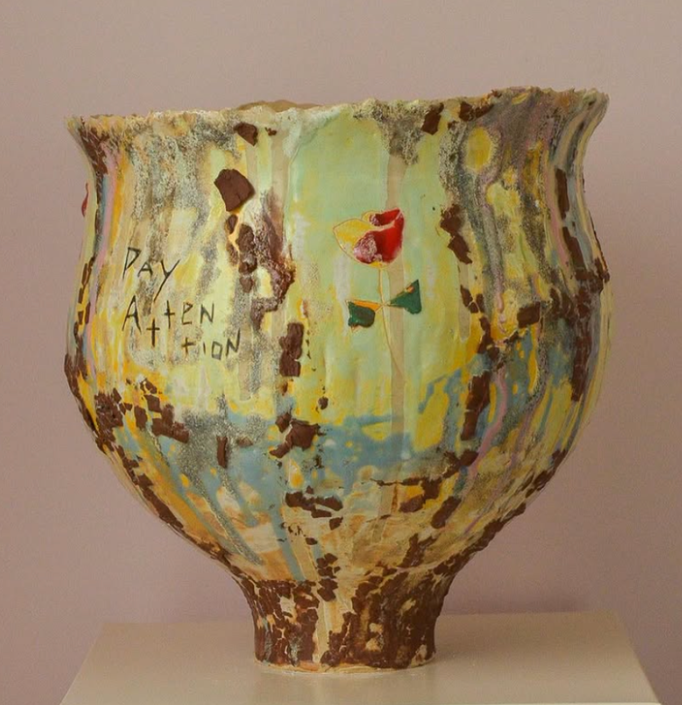
Her works captures the “ache and awe” of what it means to be human (As stated on her website) - The implements of text is what I love most, the one or two word phrases carry gravity. The glazes look and feel intuitive and expressive. She also carves into the glaze (from what it looks like) to create the text, like what I’ve been doing in my practice.
KEN EASTMAN
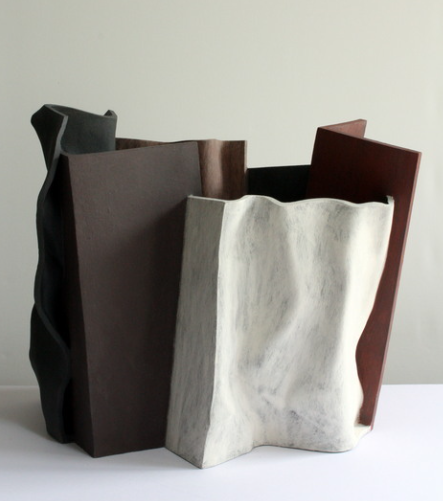
I’ve known about Ken Eastman since the first semester of the ceramics MA, however, only really came to research his work more thoroughly this semester as I was recommended to look him up again by Anna Lambert. It’s the slicing and re-assembling of forms that brought up his name. I love the flow to his work and the different clays he uses in conjunction with each other.
ROBIN WELCH
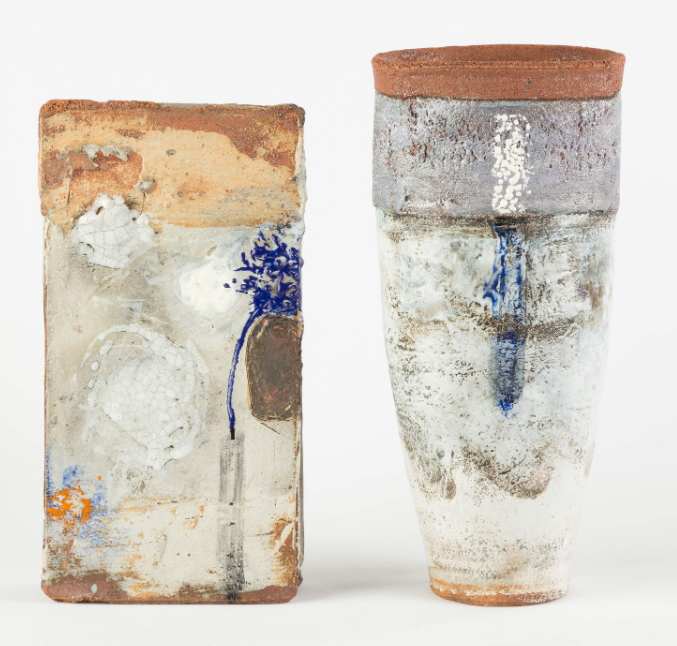
His vessels appear to be made in an intuitive process, with additions being added along the way. The small, yet vibrant areas of colour carry the energy of the pieces. The roughly applied background, creates a blockage between the clay body and the overall exterior, yet allows for small glimpses through. The layering of surface combinations is selective, yet incredibly successful.
MARIIA ORLOVA
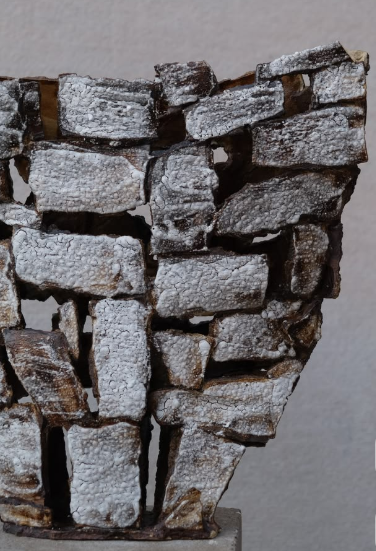
I love the segments of clay, pieced together to create a form. Surface decoration applied first, then torn and ripped, then re-assembled. The empty space between the pieces also creates it’s own form of visual interest.
DAN KELLY
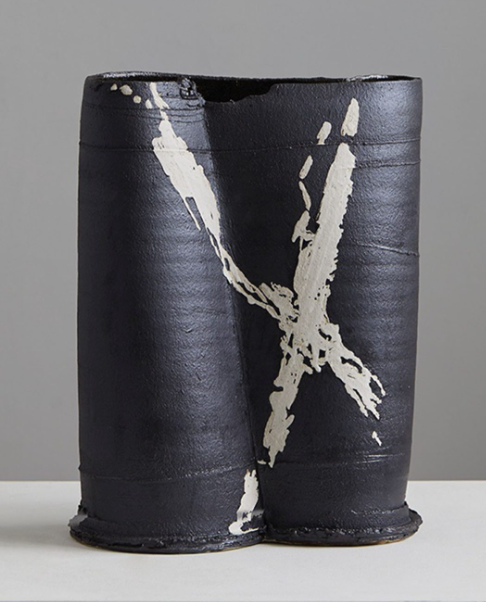
Another CAL 2026 artist who has indirectly shaped some of my creative choices this semester. After speaking, we discovered he uses wax resist on his pots, then uses a highly dense oxide to wash over (most likely manganese) - This leaves the original colour of the clay (the white) which I thought was slip over black clay. The simple, yet statement energetic gestures is what I love most. He also throws his work without a base, then attaches one later, which creates these uncontrollable, un-repeatable forms.
JANE YANG-D’HAENE
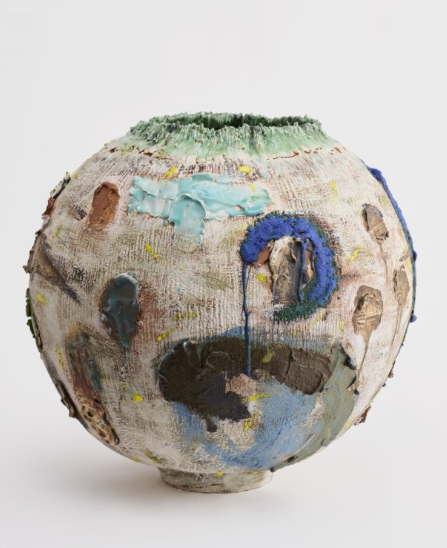
Drawing her inspiration from Korean moon jars, she experiments with elements of chance and imperfection in her work, whilst also engaging with some historical context. Her work is personal, and aims to dissect the traditional methods of ceramics, and blend them with abstract approaches to making. For me, the colour and texture is the key. I love the palette knife style textures in the glazes or slips.
ELKE SADA
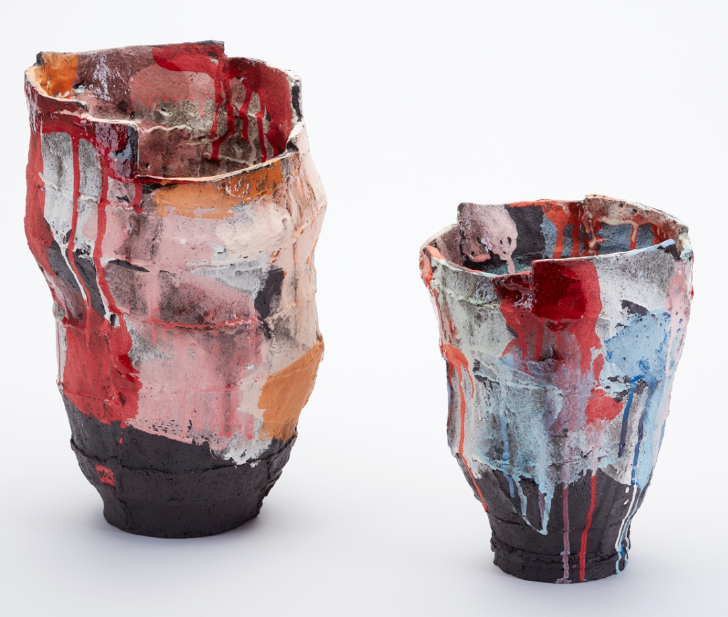
They create these “ancient forms” as stated on Ceramics Now website, then the application of colour is applied to create a dynamic shift. For me, it’s the level of vibrancy achieved through this colour application. It’s also the layering. Although applied in thin layers, the transparency between each layer captures the process.
EMILY STUBBS
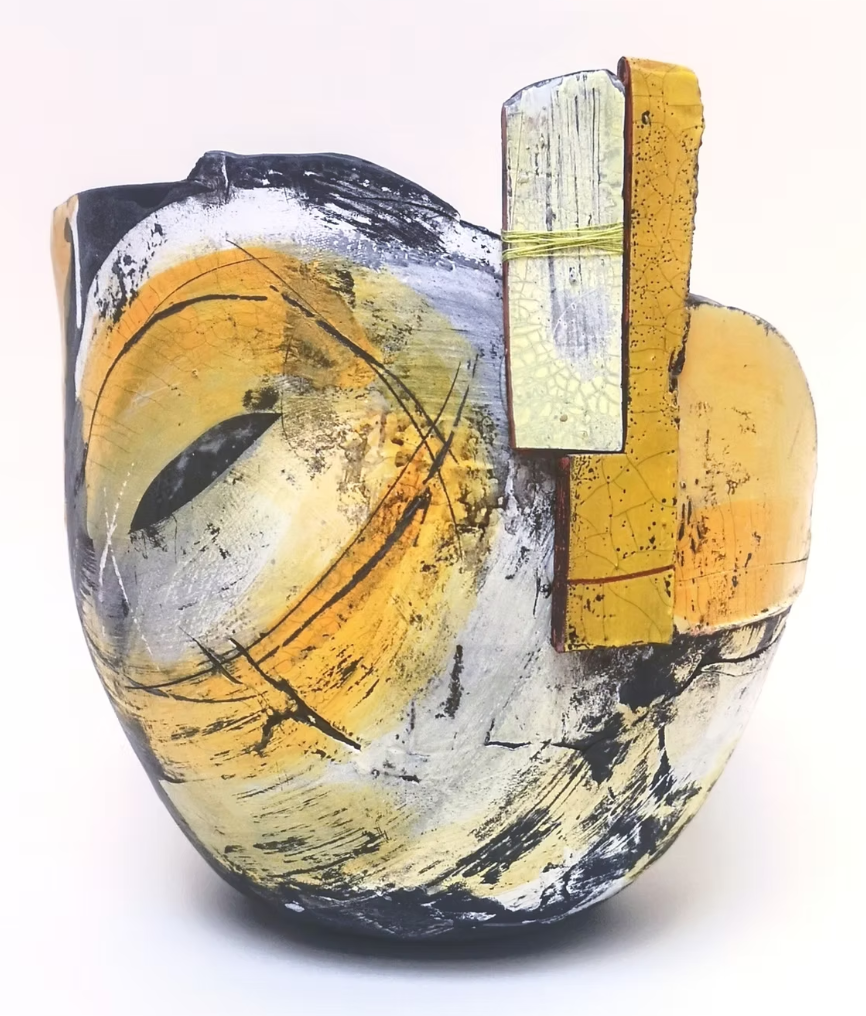
The creative slip application and layered & fragmented slabs give the illusion of a 3D drawing, much like Craig Underhill’s work. The scratching away at the slip, revealing the clay also adds a painterly approach to making. The vibrancy of the slips are effective and blend well with the organic tones.