

Glazes From Natural Sources
Glazes from Natural Sources by Brian Sutherland
This is almost a technical guide on everything to do with foraging your materials, to discovering what materials are within them and then how to implement safely into ceramics- Although I’ve only engaged with this book at a surface level, I feel it will be a book I continually keep referring too and would look to purchasing one day as there’s some invaluable information. Here are just a few excerpts that stood out to me-
Pg 3- Michael Cardew
“Finding out what the material wants to say is a sure way to speak through the material”
On his opinion on engagement with the natural world- he believed strongly that the richness and diversity supplied by local materials could carry through into the ceramics made from them.
Pg 4- Applying just a flux can destroy the surface of the clay- This is a fascinating concept that I’d like to try. It originated in Iraq around 6,000 years ago. The flux attacks the ceramic surface in the kiln. Furthermore, early Chinese and Japanese wood ash glazes would perform in similar ways when made entirely of ash. It is sometimes likened to salt glazing.
Pg 5- Banana skin ash- but also other experimental ash glazes like straw ash or apple-wood ash
Pg 15- Rocks
Petrology- Understands how rocks are formed and is the most relevant term for ceramists to explore what a rock contains.
Igneous Rocks- Cooled masses of molten magma from deep within the earth, often glassy and dense- frozen in their amorphous state to form what is virtually a true glass.
Metamorphic Rocks- Modified rocks over hundreds of millions of years and sometimes many times over. The forces creating these changes are heat, pressure and chemical action
Sedimentary Rocks- The vast majority of rocks found at or near the earths surface. Exposed rocks of all kinds, weathered by wind, rain, frost, water.
Argillaceous Rocks- Rocks that are found almost everywhere and could be classed as the most useful rocks, which includes clay!
This creates a basic understanding to rocks and if I choose to include rocks in my work, then this can help identify the qualities within the rock and how I should incorporate it into ceramics.
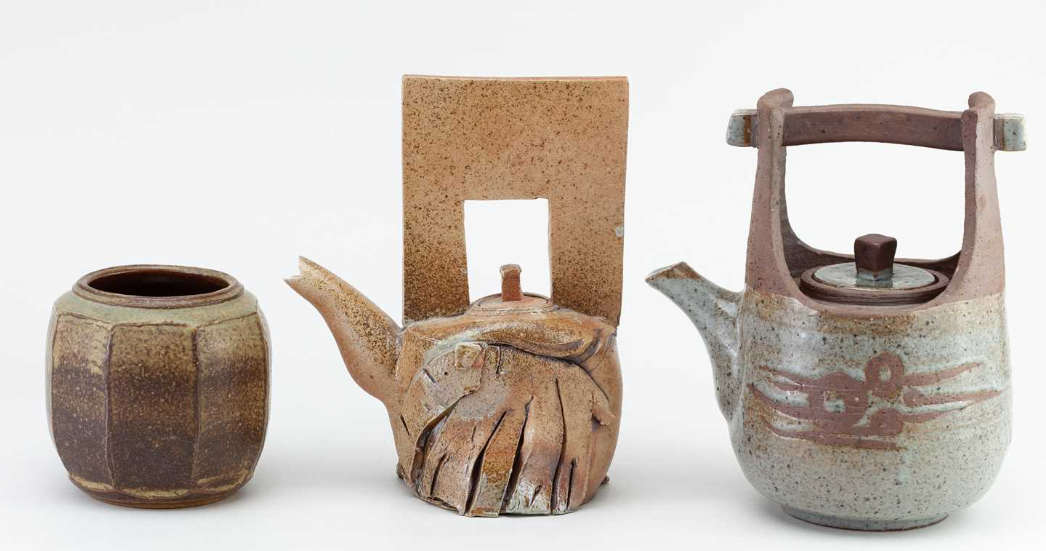
Brian Sutherland
Brian Sutherlands ceramic pots. Stoneware created between 1929-1998. It was actually difficult to try and find his work online. Molten Grey glaze and Iron and green ash glaze.