

A Variation of Testing…
As I continue to develop my practice, I've carried on my process of testing out new ideas, glazes, slips and new clays. This is the series of testing i’ve carried out from May - June 2026.
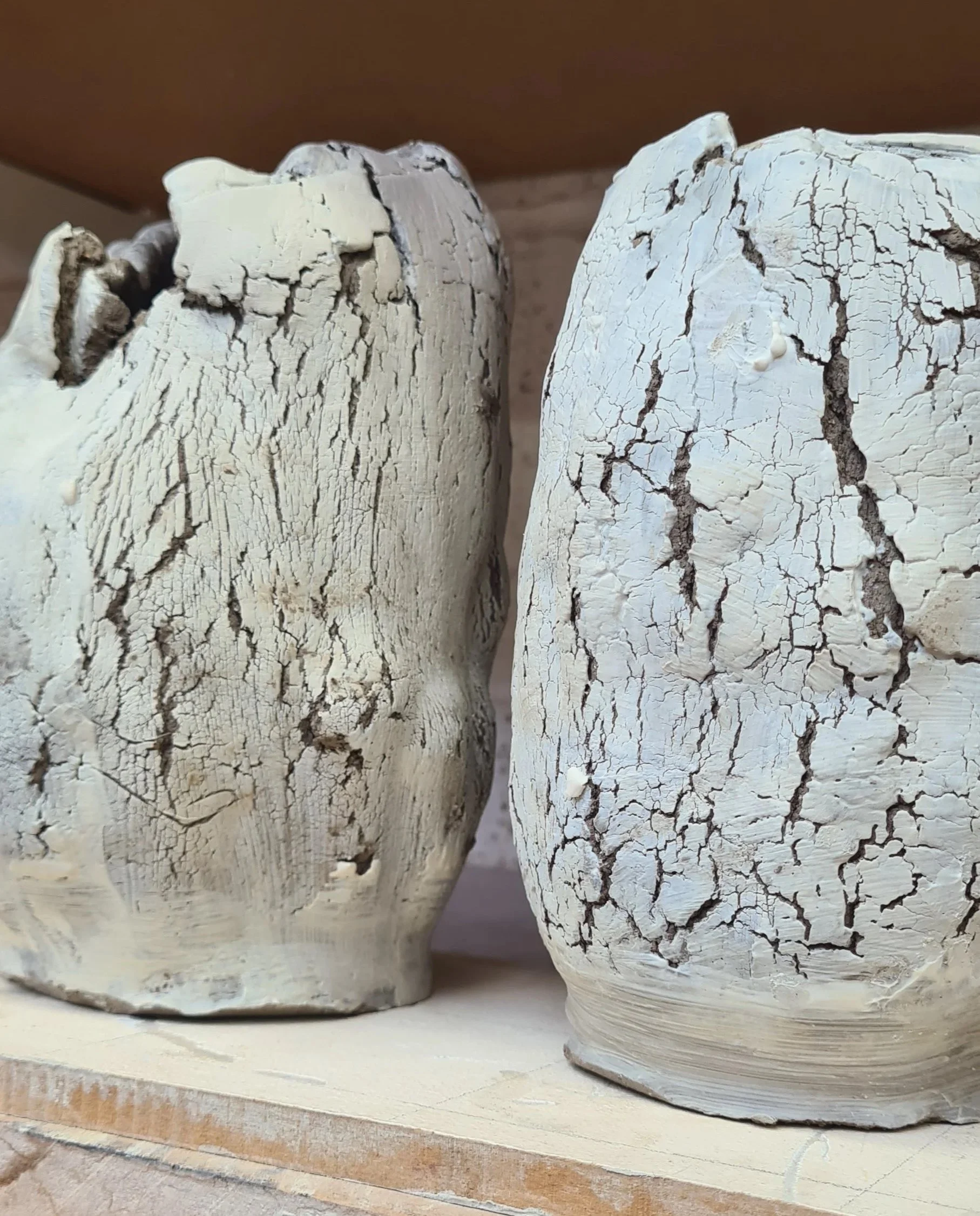
I created my own porcelain & parian slips. I read in an article from New Ceramics (March-April 2026) on ‘Bonsai Fascination’ by Eddie Curtis, that porcelain slip can ‘aggressively’ crack under heat. After speaking with Cath, she also recommended I tried Parian slip too. I applied the slip to some very quickly built forms and tried to spin them out on the wheel with the slip applied. I ended up pushing them out with my fingers as throwing them didn’t work out. Next time, i’ll apply them without purposely cracking the slip and see if the kiln cracks the slip in the firing process. I liked the intensity of the Parian slip (right) so I’d consider using this on some of my work.
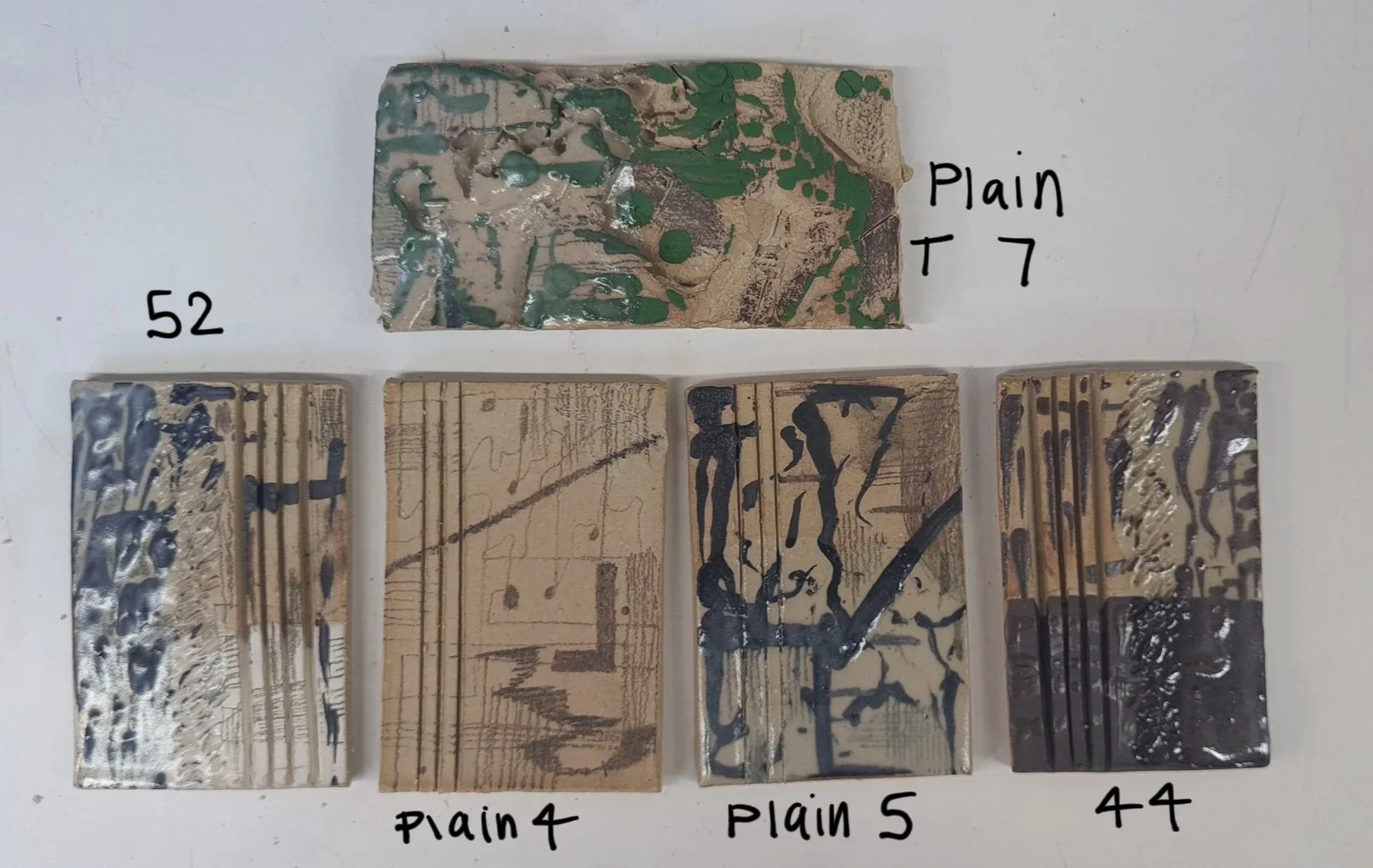
Here I tested the engobes I made and how they’d turned out if I tried to draw with them. I used a stick to apply the engobe as it created an unintentional shape of mark. I used the green, black, red/brown engobe. I also used a glaze pencil to create contrasting thicknesses of lines and depth. I tried it out over white & black slips, transparent glaze and varying textures within the clay test tile.
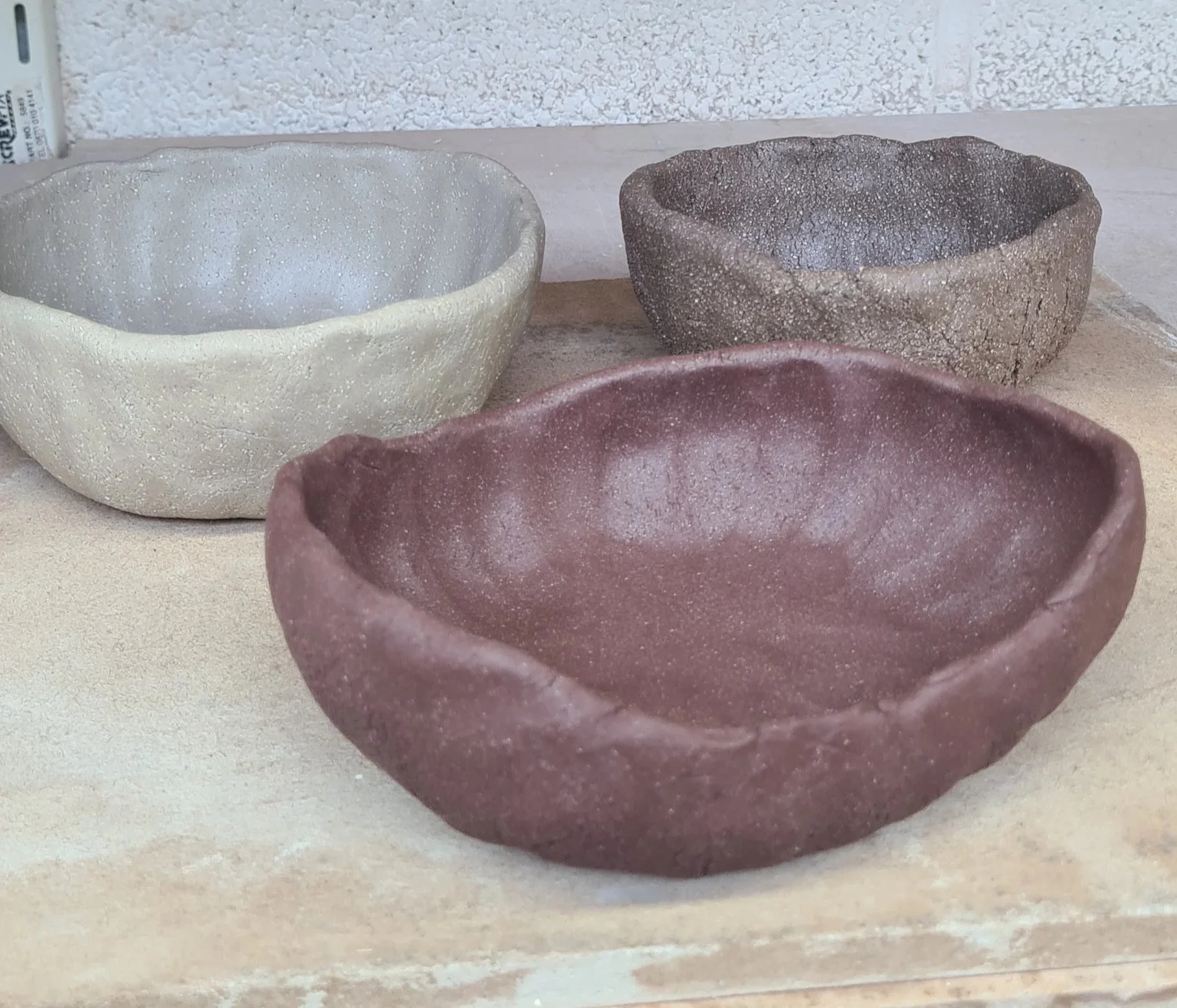
I was given some clay samples from the 2nd years as I’ve not yet discovered the types of clay I enjoy using. I was given white craft crank, original craft crank and a black clay coloured with manganese oxide. I just created some simple pinch pots to get a feel of each clay. I enjoyed the level of grog in the original craft crank. Therefore, I ordered 4 bags of this clay to slowly introduce myself to new clays.
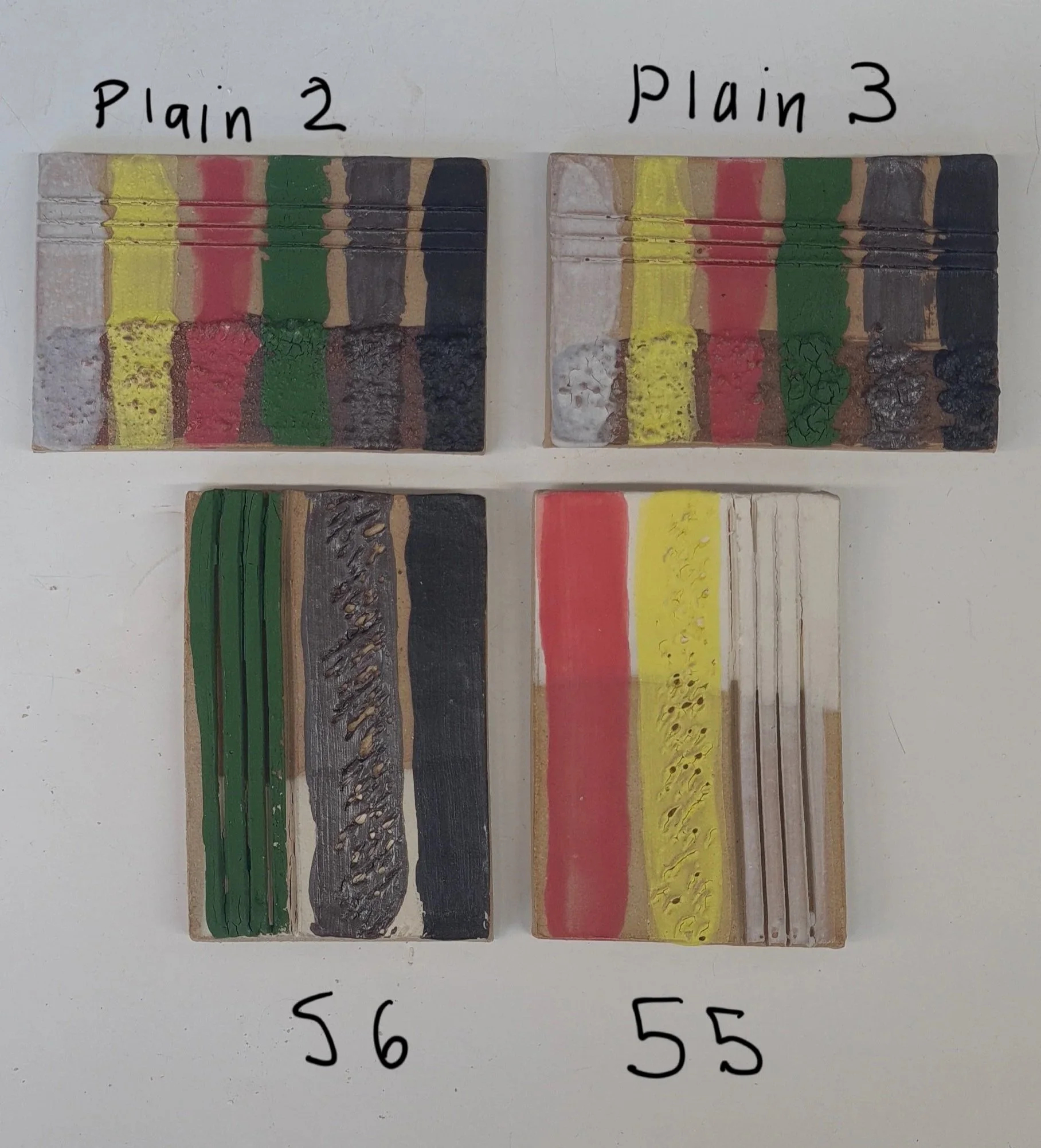
I created my own engobes. When interviewing Craig Underhill, I learnt that he used engobes a lot in his work. They’re very similar to underglaze, however just carry abit more thickness and slip-like qualities. I made a white, yellow, red, green, ‘red-brown’, and black engobe. Interestingly, the red/brown engobe went shinny in the firing. Underneath these test tiles are white slip (56 & 55) and a grogged terracotta slip (2&3). It’s nice how the engobe cracked on the grogged slip and the vibrancy increased on the white slip. Since this test, I’ve been using the black engobe to draw with (with a stick)- You can see this on my slate pots page & on the image to the right where I applied to black engobe with a stick.
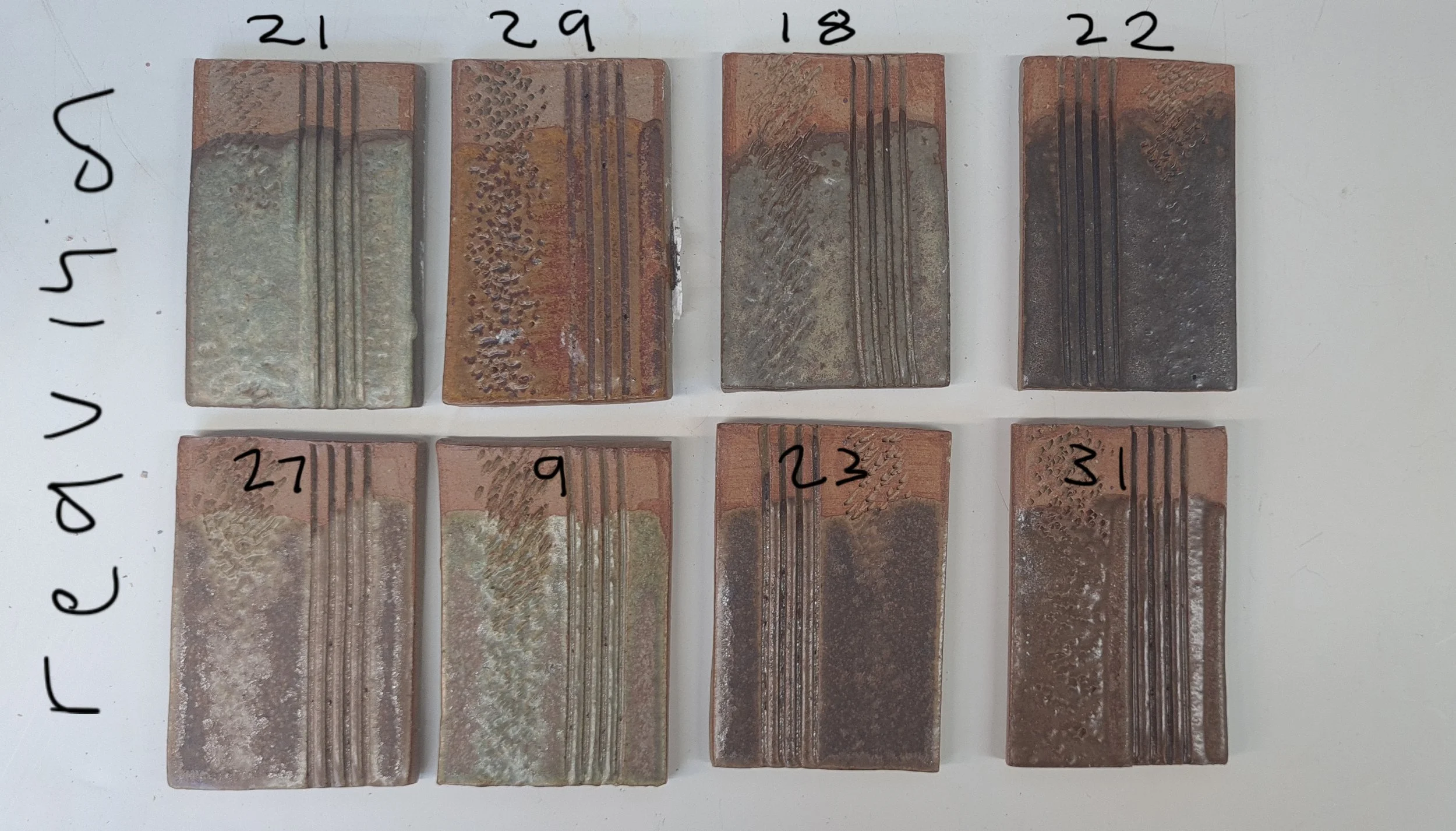
These are also using the potters palette base glaze recipe C with these additions but fired in reduction-
21- Vanadium pentoxide 6%
29- 6% Ilmenite
18- Cobalt carb 0.25% and Vanadium pentoxide 3%
22- Copper Oxide 1.5% and Vanadium Pentoxide 3%
27- Manganese Oxide 1% and titanium 5%
9- Cobalt Carb 0.5% and titanium 5%
23- Manganese 2% and Rutile 5%
31- Cobalt Carb 0.25% and Ilmenite 3%
The reduction ones do work better as the higher temp is reached and the gas is drawing it all out. However, still not quite as pictured so perhaps my recipe was slightly wrong to begin with.
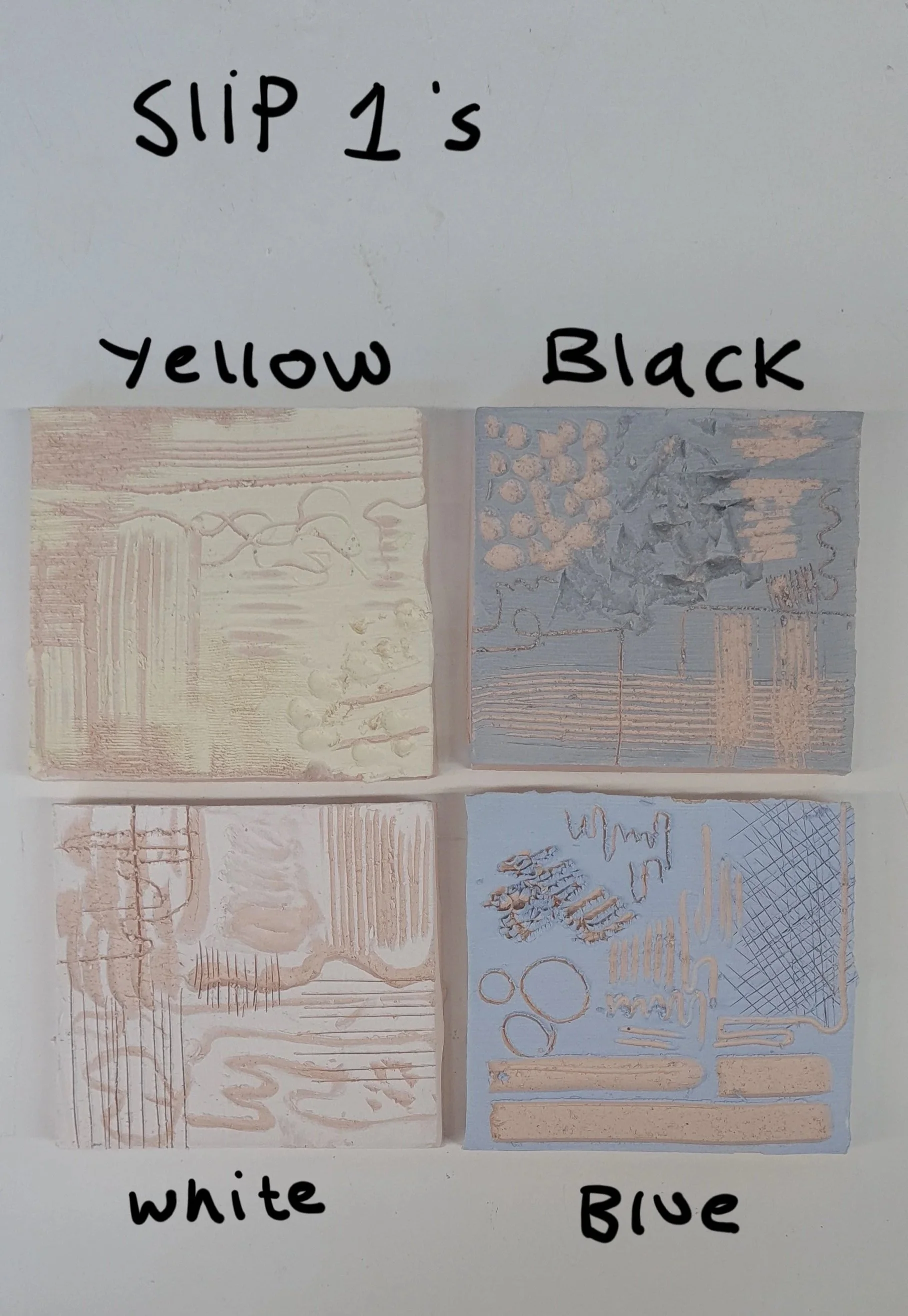
I created some test tiles with slip applied to each in a different colour. I was testing out the types of marks I could create when carving away at the slip on wet clay. I also did another 4 test tiles with the same colours of slip, fired them with no markings and then applied a white glaze and a coloured glaze (Azurite) and scratched into the glaze to reveal the colour of slip underneath.
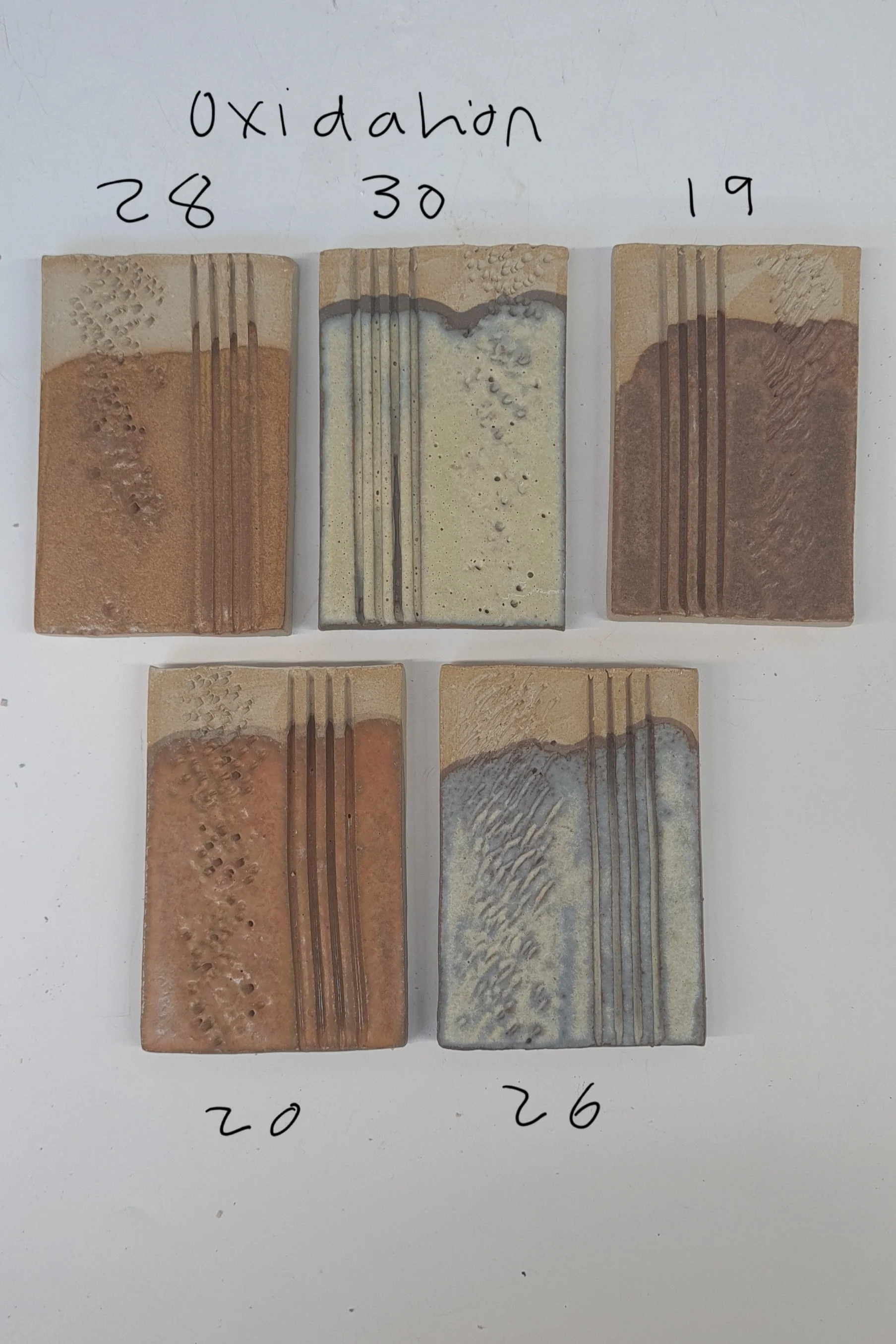
I expanded my range of glazes from the Potters Palette book. However, I’d say they don’t look like the glazes in the book for two reasons-
I used Cobalt Carb oppose to Cobalt Oxide because I couldn’t access the oxide at the point of creating these glazes.
Another reason is that I didn’t specify the firing temp for the oxidation fired tiles. These ones shown in the image were fired at 1280’c- but after firing I noticed in the book it said to fire at a high temp oxidation firing. I’m not sure what temp the oxidation firing can reach but perhaps if it went higher than 1280’c the results would have been more similar to the book.
All of these test tiles have used the base glaze recipe C from potters palette with the addition of these-
28- 6% Ilmenite
30- 5% Vanadium pentoxide and Cobalt Carb 0.12%
19- Cobalt Carb 0.25% and Ilmenite 3%
20- Vanadium Pentoxide 5% and Ilmenite 3%
26- Cobalt Carb 0.25% and Vanadium pentoxide 3%
I’ve decided I don’t like Ilmenite.