

Bringing the 2D to the 3D
Through my series of drawings in my sketchbook, I’ve finally began developing them sketches into 3D forms, some more literal to the drawings than others to begin with. I found it more approachable directly copying my drawings into a clay form. However, from creating a few representational forms, I’d like to try and extract qualities from my drawings to then develop further through the clay, thus creating a new form.
I find layering my research process really helpful when trying to find inspiration or find a start point.
Documentation through photographs - Drawing from photograph or on-site, extracting areas of interest - Transforming the 2D into 3D through clay - Re-visiting drawings & photographs to develop further
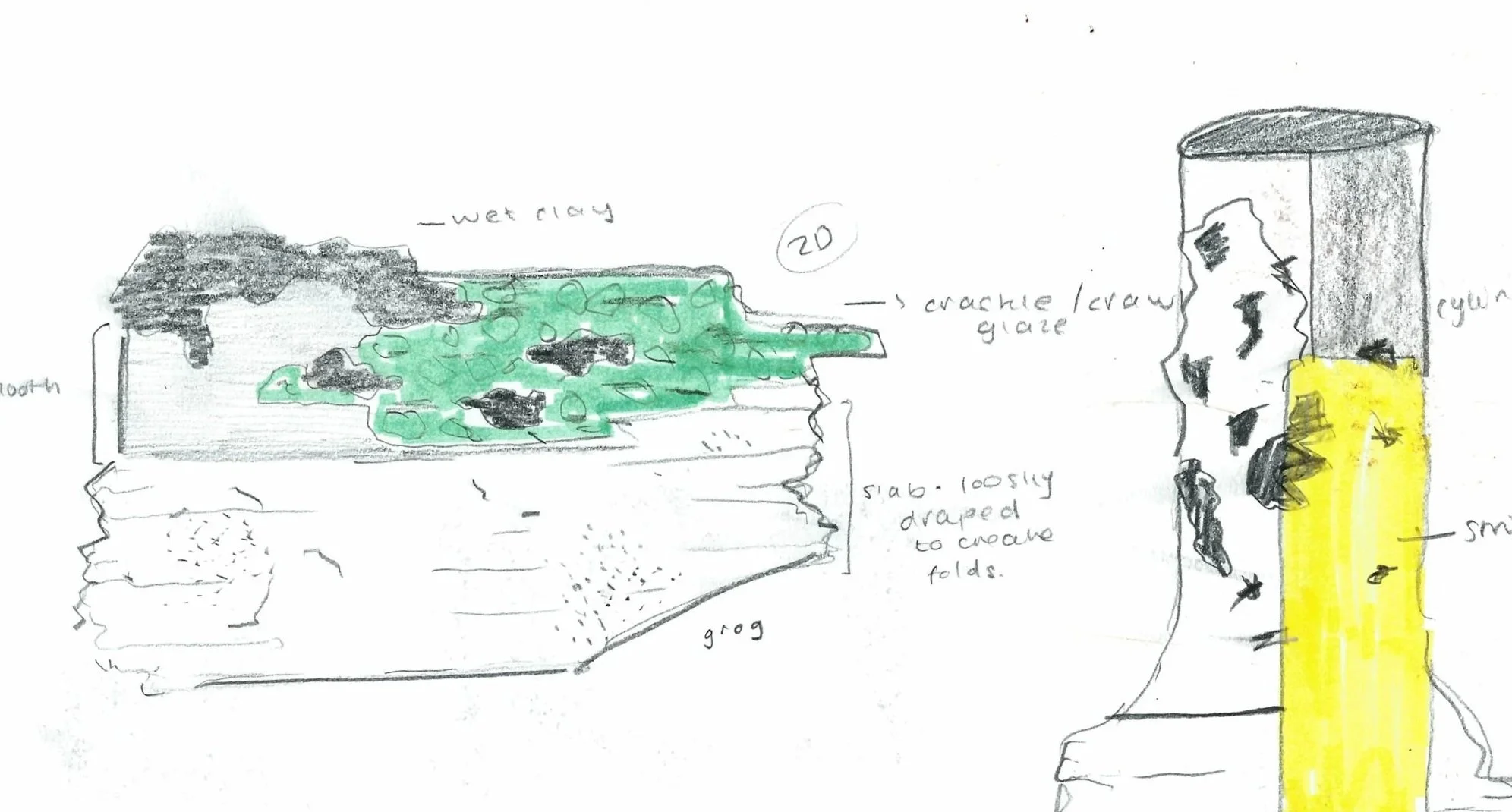
This was the initial drawing based of a segment of a tree with lichen and moss. Through these series of drawings, I was aiming to create potential sculptural form ideas, oppose to just mark making and free-handed drawings. I was thinking logically about how I would turn this into 3D whilst drawing, adding annotations about what I’d do to achieve this.
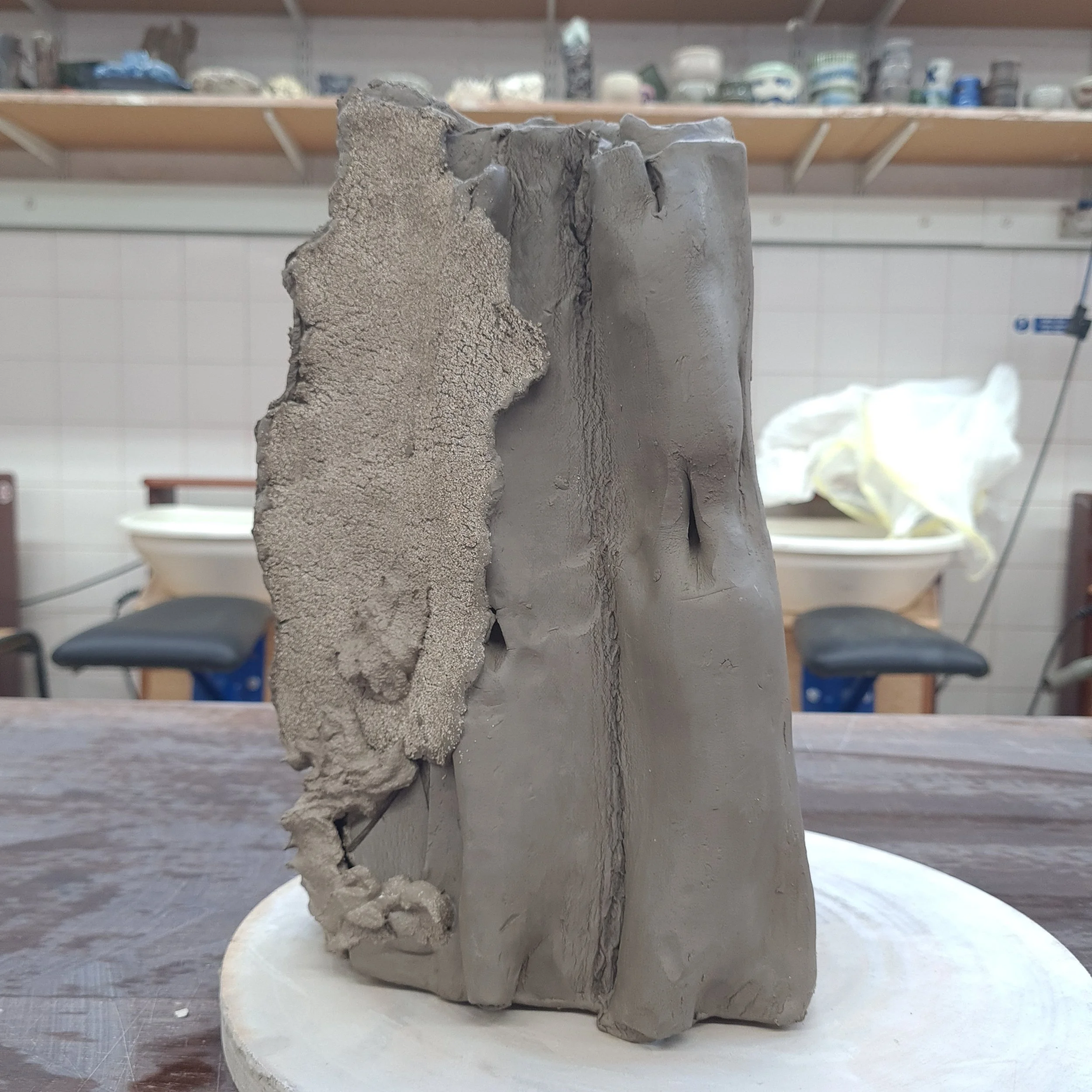
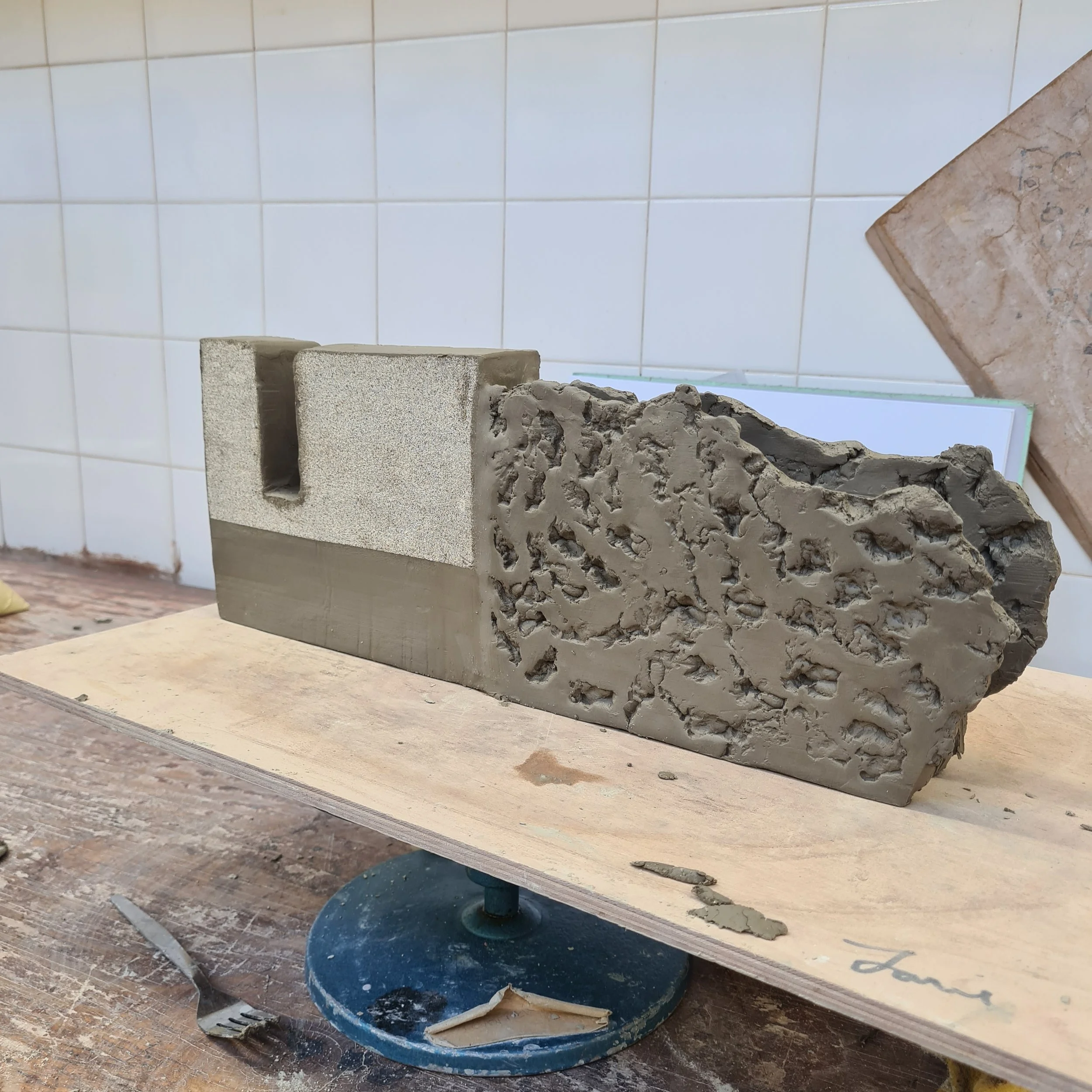
It became a very representational version of my drawing. In ways, this shows my development in terms of using clay as a material. I’m able to establish potential methods to making and create a recognisable piece.
However, I think by making it a copy of my drawing, I lost the experimental mindset and didn’t allow the process of making alter my outcome.
From 2D to 3D
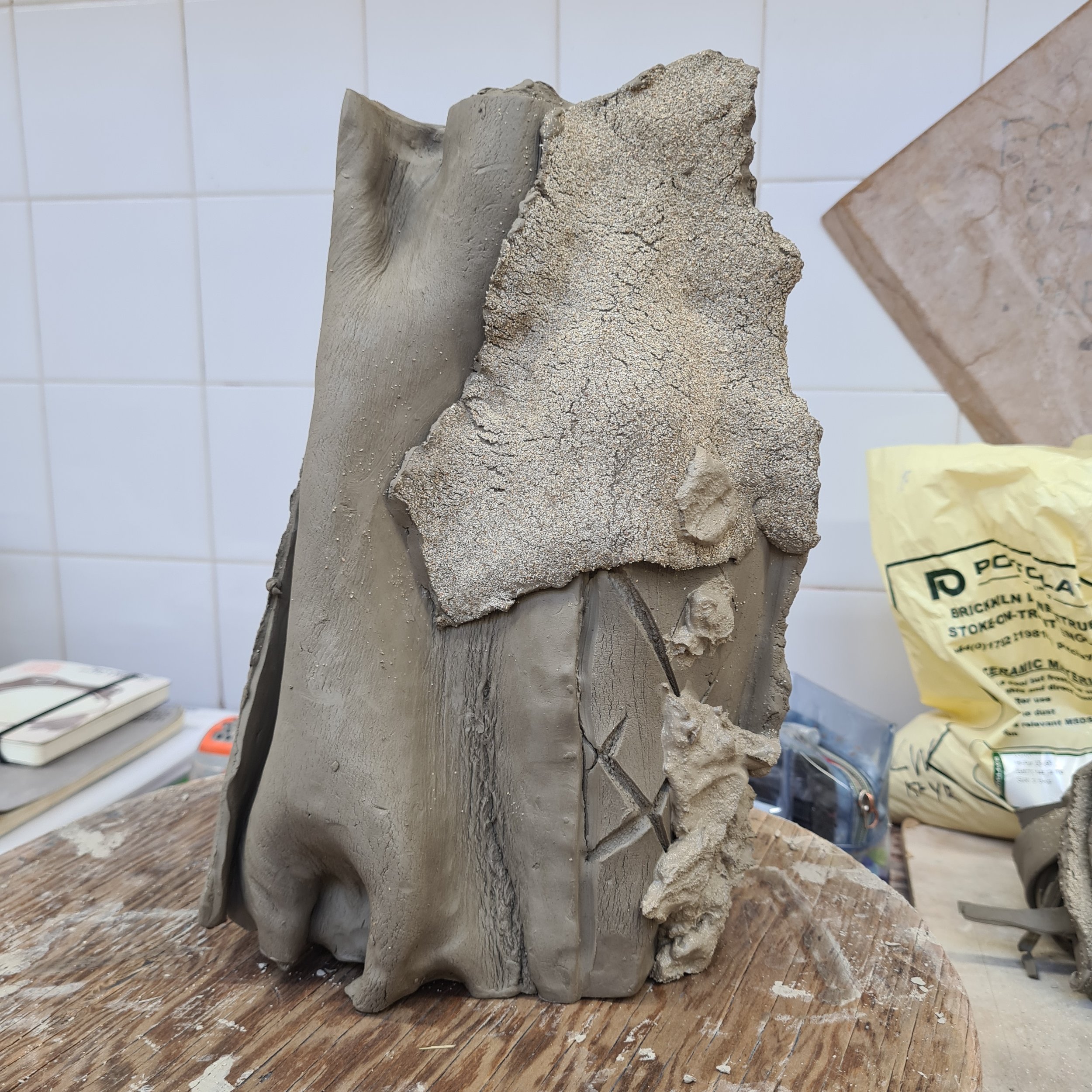
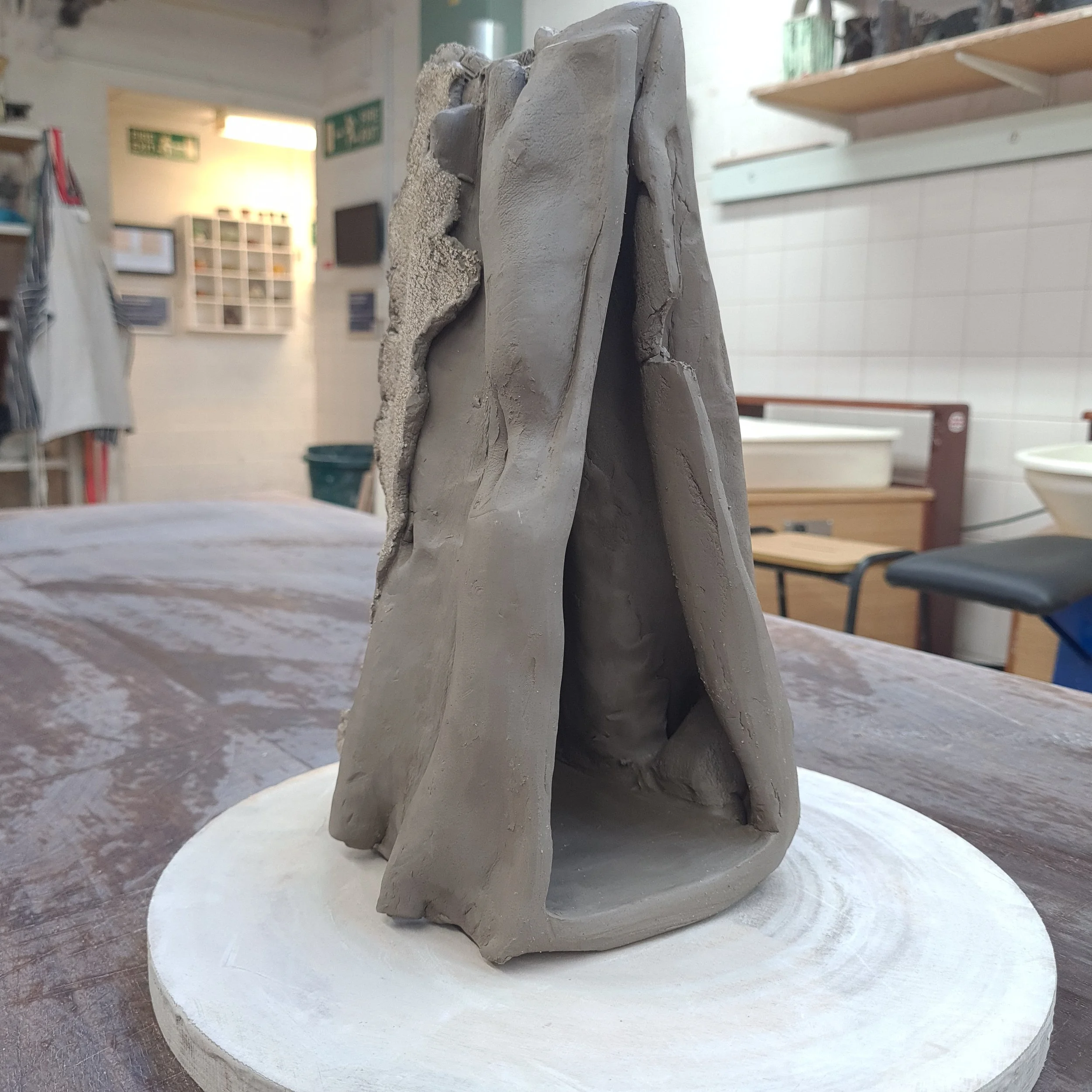
This is the form I ended up created, a vessel form with collaged grogged clay and wet grogged clay. I turned the piece on it’s side once it was leather-hard as I thought it worked visually this way.
I really liked the folds and cracks in the clay, as I used soft slabs to construct the piece. I also liked how at the side it was exposed and open, due to the rotation of the piece after it was built. I really enjoyed making this piece and it felt like a step in the right direction, oppose to just making cylindrical vessels.
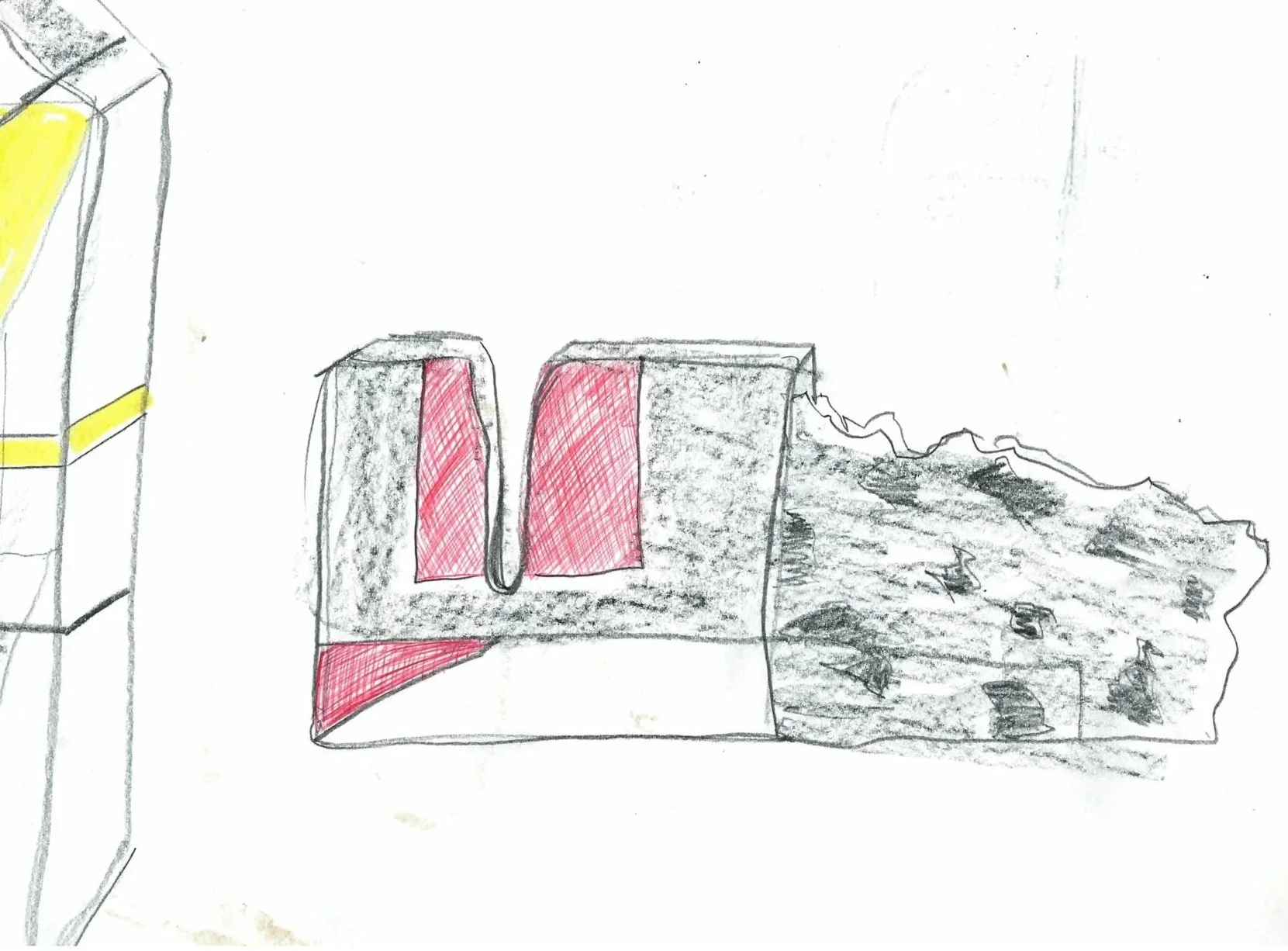
This was the next drawing I decided to develop into a clay piece. I was drawn towards this one due to the red features and textural qualities.
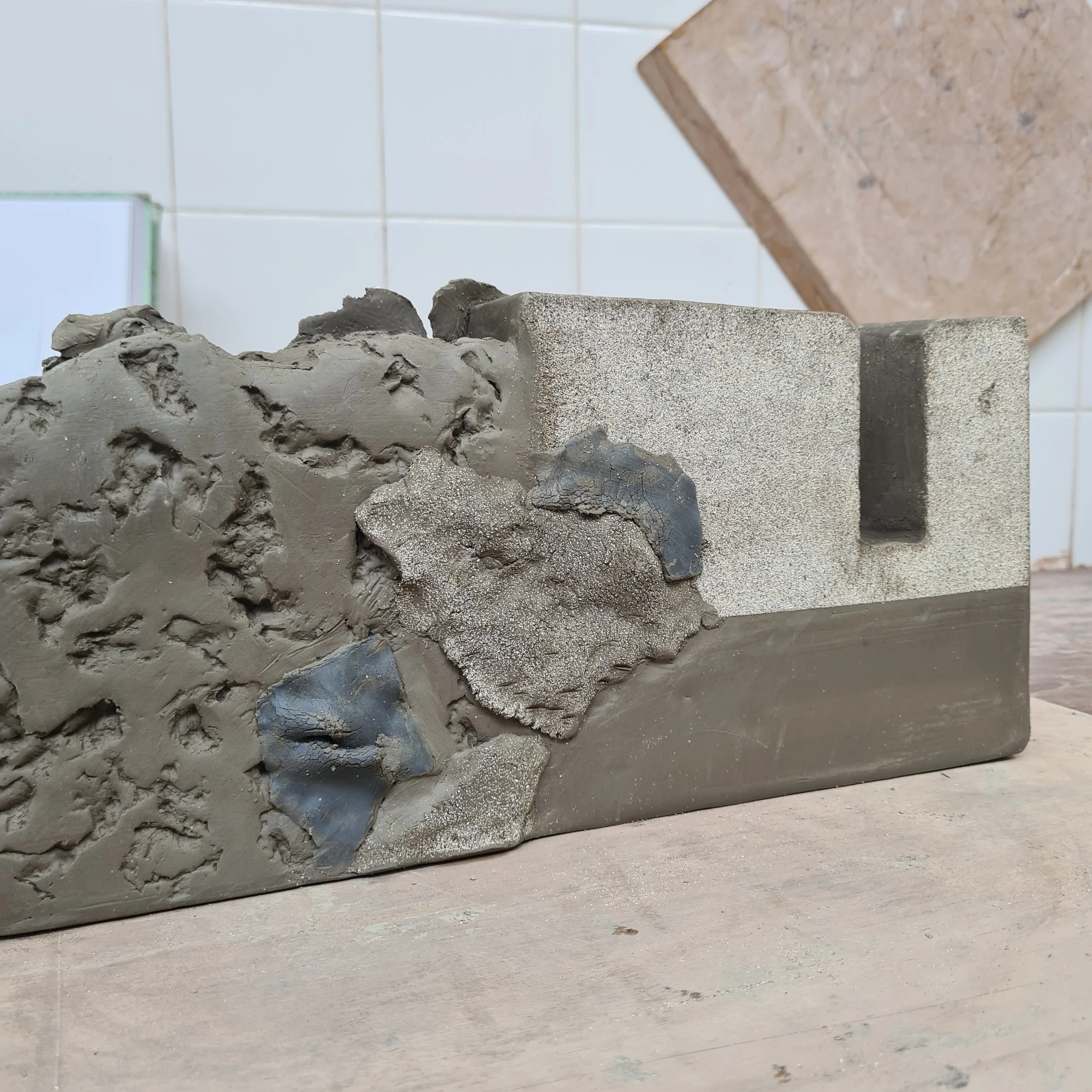
I did however, add on these collaged patches using black slip and grog. This added some fluidity to the piece. I do see this piece being rotated when bisque fired so the textural half is towards the top.
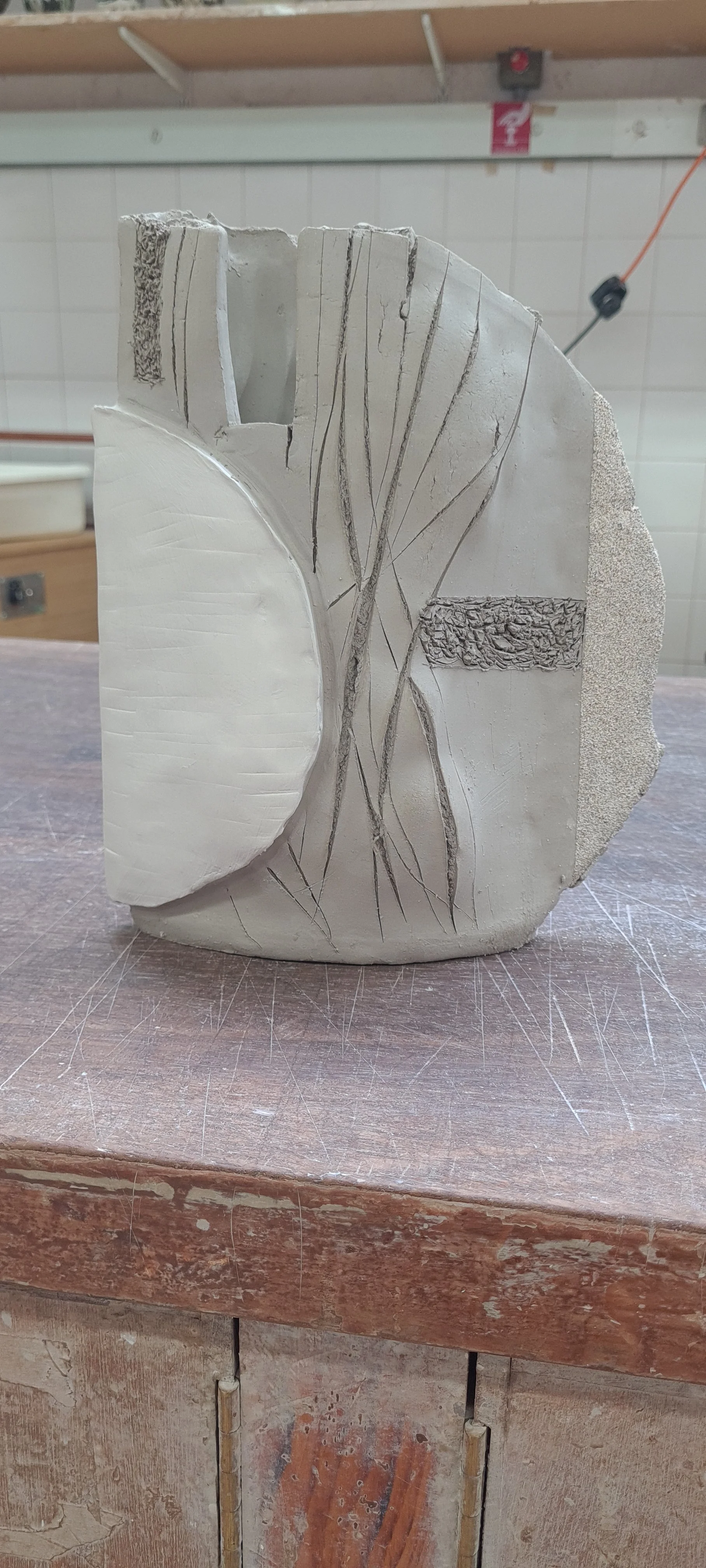
Less representational…
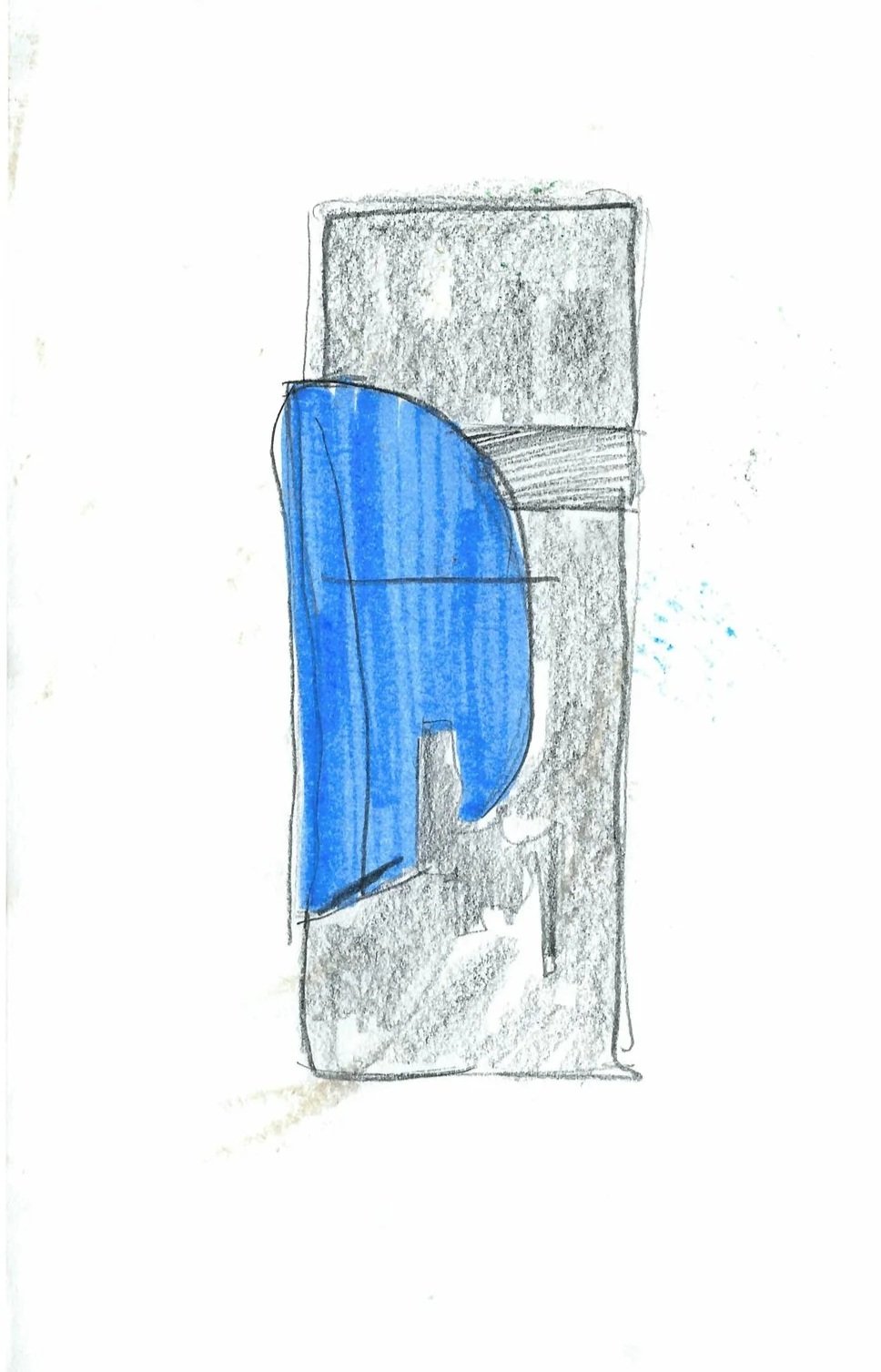
This piece was inspired by a piece of folded over road sign, which I then sketched and then turned into clay. It’s still got recognisable qualities, but I allowed the process of making to guide me.