

Ceramic Art London
On the 8th May 2026, we travelled down to London via the train and went to Ceramic Art London & The V&A Museum. I’ve never been to Ceramic Art London before so this was super exciting to see up and coming artists and also established artists all under the same roof. There were definitely some stand out favourites such as Dan Kelly, Lisa Herud Braten, Deiniol Williams and Becca Brown.
I also brought a cup from Russel Kingston- Typically, his ceramics are not something i’d be particularly interested in due to the honey & brown colour palette that runs throughout his work. However, with the inclusion of the blue and green palette and his marking making on this particular cup, I chose to buy it! It was £30, which was very reasonable (and may be another reason as to why I brought it) as in comparison to other artists, his work was really well priced and allowed me to bring home a souvenir of the show.
The overall show was incredibly insightful. I really enjoyed the balance between more abstracted and sculptural work and then the pot’s and more classic vessel shapes. They had a really strong mix of artists and most of them were really happy to talk about their techniques, methods and ways of thinking around their work. It gave me a fire in belly as I’ve now set myself a goal of one day becoming an exhibitor at CAL.
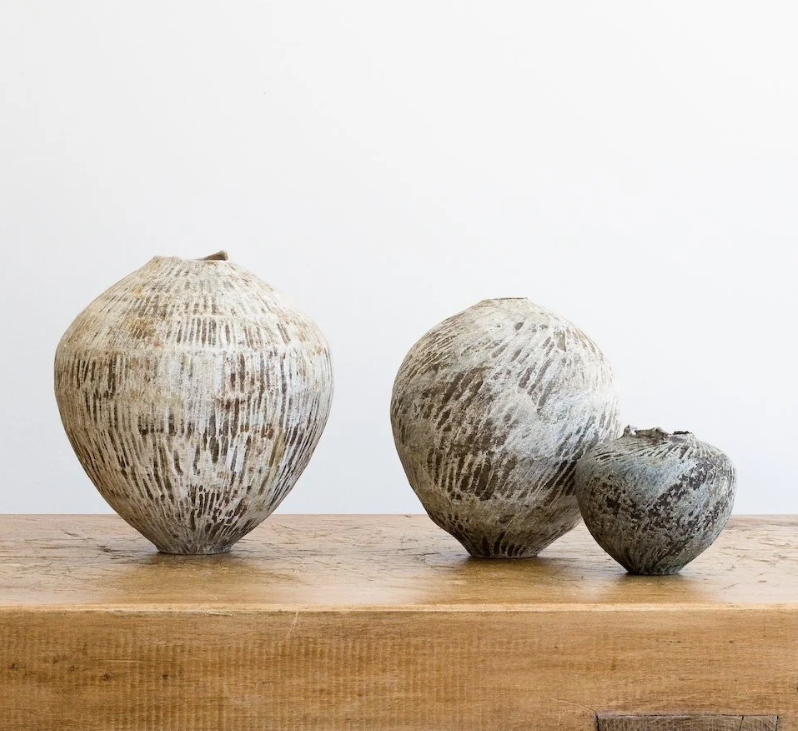
Lise Herud Braten or ‘Colours of the land’
Her raw, earthy tones and textures are the main highlight within her work. The ripped trims of the vessels and varying sizes all connotate the natural and organic inspiration behind her work.
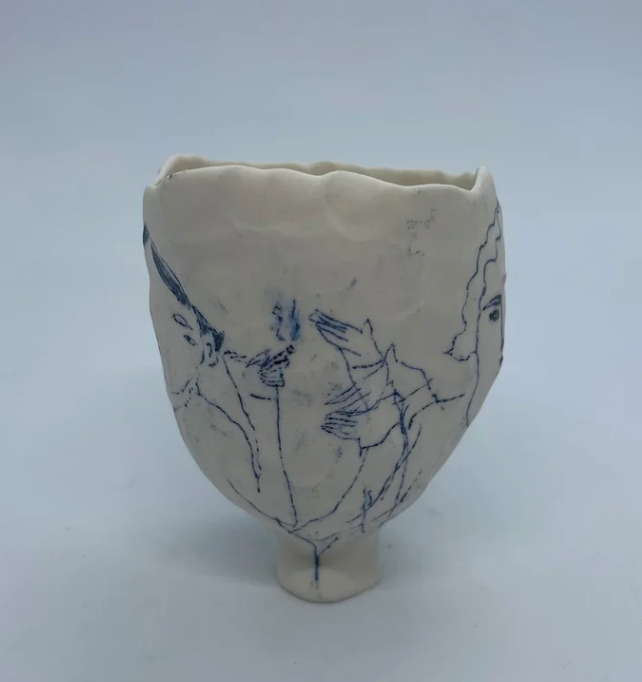
Becca Brown-
Initially, I wasn’t drawn to her pieces when displayed at CAL. However, at a passing glace, they stuck with me. After CAL, I found myself re-visiting her work. I found her delicate and frail appearance of her drawings really interesting and I wanted to figure out how she did it.
In one of her pictures, she’s seen using a needle. I believe, she carves into the work over the top of an applied glaze, or literally uses the needle to apply a stain or oxide. It inspired me to use this quality of mark making in my own work, to convey a sense of playfulness or visual depth.
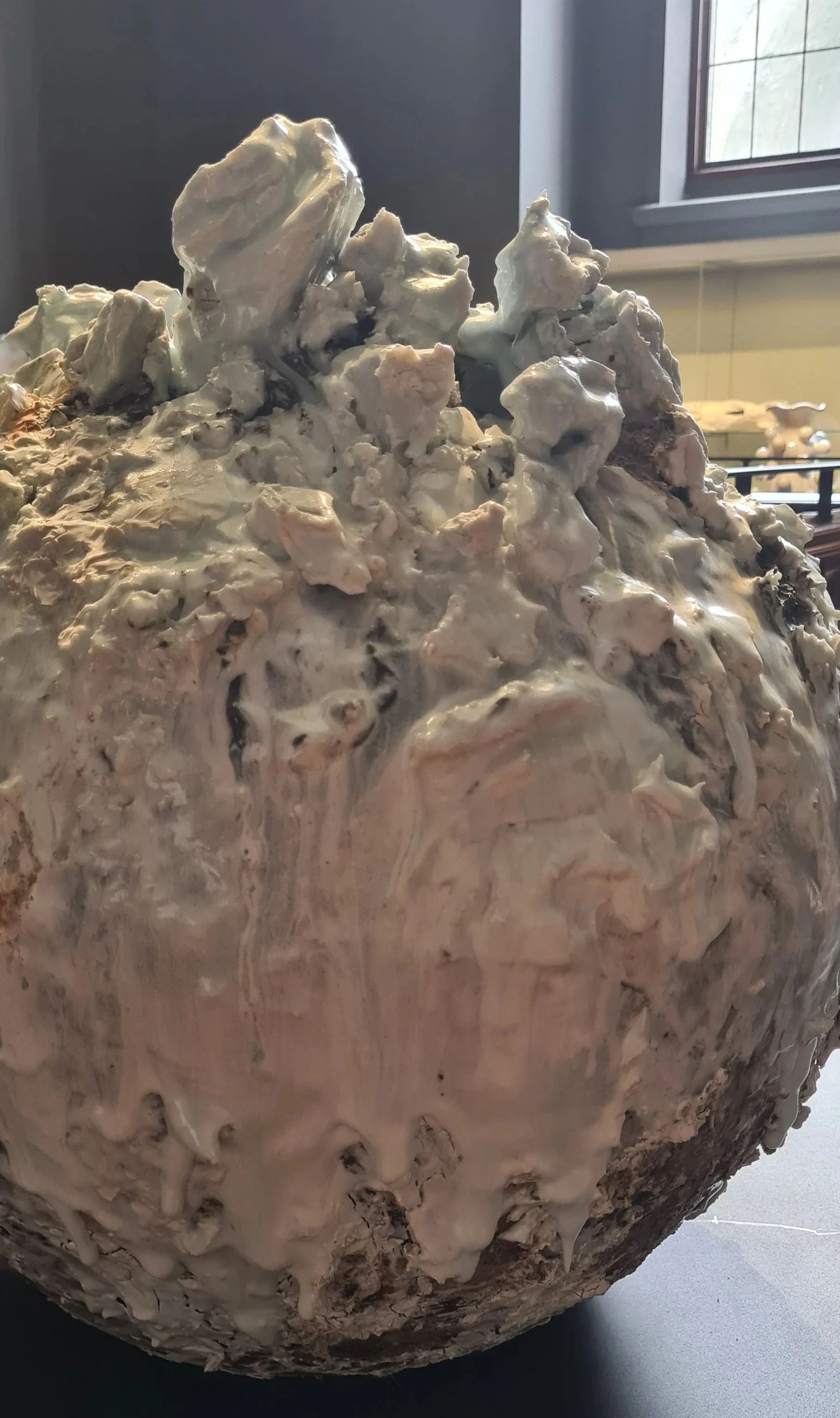
Akiko Hirai, 1970
@ the V&A museum- Glazed Moon Jar, stoneware with landscape inclusions and cherry wood ash glaze
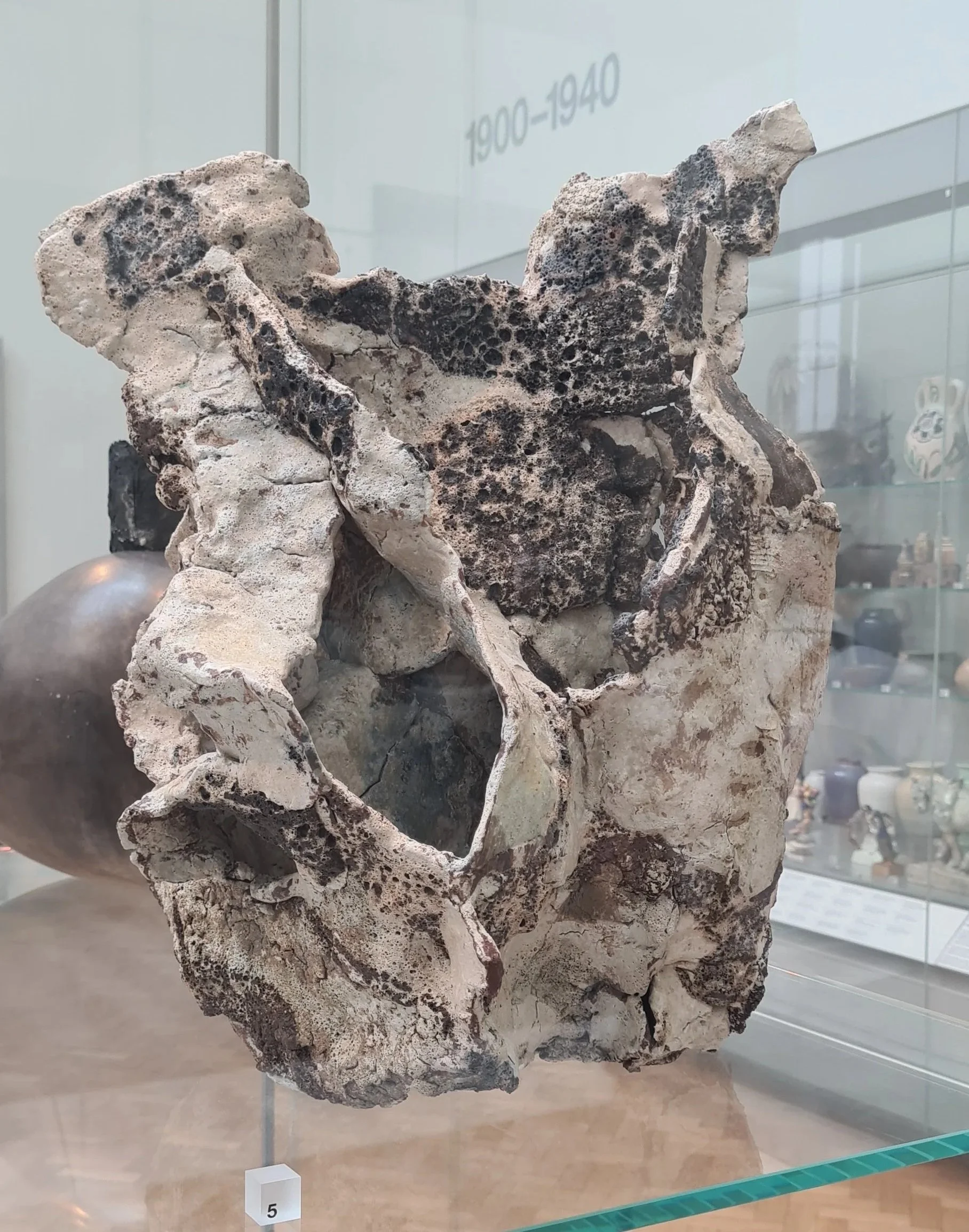
Ewen Henderson, 1988
‘Skull Mountain’ - Influenced by a pile of skulls in Cambodia. Uses landscape inclusions that burn away during firing.
Viewing the Ceramic floor in the V&A was incredibly insightful into the history of ceramics. It displayed the earliest forms of ceramics, to modern contemporary of today. It was surreal viewing the works of ‘legendary’ ceramic artists such as Peter Voulkos, Alison Britton, Ewen Henderson, Gordon Baldwin and Bernard Leach.
Witnessing the journey of ceramics from all over the world, allowed me to create a mental tangent of how ceramic’s have become what they are today. Being able to create pieces with no form or function is somewhat a new practice within the field. Formerly, perhaps non-functional pieces may have been statues or relics of worshipped people and gods. In today’s contemporary art scene (1970’s onwards) - we see a huge desire to explore the potential of clay when it’s not performing a functional use.
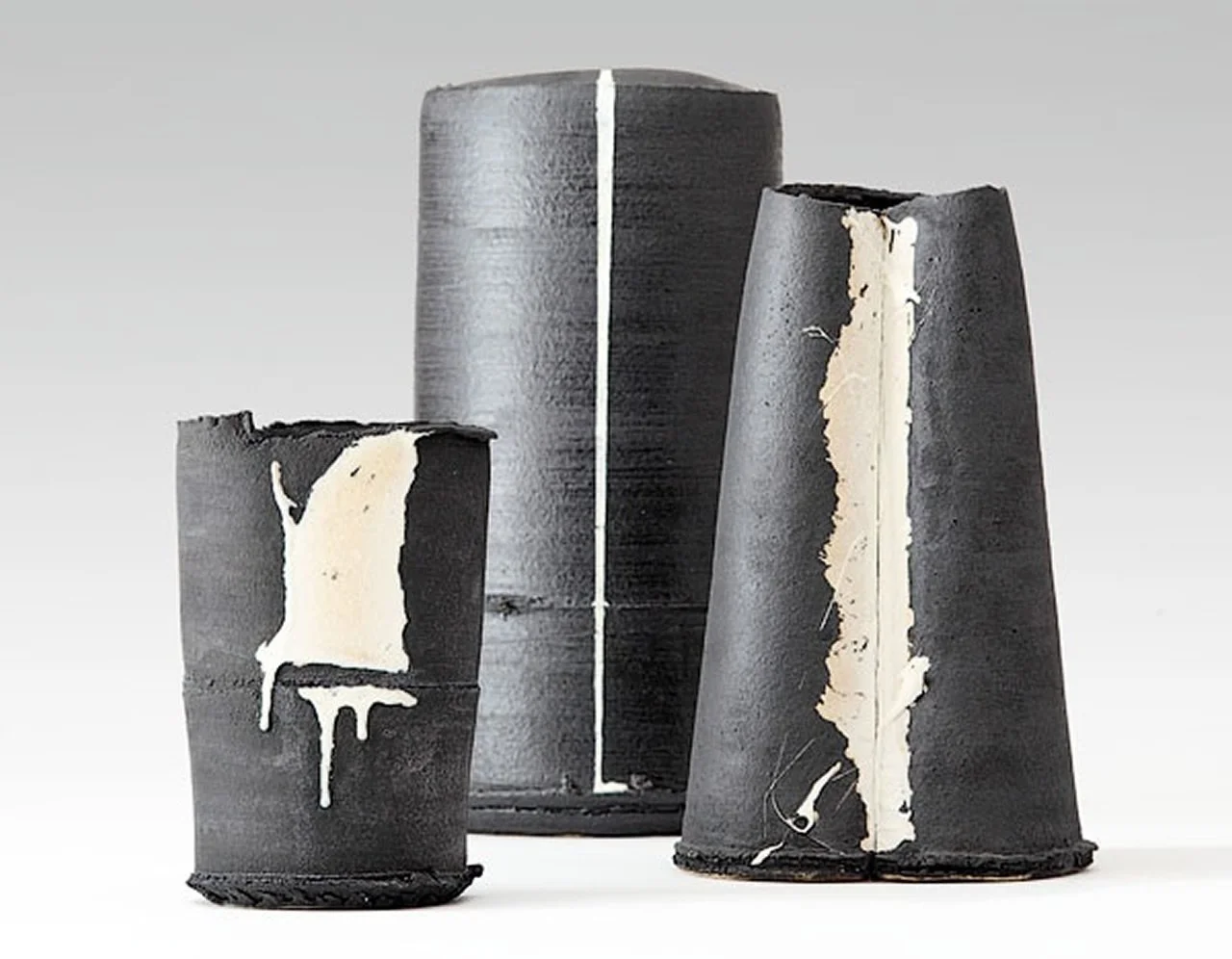
Dan Kelly- Stoneware, with manganese oxide, white slip and latex resist. Dan was probably my favourite artist at the show. He was wonderful to talk to and really gave us an insight into his work. I also like the simplicity of his work, yet the visual impact they hold.
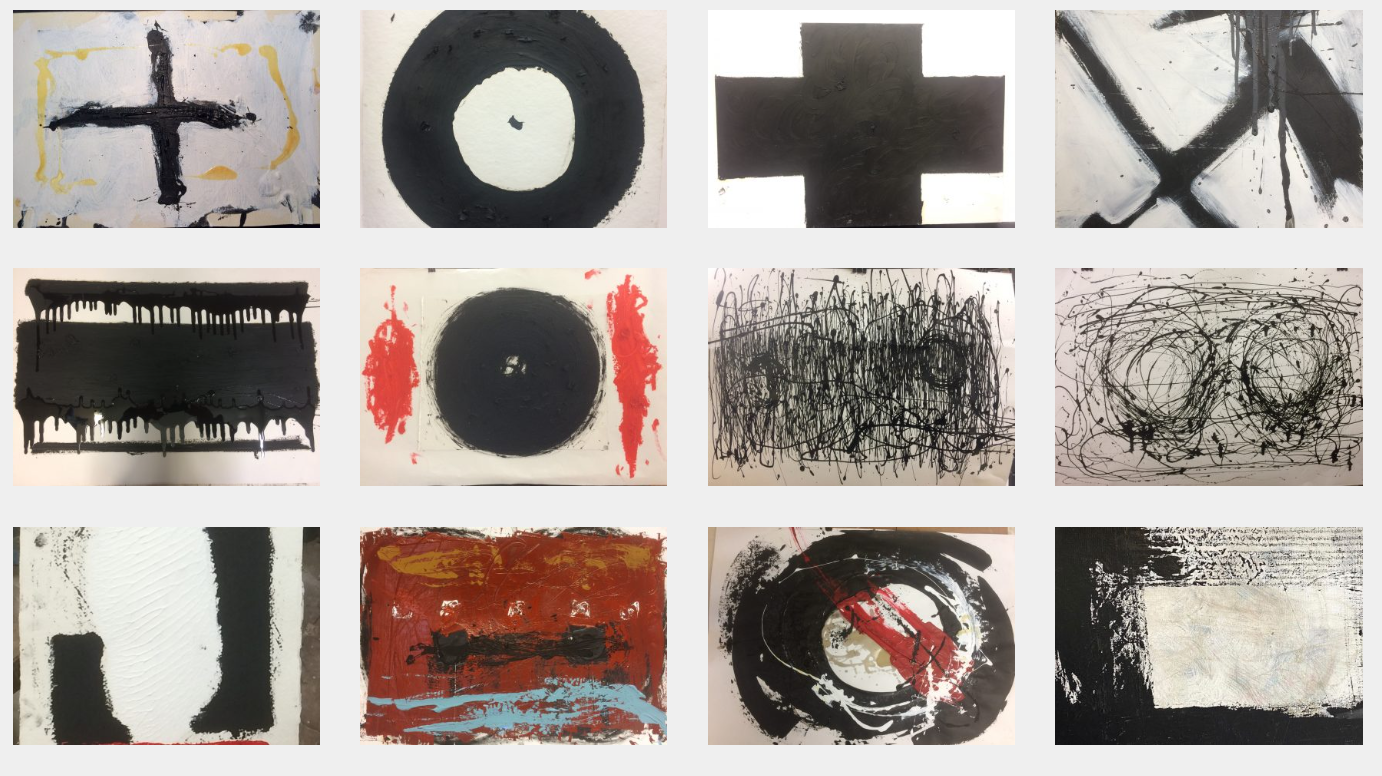
Dan Kelly’s sketchbook work- Found on his website. I found it fascinating seeing how he sketches and then how he translates that into clay. A lot of gestural and energy driven mark making.
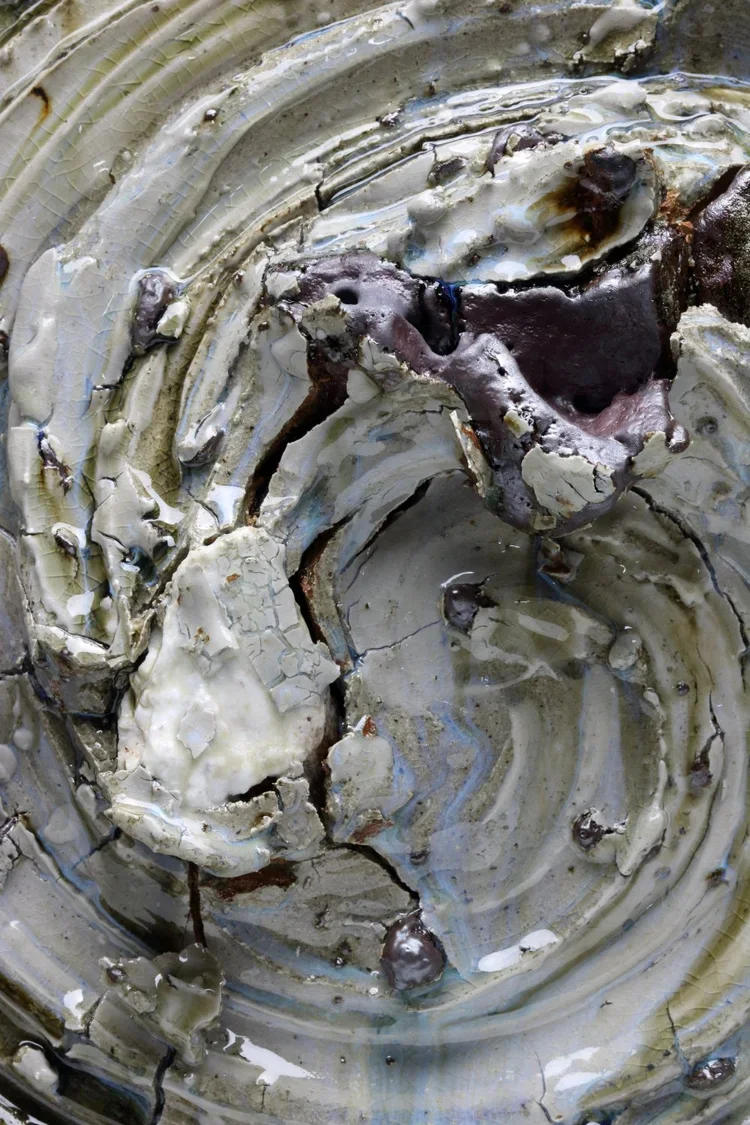
Deiniol Williams- His inclusions within the clay are the initial eye-catcher and they draw you in to explore the inner details of the work. The cracked and dripping glazes and the thrown shape where you can see the process of creation.
He also wood fires which exploits the melting point of the inclusions and glazes, creating a visually dynamic response to place and landscape. These inclusions pictured here, were found in West Yorkshire.
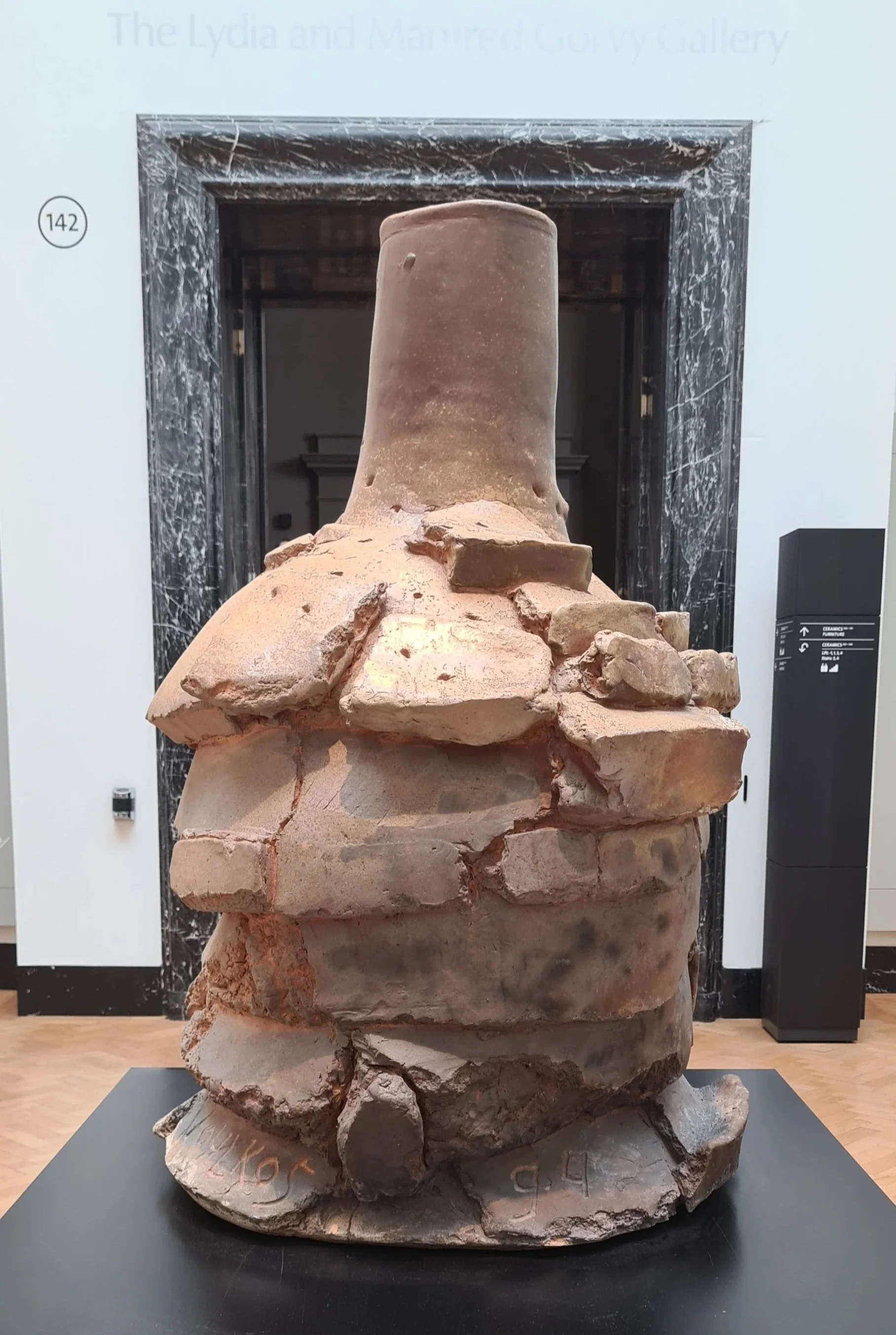
Peter Voulkos, 1994
Wood-fired stoneware @ the V&A Museum
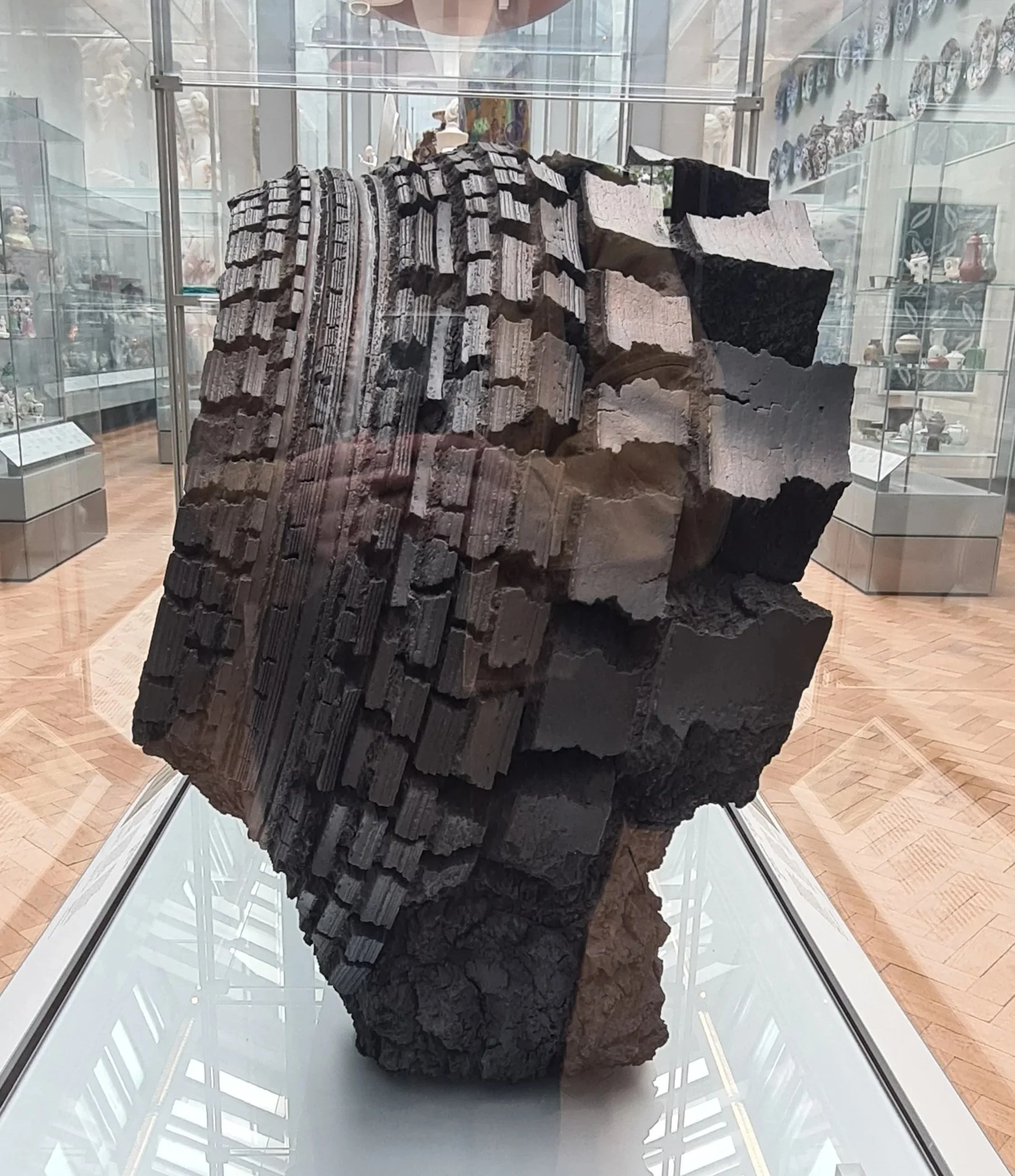
Akiyama Yo, 1992
‘Geological Age V’ - Made in Japan, Kyoto, he explores the primordial nature of clay and shows the forces of nature through the ripped and torn appearance.
Carbon-impregnated earthenware, partially polished.