

First Time Glazing
On the run up to our Stand & Deliver project we began learning about glazing. For me, I found this to be incredibly interesting but also incredibly overwhelming. I was never really switched on when it came to science and this involves a lot of science.
However, I was surprised how quick I became to understand some of the glazing processes and most of this was learnt through doing.
We began applying a variety of oxide combinations to our tiles we made in the first week of university.
These included-
Copper Oxide
Iron Red Oxide
Copper Carb
Manganese Oxide
Chromium Oxide
Iron Black Oxide
Iron Yellow Oxide
Cobalt Carb
We did three sets of test tiles- One would get fired at Earthenware temperatures ( 1060’c - 1080’c), then Stoneware Oxide (1260’c-1280’c) and finally Stoneware Reduction (1300’c)
We also applied transparent white glaze and white glaze to either side of each test tile so we could see the difference once fired.
The results were really beneficial and it was interesting to see the different outcomes depending on the different firings. I used these test tiles to decide how to glaze my Stand & Deliver pieces as this was my only experience of glazing.
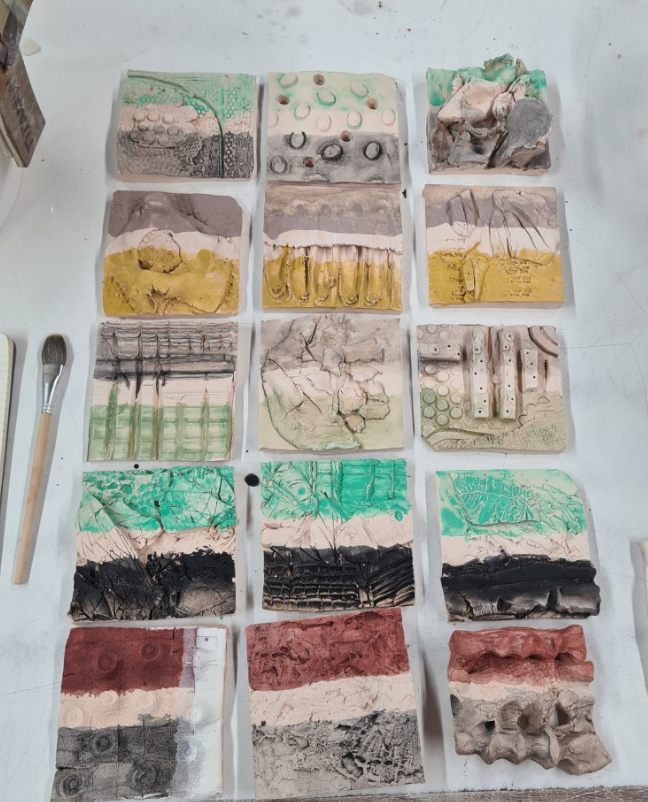
After applying the oxide washes
Futhermore- I decided to challenge myself and make my own volcanic glaze. I wanted this glaze to go on my moss pots I created for the Stand & Deliver project.
This was my recipe (Baring in mind, it did NOT come out volcanic and bubbly)
Nepheline Syenite 60g
Barium Carbonate 18g
China Clay 11g
Flint 10g
Rutile 2g
Silicon Carbide 2g
THEN- I spilt the mixture and added-
0.3g Chromium Oxide to one pot
1g Copper Oxide to the other pot
The results were not as expected but I got some interesting outcomes and still used this glaze on my moss pots.
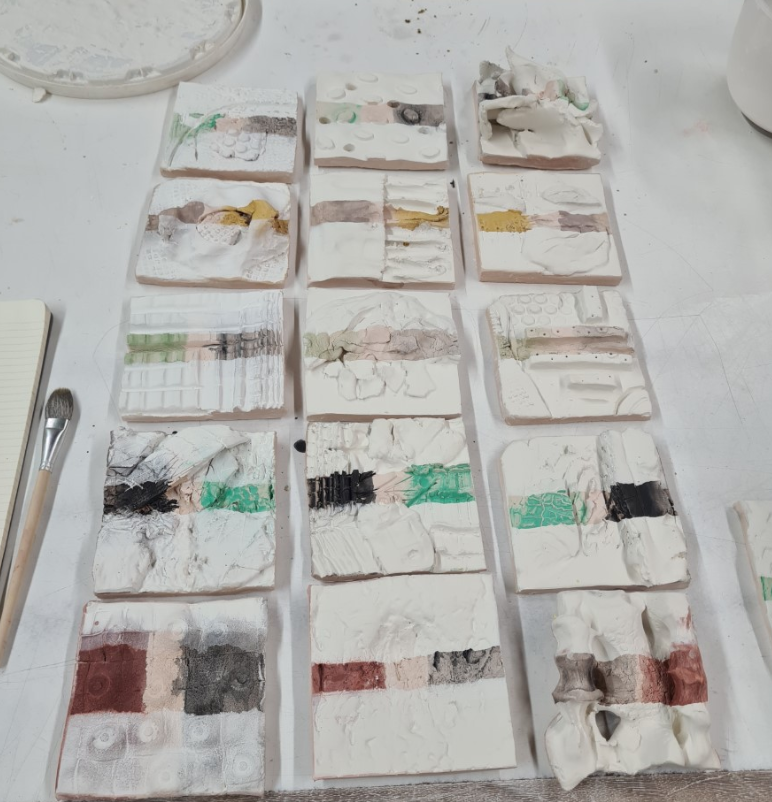
With the applied Transparent Glaze and White Glaze
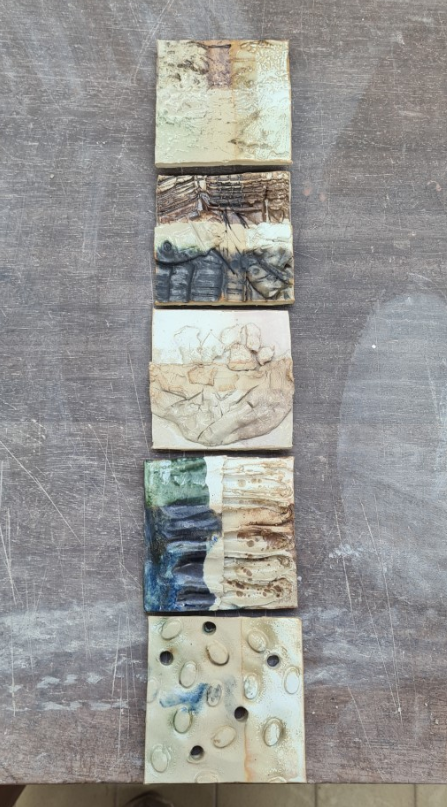
Stoneware Oxide results
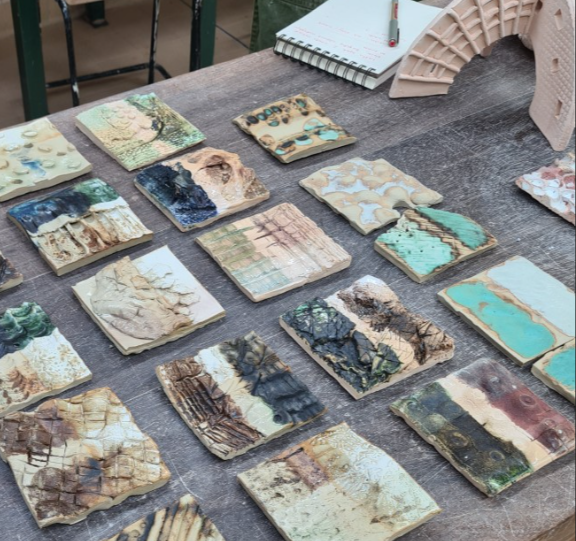
1st row- Stoneware Oxide
2nd Row- Earthenware
3rd Row- Volcanic Glaze
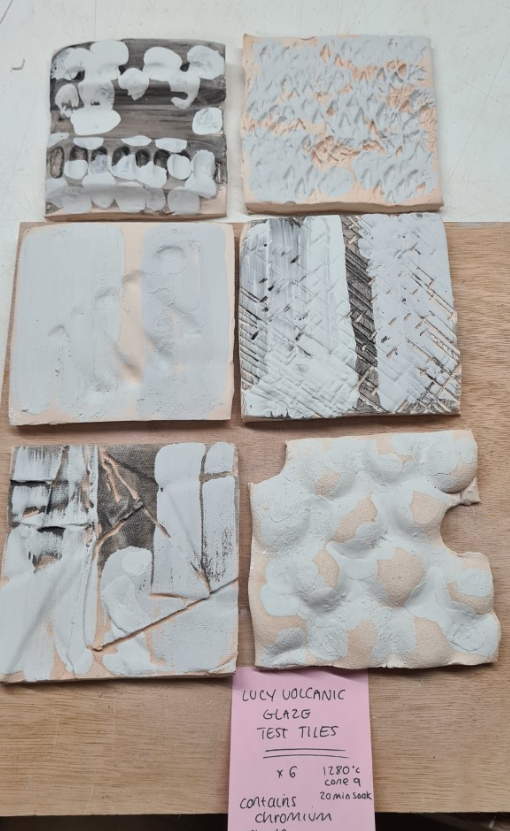
My volcanic glaze test tiles before being fired
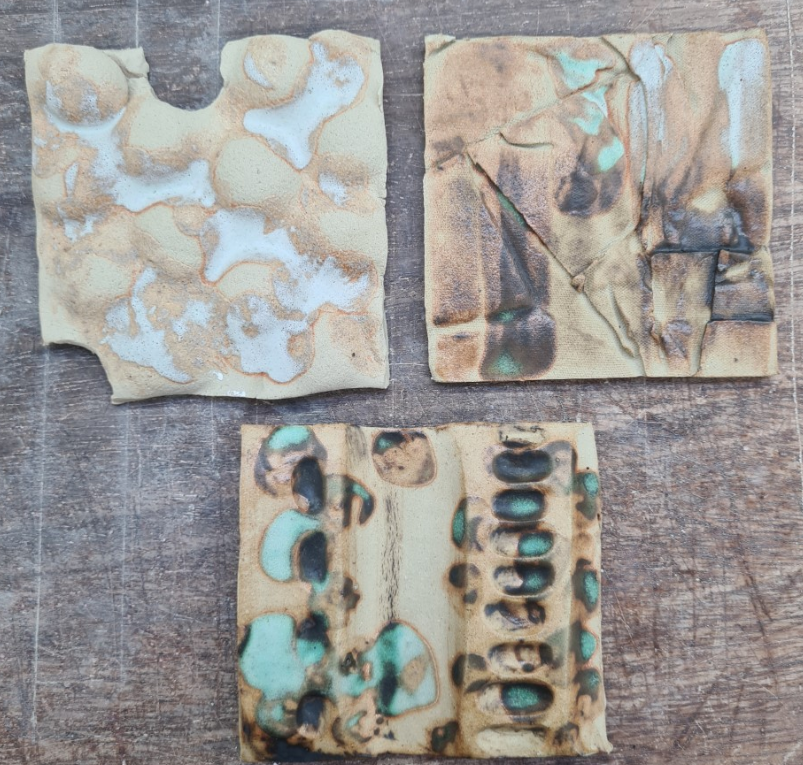
First three after firing- some nice results but not as expected!
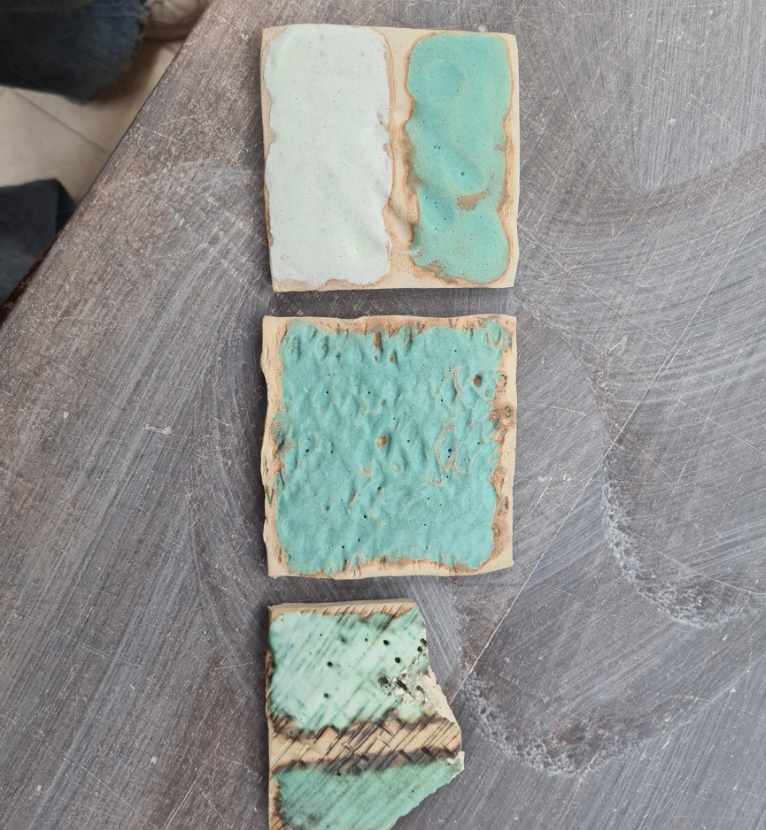
I re-added some glaze onto these extremely thick and it was a different result but still not as expected