

New Clay- Craft Crank
I purchased four bags of the Original Craft Crank clay from Potclays as I was ready to find a clay that matched my making preferences. This clay in particular is very groggy and retains it’s material characteristics when creating forms. It’s also a very Iron rich clay, which allows me to work with more earthy tones that compliment this clay body.
My making style previously consisted of tearing the clay, ripping it, slicing it, exploiting the qualities to it’s maximum potential. Through using the Craft Crank, I’m able to continue these making styles yet the results are heightened due to the nature of the clay. I’m also interested to potentially explore the white craft crank clay, as I’m using slip to create a blank canvas. By using already white clay, it eliminates the some of the slip process.
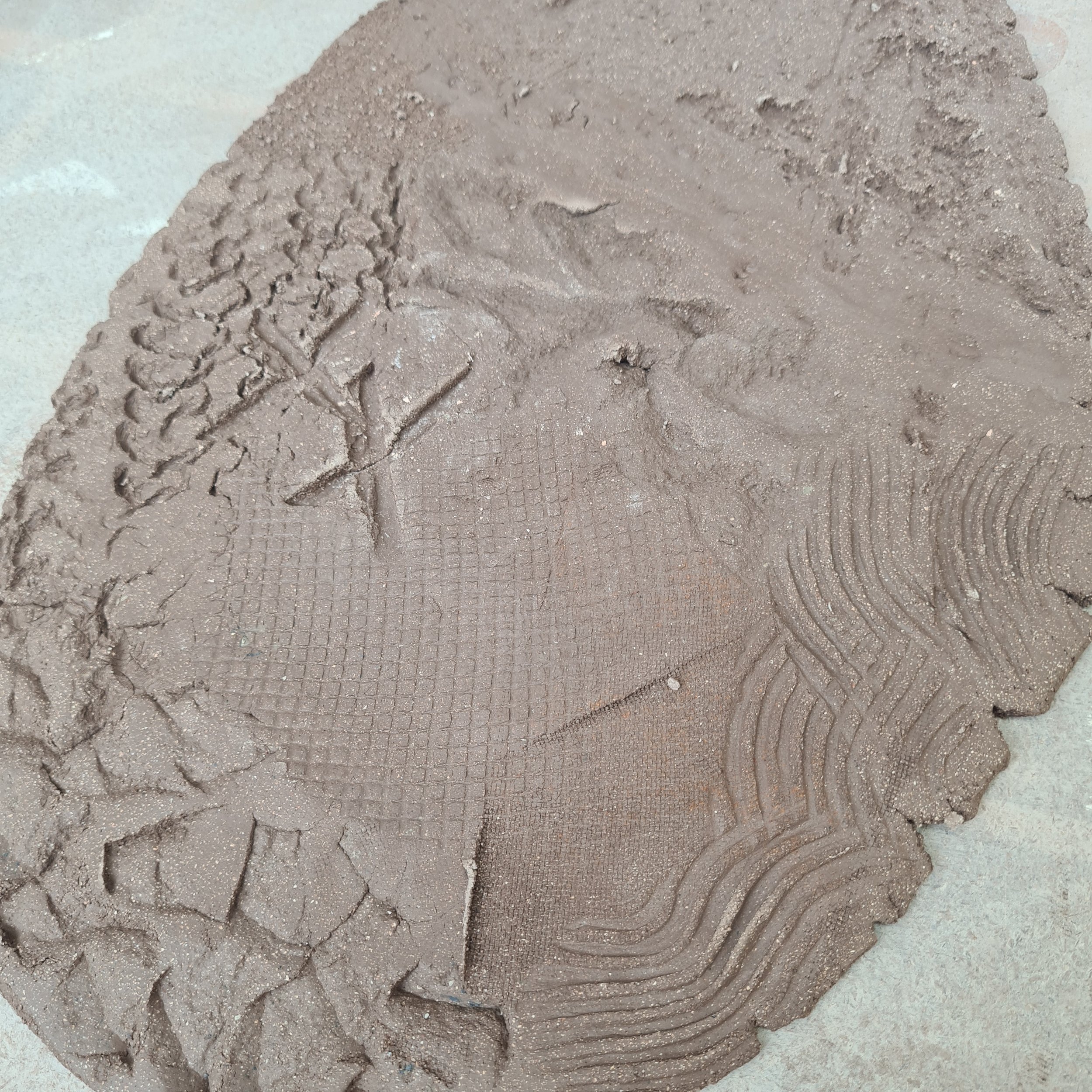
Pressing in textures and marks to create a textured slab for making. I find working with this clay at the leather hard stage is tricky, I prefer using it in it’s wet state so it doesn’t crumble so easily.
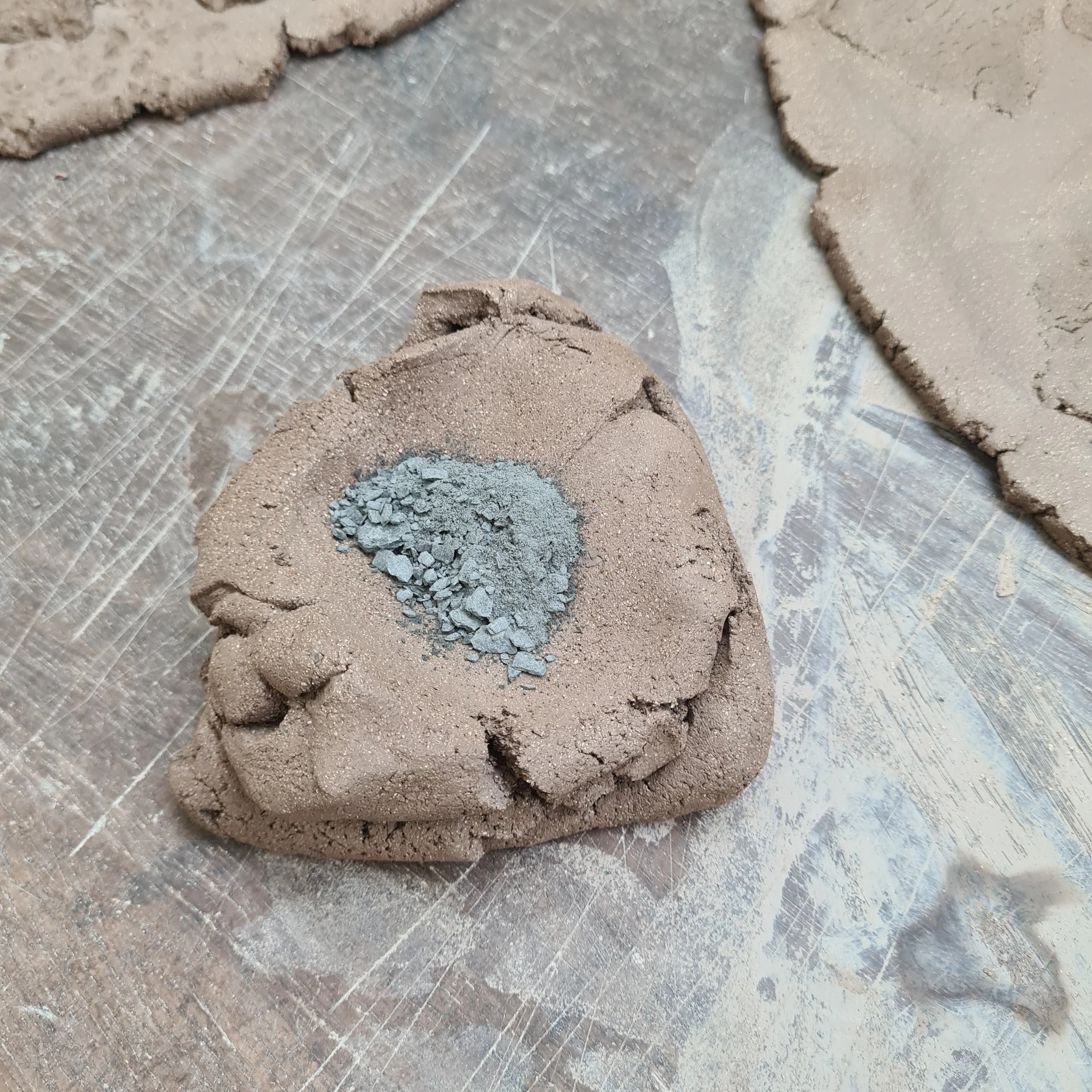
I also added in some slate ash into the clay- As this clay works well under a reduction firing, the flecks of slate will bubble through and hopefully create a subtle, yet reactive result, reflecting the process of making and firing.
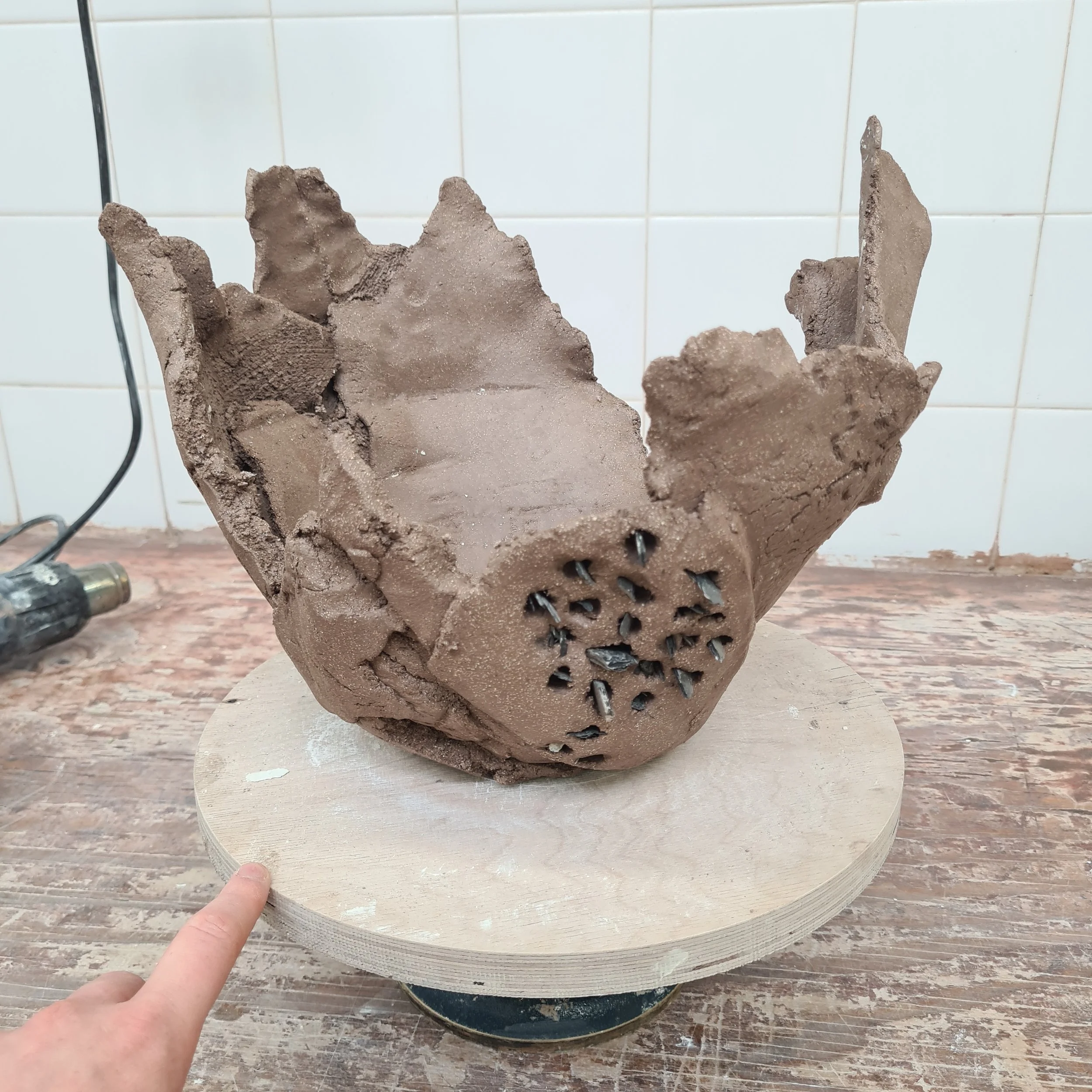
This was the form flipped- I don’t think I would of been able to achieve this visual quality with the grey stoneware clay. The clay held it’s textured imprints and the grog content definitely heightens the materiality of the piece. I wanted it to look like I’ve just loosely pressed slabs together, almost effortless.
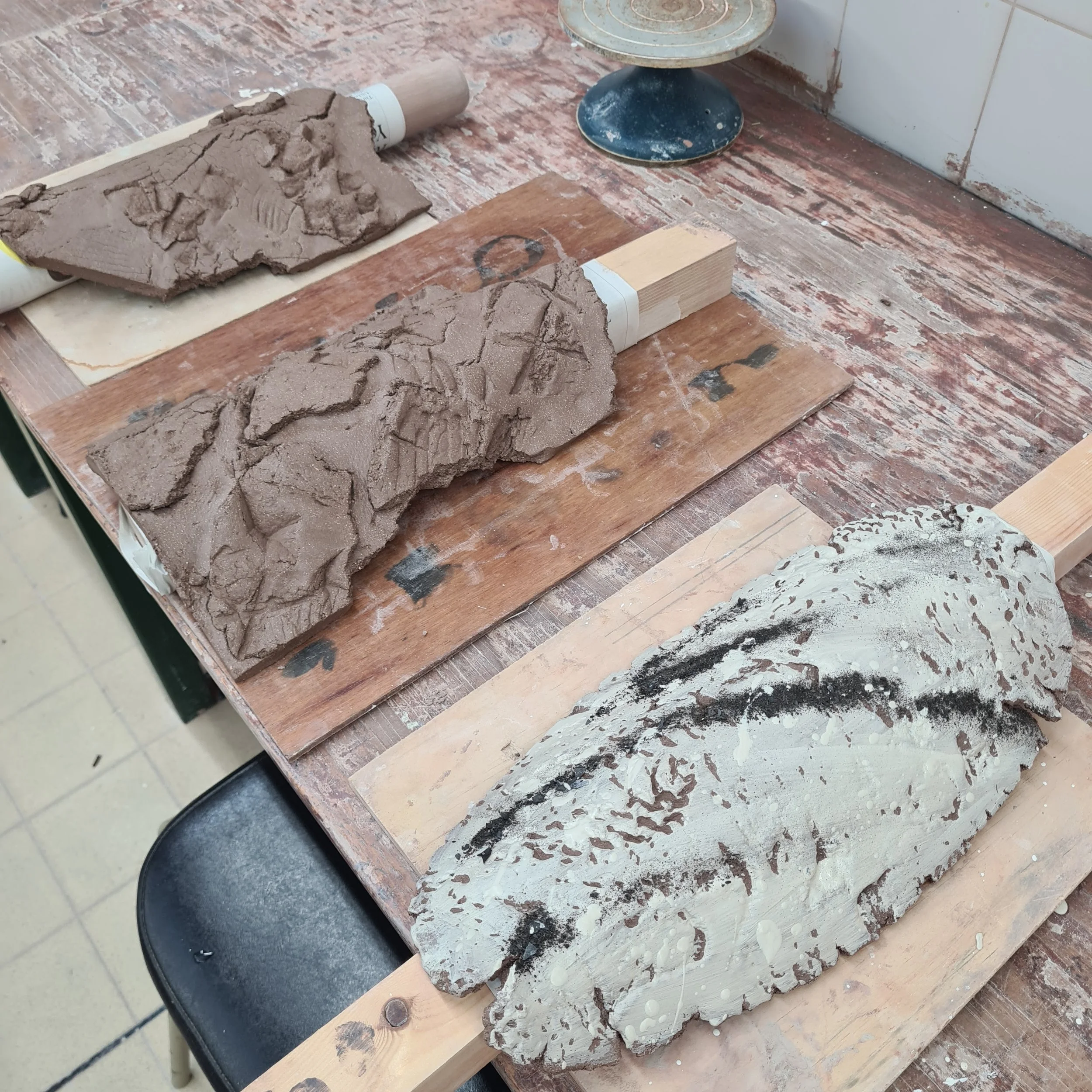
I then created my own formers using wood and newspaper. I draped over wet textured slabs and let them go leather hard overnight. I applied chunky, thick textured pieces on the slabs, as I wanted a dramatic surface. I also applied porcelain slip and more slate ash on the last slab as I wanted to break this up and use it in a fragmented state.
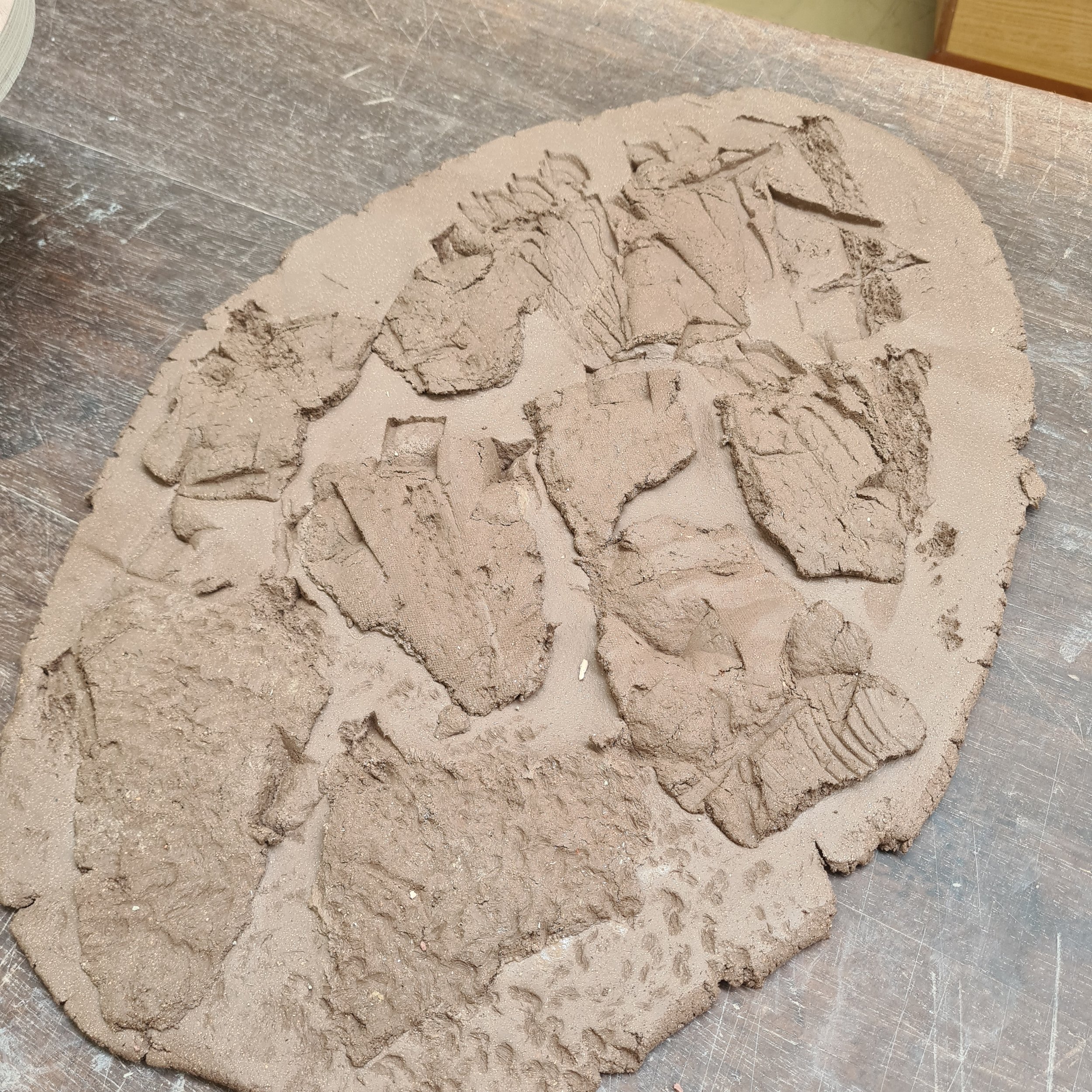
Ripping textured slabs and pushing them into a new slab to then put through the slab roller.
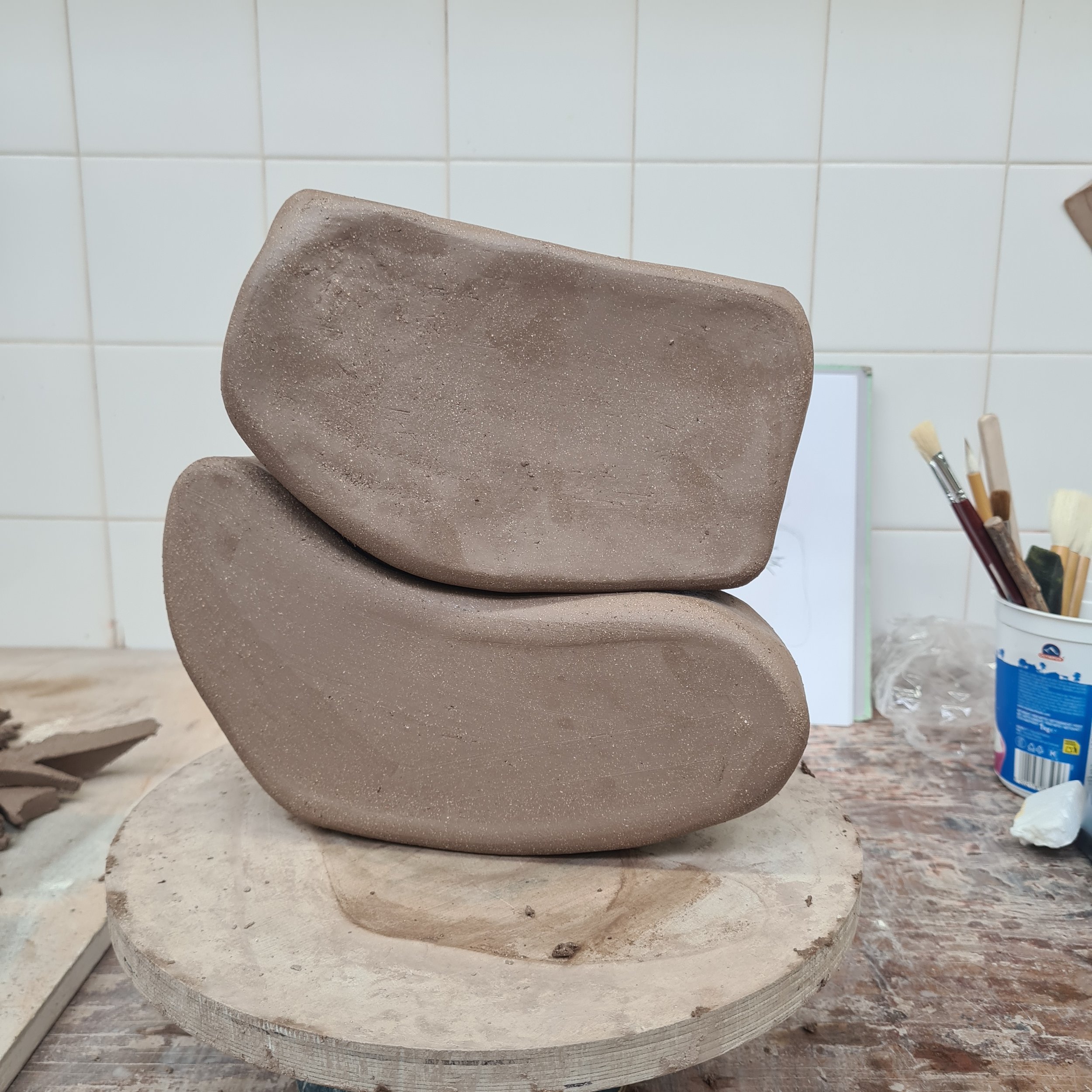
Smoothing out
It also has the ability to be smoothed out to create more polished forms. In this piece, I was exploring the clays potential. It was satisfying to smooth out whilst still revealing the flecks of grog.
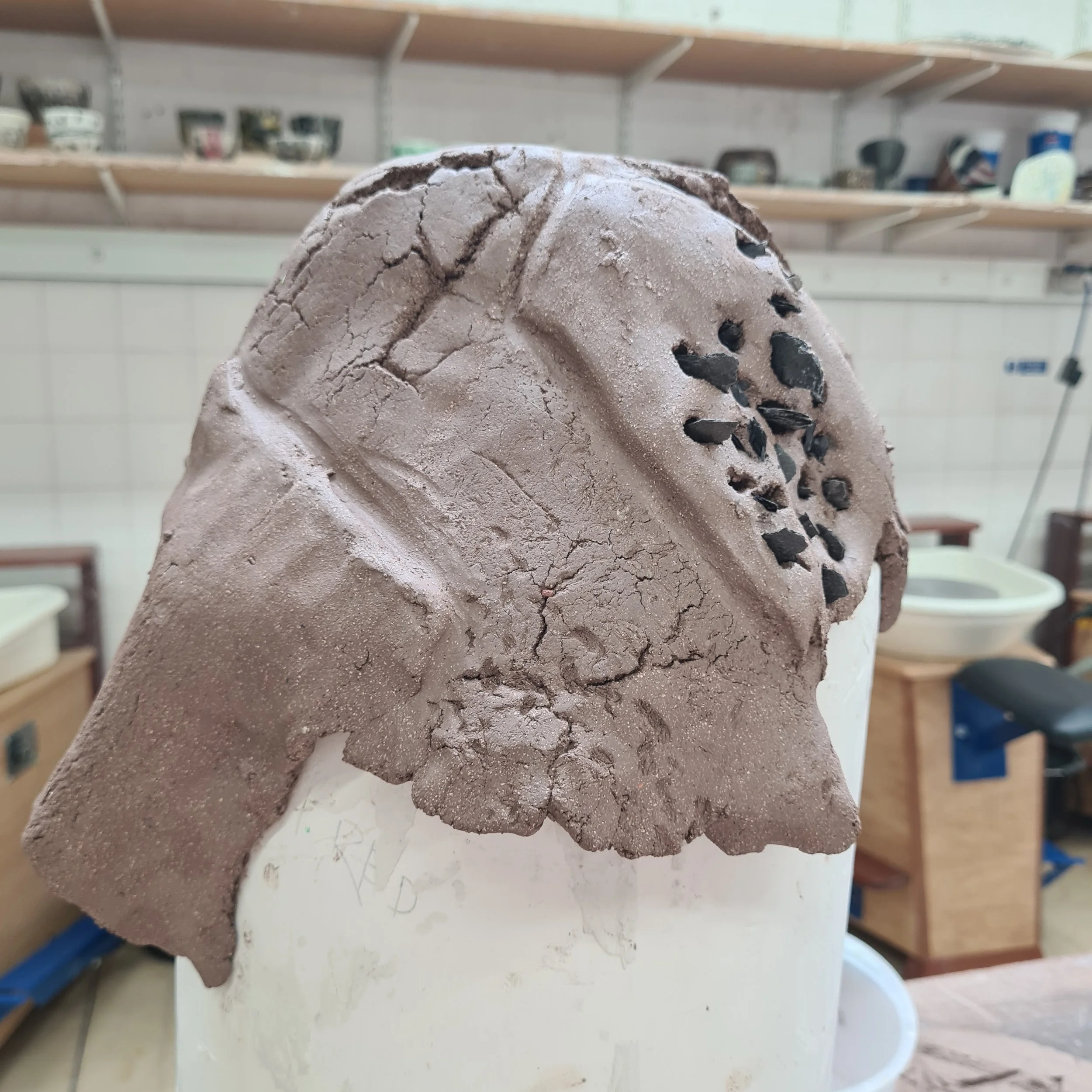
I also used a plaster former to create an almost ‘anti-gravity’ form. It was useful when piecing together the textured slab parts and allowed me to create a well built structure. Using the former, also allowed me to press in slate without comprising on the shape of the form. When dry, I flipped the clay form round and pinched out the ends
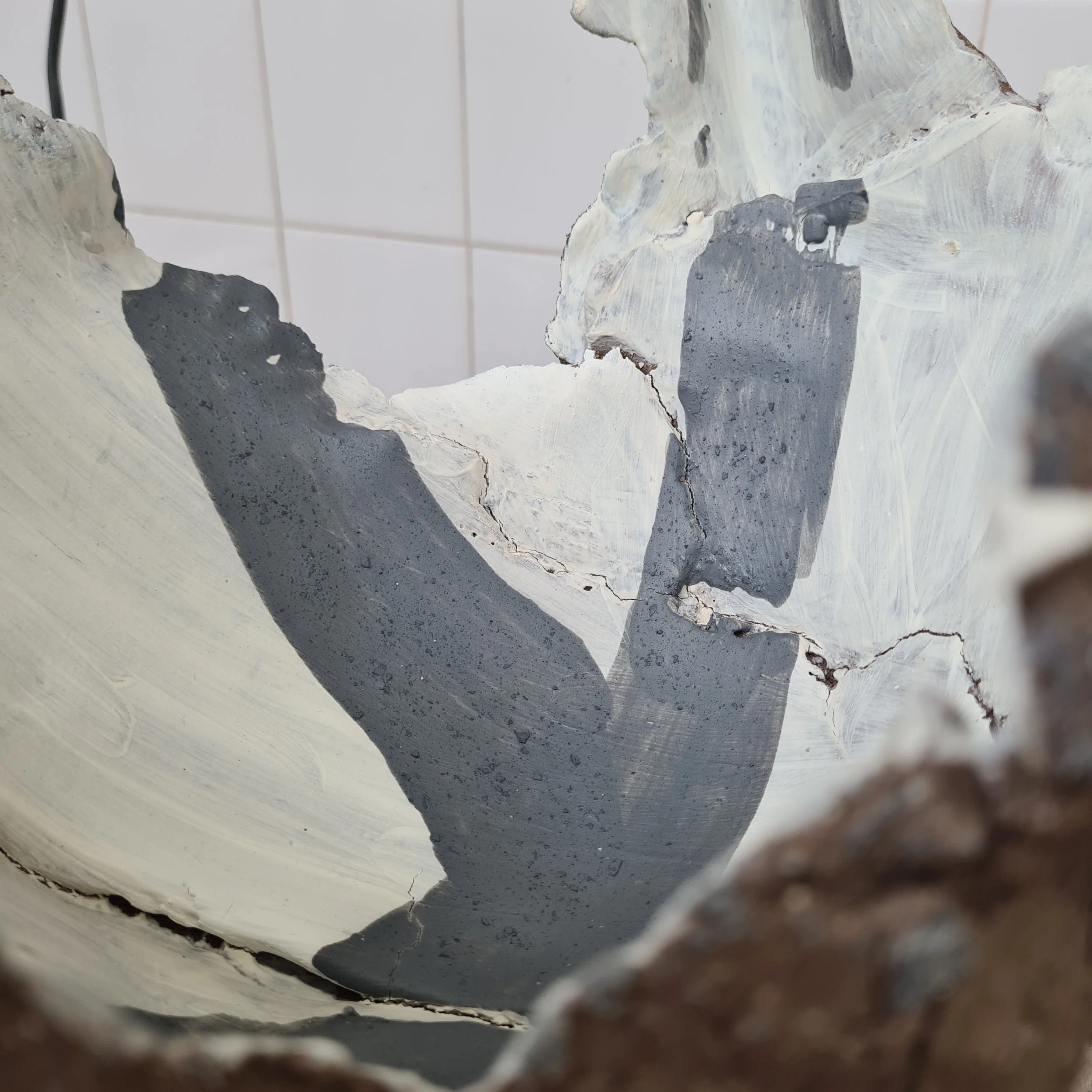
I then covered the inside with porcelain slip, then brushed black slip across with slate ash combined into the slip. This will create a flecked appearance in the reduction kiln and will work cohesively with the impressed slate pieces on the outside of the form.
Reflecting upon the change of clay-
Deciding to change clay, shifted the direction of my practice. When using grey stoneware, there’s a temptation to create a polished, smooth surface on forms. However, the craft crank encourages you to pursue the materiality of the clay and use it to your advantage. It’s taken my practice into a promising developmental stage, as it’s allowed me enhance processes I was already doing. The ripping, tearing and texturing of slabs is so much more dramatic and visually revealing. It also opens up potential for more material relationships to form, such as the application of oxides. I now use an oxide wash as an automatic go-to for surface treatment. It picks up on all the fine rips and tears within the craft crank.
Overall, I’ll continue using the Craft Crank and only using the grey stoneware for some experimental purposes. I’d like to explore the white version of this craft crank clay as it provides a blank canvas for glaze application and slips. It would also be interesting to blend the clays together and create a marbled surface.
Check out my next blog post when I talk about the introduction of Nichrome wire and how I’ve used these textured slabs to create more forms using the Craft Crank clay.