

Introducing Nichrome Wire
Having used inclusions in the previous semester; I’ve been wanting to explore the use of Nichrome wire in my work. In comparison to slate inclusions, it provides a controlled outcome. It can direct the flow of a form by including a 3D, non ceramic element. It also enhances it’s sculptural identity, by positioning it in a non-functional, non-vessel realm. Through looking at my inspiration also, it brings in this element of ‘the everyday’. A man-made, very processed material, included in an earthy, iron rich toned clay. It creates a visual tension in the forms.
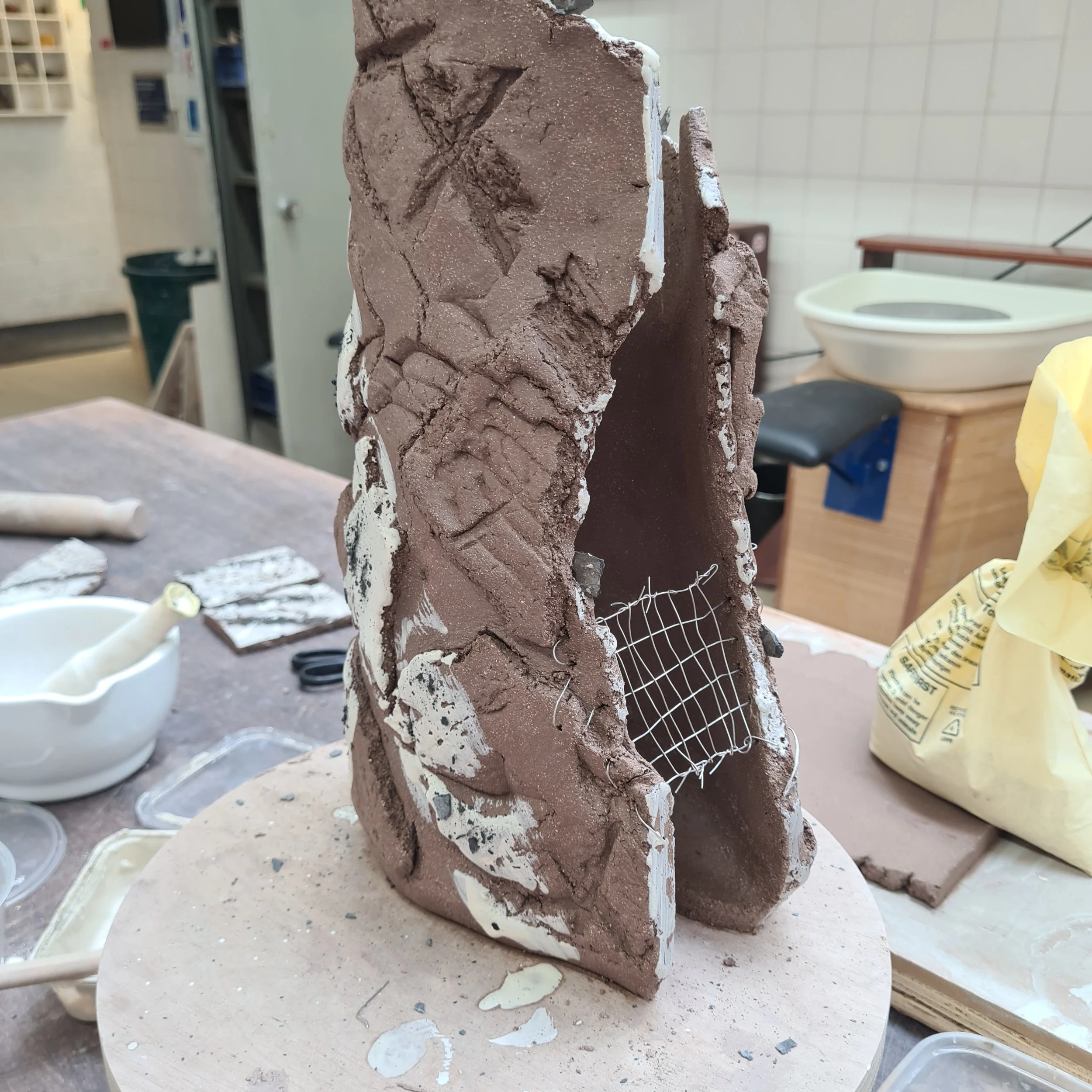
In this form, the Nichrome wire, provides a structural belonging. This form was created using two slabs, only connected once at the back, even the base isn’t connected. Therefore, the wire gives the illusion of providing a sense of structural integrity. I wove the wire together and pushed it through the clay to secure it in place. It was fragile until bisque firing.
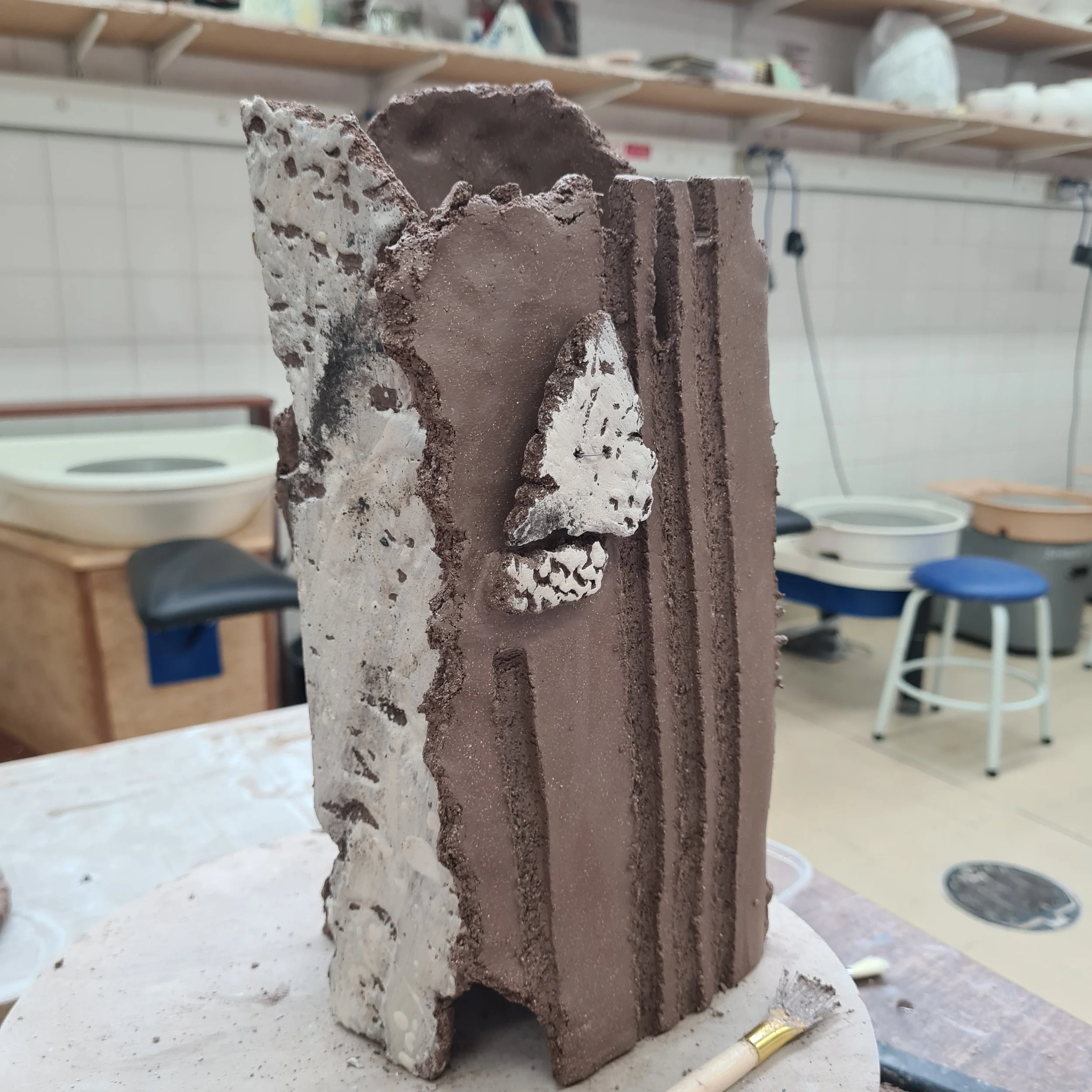
I tied on these pieces at the front and some round the other side of the form. It provided an alternative way to creating a form, adding in movement and fragility to the piece. I could do this with other types of clay, porcelain pieces or even vibrant earthenware fragments (attached after firing) to create a visual dynamic- Something I’m developing throughout my practice.
Reflecting upon the use of the Nichrome Wire-
I feel I have now established a new inclusion I can confidently use within my work. It can provide a structural use or visual purpose. Alongside the slate inclusions, it creates contrast yet also works in harmony.
Upon reflection, when I come to glaze these pieces, the loose pieces attached will most likely stick to the glazed surface and therefore, will loose it’s initial sense of movement. Therefore, in future, I need to consider the application of these fragments after firing. This could lead onto more potential, as stated above, I could use fragments from all areas of ceramics (Earthenware, porcelain), that could result in a variation of finishes.
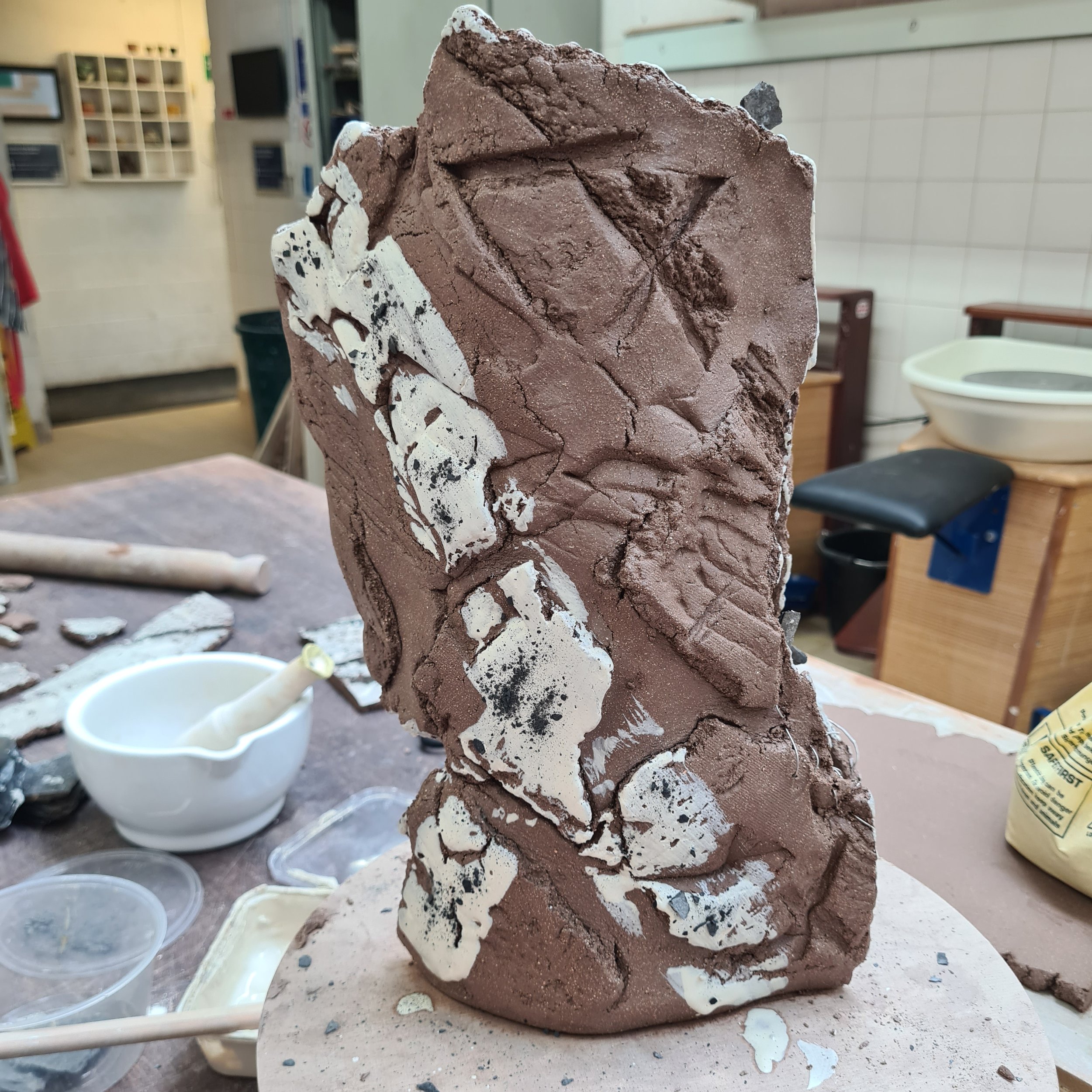
In conjunction to the Nichrome wire, I used a lot of slate in this piece. I threw slate ash at the porcelain slip when it was still wet and pushed larger pieces into the form. When fired, this will present a balance between the two inclusions. One controlled and considered, the other reacting to the firing conditions.
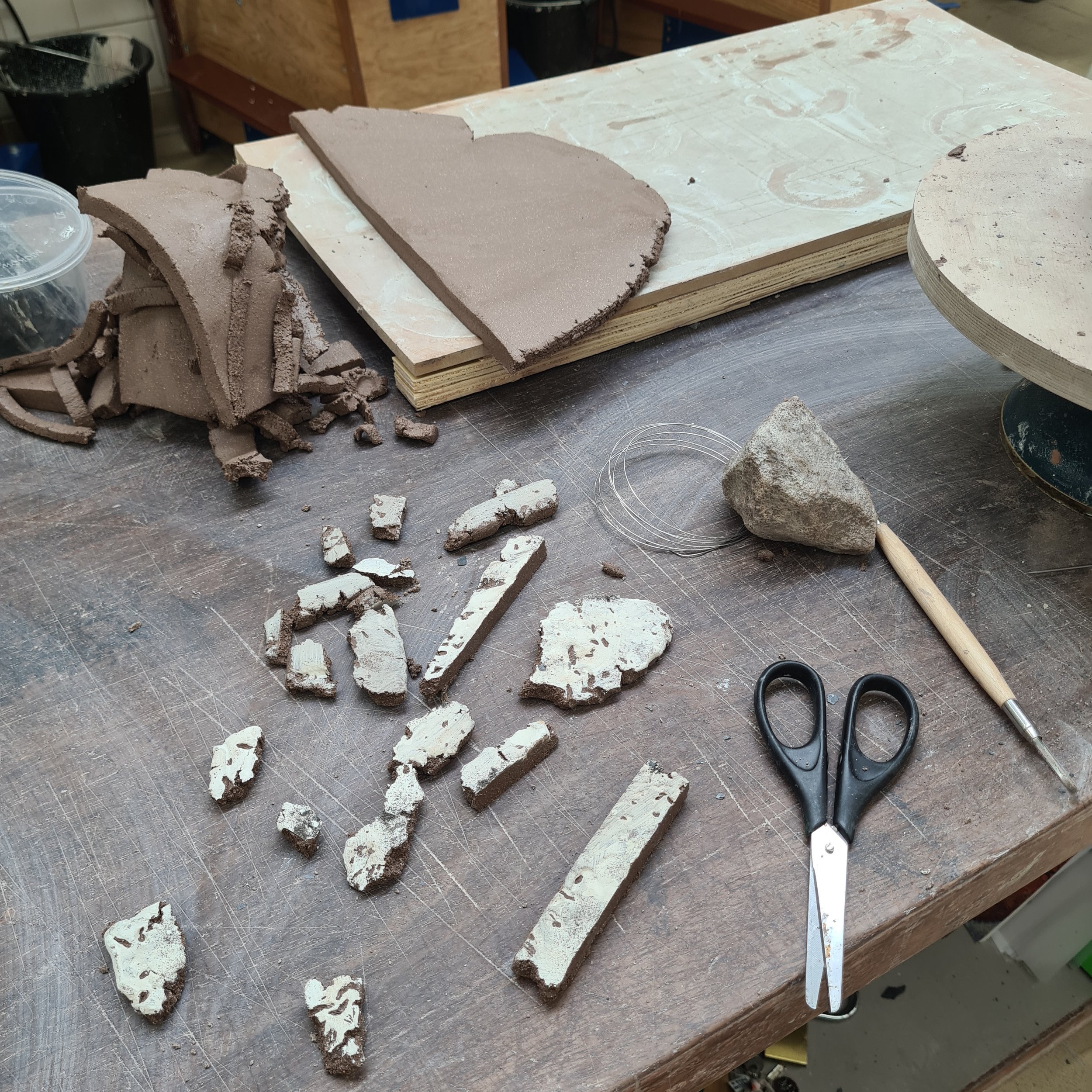
In the next piece, I wanted to attach some porcelain slip and slate ash fragments onto a form with the nichrome wire. This was inspired by Cabby Luxford at Ceramic Wales, where they had tied on ceramic fragments using leather after firing.
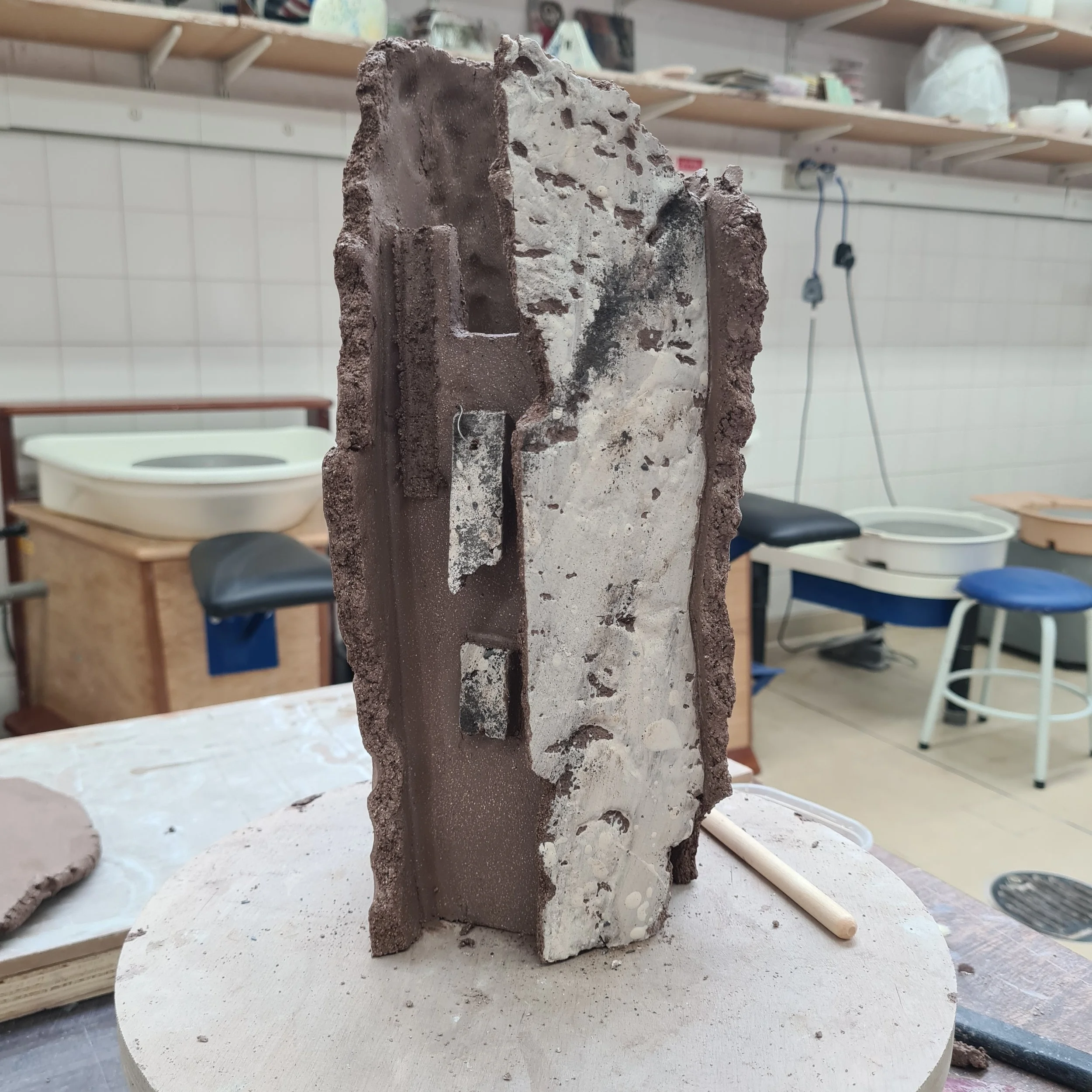
This is the other side of the form where I’ve attached more pre-prepared fragments.