

Sandy Lockwood-
Materiality and a Visual Vocabulary of Time- Patricia A Briggs
New Ceramics article from the March/April 2026 addition - Page 12
April-August Semester 2026
Lockwood’s ceramics “amplifies the voice of nature” as she sees the clay as a material agent to create a dialogue.
“She established a way of seeing nature as an active web of interwoven visual and tactile agents playing out complex narratives that unfold in time. From this, Lockwood has developed a practice of mind-fully participating in this unfolding visual and tactile dialogue through acts of stretching, pushing, pinching and throwing clay. “
“She developed a way of seeing through the eyes of an archaeologist” - Lockwood has a masters and PHD that focused on the visual effects of the aging and weathering of prehistoric artefacts and ruins.
Her series of work, ‘Unstan Bowls’ and ‘Subduction Bowls’ show this way of seeing nature and time.
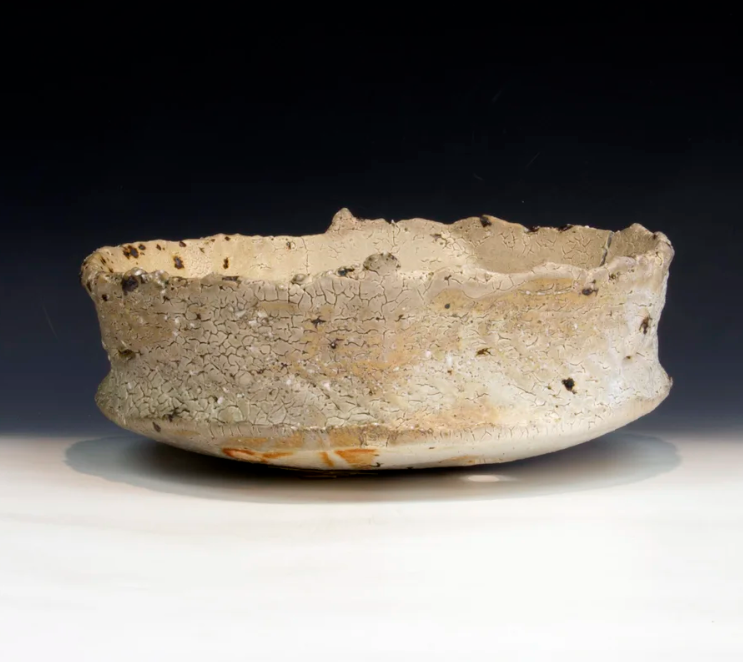
Unstan Bowls
Carries the characteristics of an artefact, displaying erosion and weathering of material over time.
I believe she wood-fires her work, which encourages the context behind her work.
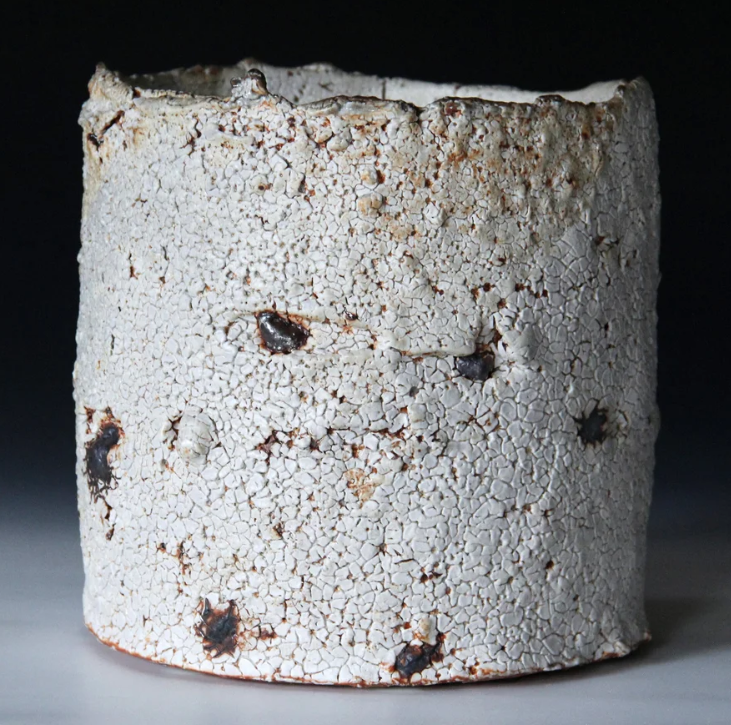
Subduction Bowls
Salt-glazed and wood-fired- Seems to be the appearance of inclusions in there too or could be a reaction from the salt-firing.
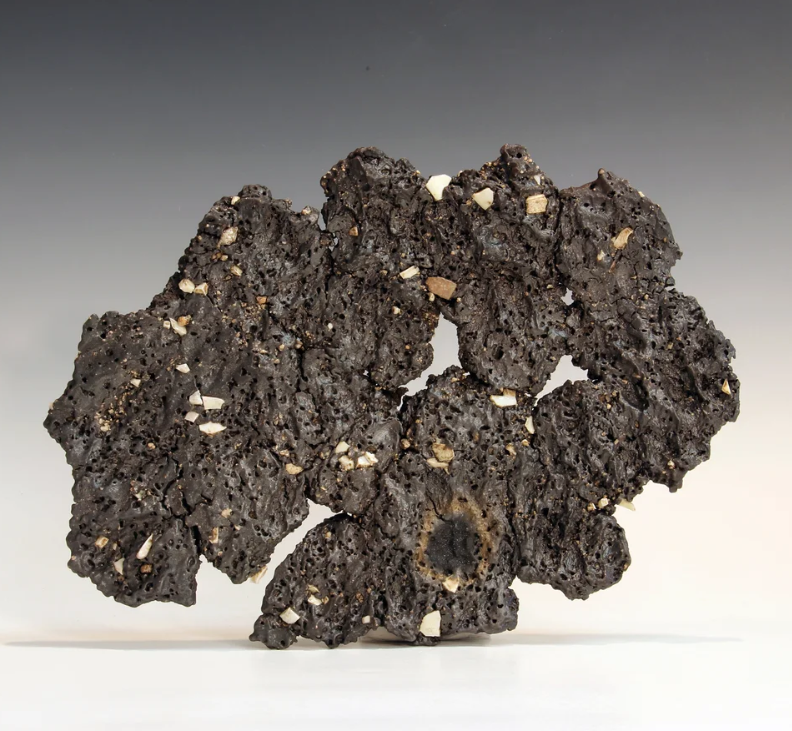
Meshwork Series
Lockwood is from Australia, so it’s suggested in the articles that the surface treatment is inspired from crystalline patterns or mudflats. - There’s a lot of salt lakes and dried up land in Australia that represent similar texture and surfaces to this series of work.
Wood-fired piece- she describes wood-fired kilns as weathering chambers.
“The black platter arises from a ball of clay rolled, flattened, textured and then stretched until it has something to say”
She also uses formers to press together pieces of clay. Then tears and rips to create develop the form.
Reflection- Sandy Lockwood’s work resonates with my practice, due to the handling and treatment of the clay. Also, the idea of ecological fragments or traces of time, are thoughts I’m connecting in my own practice. Her traces of time are contextualised through artefacts and erosion. Mine on the other hand, are explored through human interaction with landscape. For example, the quick spray of graffiti paint on a rock face, or an innocently tied piece of construction tape on a tree trunk. These traces of time are what interest me and how we interpret the landscape as we develop in a modern society. Lockwood’s work is purely organic and process driven, which I love! The surface treatments and textures are similar to what I inspire to create, however, the infliction of a non-organic or non-natural material applied to the surface creates a visual contrast exploring this element of time and nature in the present human era, oppose to archaeological finds or past relationships with land like in Lockwood’s practice.