

Mono-printing
Over the course of the semester, I’ve been testing out different methods to mono-printing. I've been creating my own ceramic ink’s by either following my intuition or following a loose recipe found online. My aim with mono-printing, is to create small, detailed areas within my work. I don’t want whole sculptures to be covered in mono-print, but only selected areas to create a contrast or reveal more information about the origin of the piece.
My interest developed when I saw Becca Brown’s work at Ceramic Art London 2026. Her delicate, fine line drawings hold sensitivity and draw you into the piece. I’d like to capture this same quality in areas of my work. As my work is very sculptural in comparison to Becca Brown’s delicate porcelain pots, I wanted to develop a way in which worked for me.
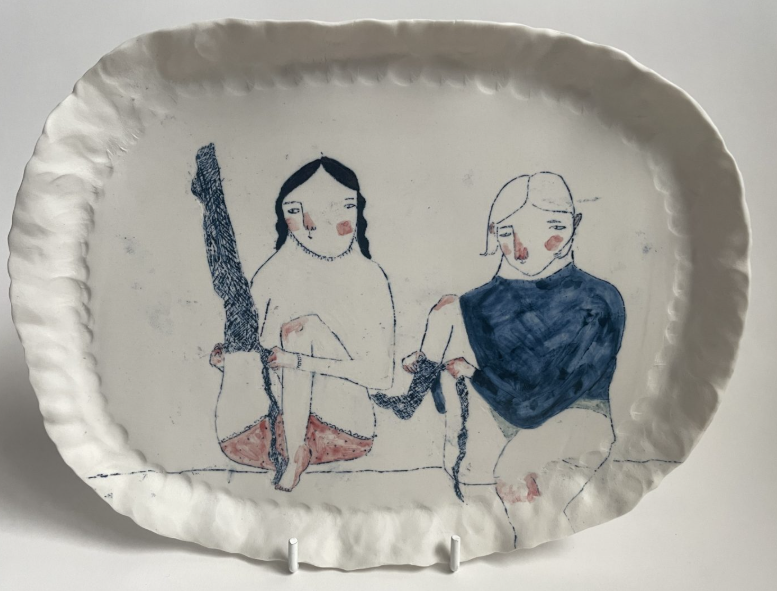
Becca Brown’s Mono-printing
I found out, through looking at her Instagram, that she uses cobalt oxide, linseed oil and China clay to create a ceramic ink. She then applies a layer to a piece of newspaper and uses a fine tool, like a needle to draw over the top, which presses that area onto the bisqueware. She then use’s, what looks like a thin underglaze, to fill in some areas to add colour.
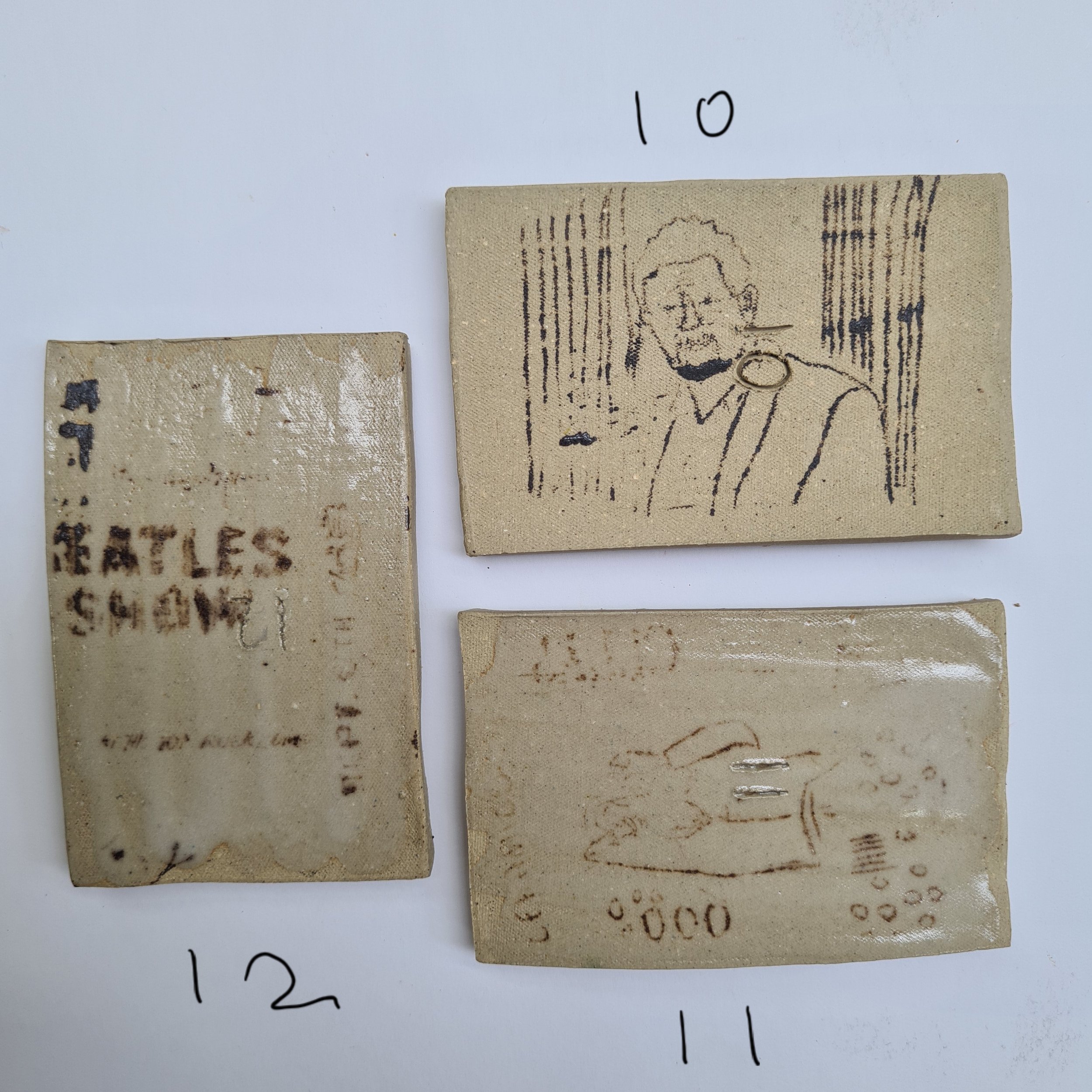
First Attempt at Mono-printing
This was my first attempt at mono-printing. I used some bisque test tiles and tried printing onto the back of them, as the front has textured parts.
Before getting my hands on Linseed oil for Becca Brown’s recipe, I created a recipe using Manganese oxide, China clay and water. This dried very quickly once applied to newspaper, and then I slightly dampened the tile surface, then laid the inky newsprint on top. I used a sharp, fine tool to start tracing what was on the newspaper.
I was actually quite pleased with the results. I didn’t expect it to really work, I imagined just a inky blob. I then applied some transparent glaze to two of them to see if the ink would burn away or bleed into the glaze. As you can see, it did burn away with the glaze applied over the top in areas. However, the unglazed one stayed exactly the same after firing.
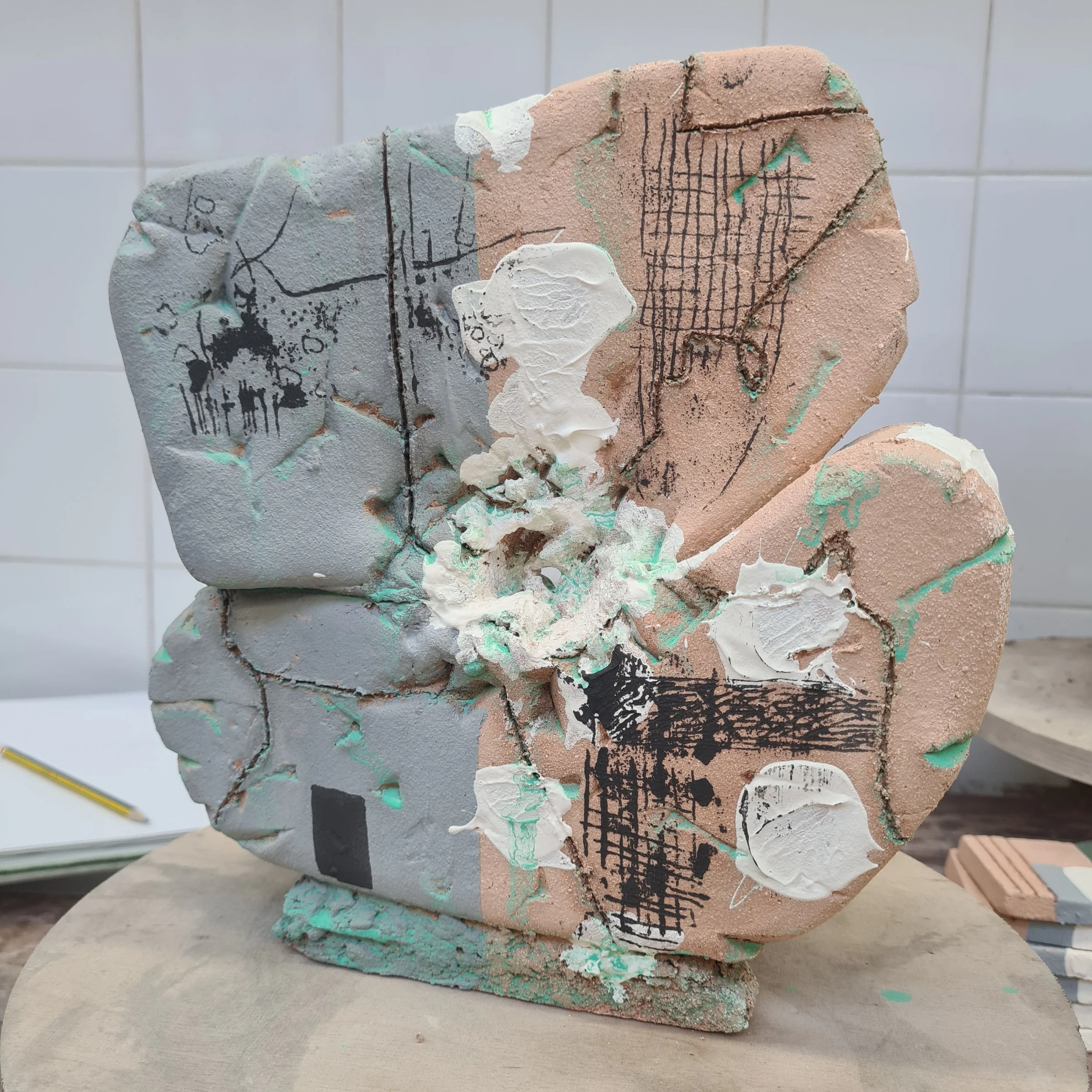
Mono-printing onto a 3D form
With the partial success from the test tiles, I used the same ink to then mono-print onto this sculpture. I did some gridded marks and lines drawings. This was inspired from some images from ‘The Everyday’ post on my Inspiration page.
I also used the ink directly onto the form, using a brush to create dark squares.
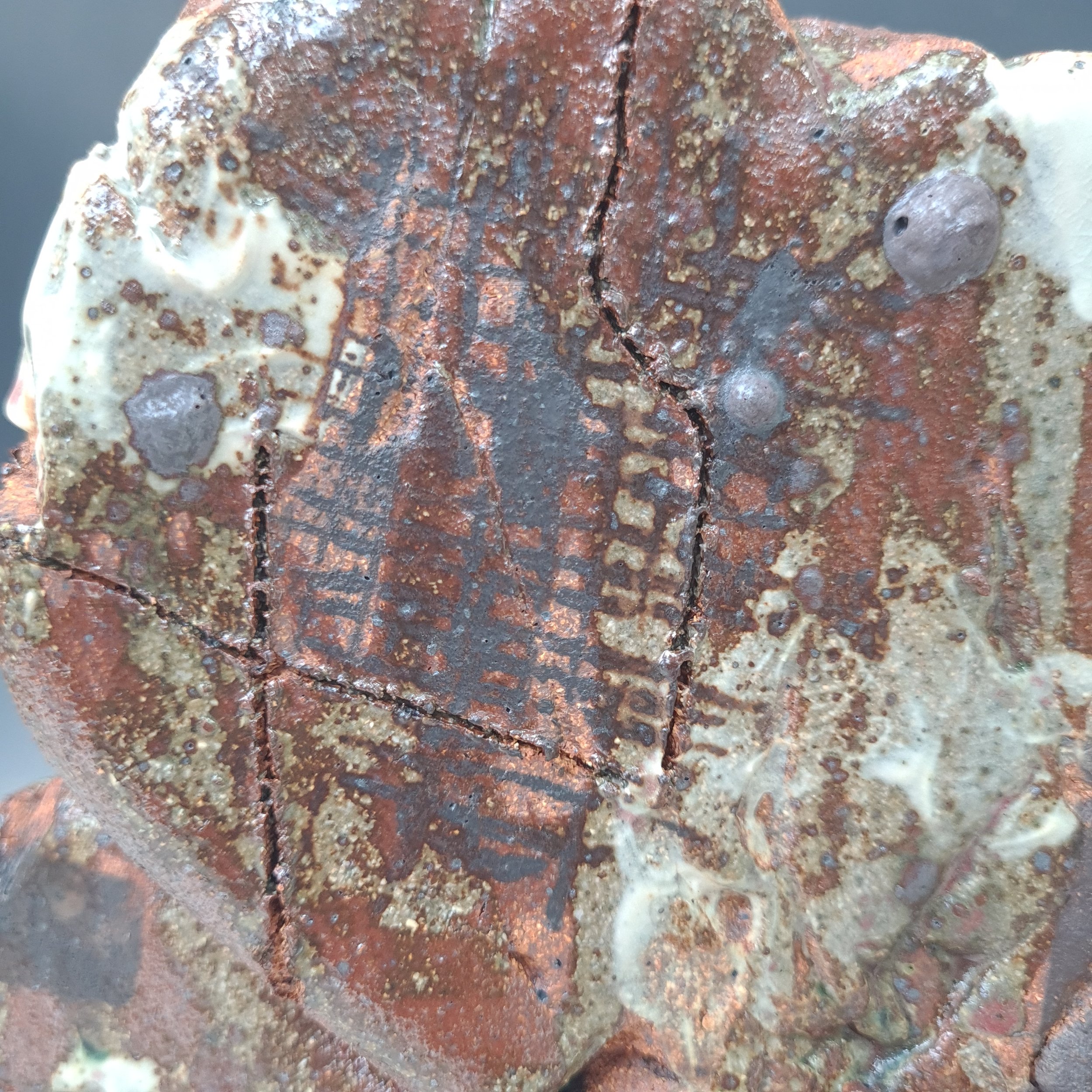
After firing
This was the result after it was fired at reduction. It kept it’s original clarity and gently hides behind the slate ash, oxides and glazes.
I liked how the mono-printing here turned out. It would be super effective on a white clay or white slipped background.
These images below are with an ink I made with the Linseed Oil. Due to having no recipe, only knowledge of ingredients, I tried my best to recreate the ink similar to what Becca Brown uses. I used Manganese oxide again, instead of cobalt carb. I then used China clay and linseed oil to mix the base paste. I started by adding 50g of China clay (Which in hindsight was WAY too much)- I should have began with maybe 10g. I then mixed in the linseed oil until it became a paint consistency (I used a whole bottle, around 100ml as I used too much China clay) I then added in manganese oxide, but again in hindsight, I needed to add more as the manganese isn’t strong enough.
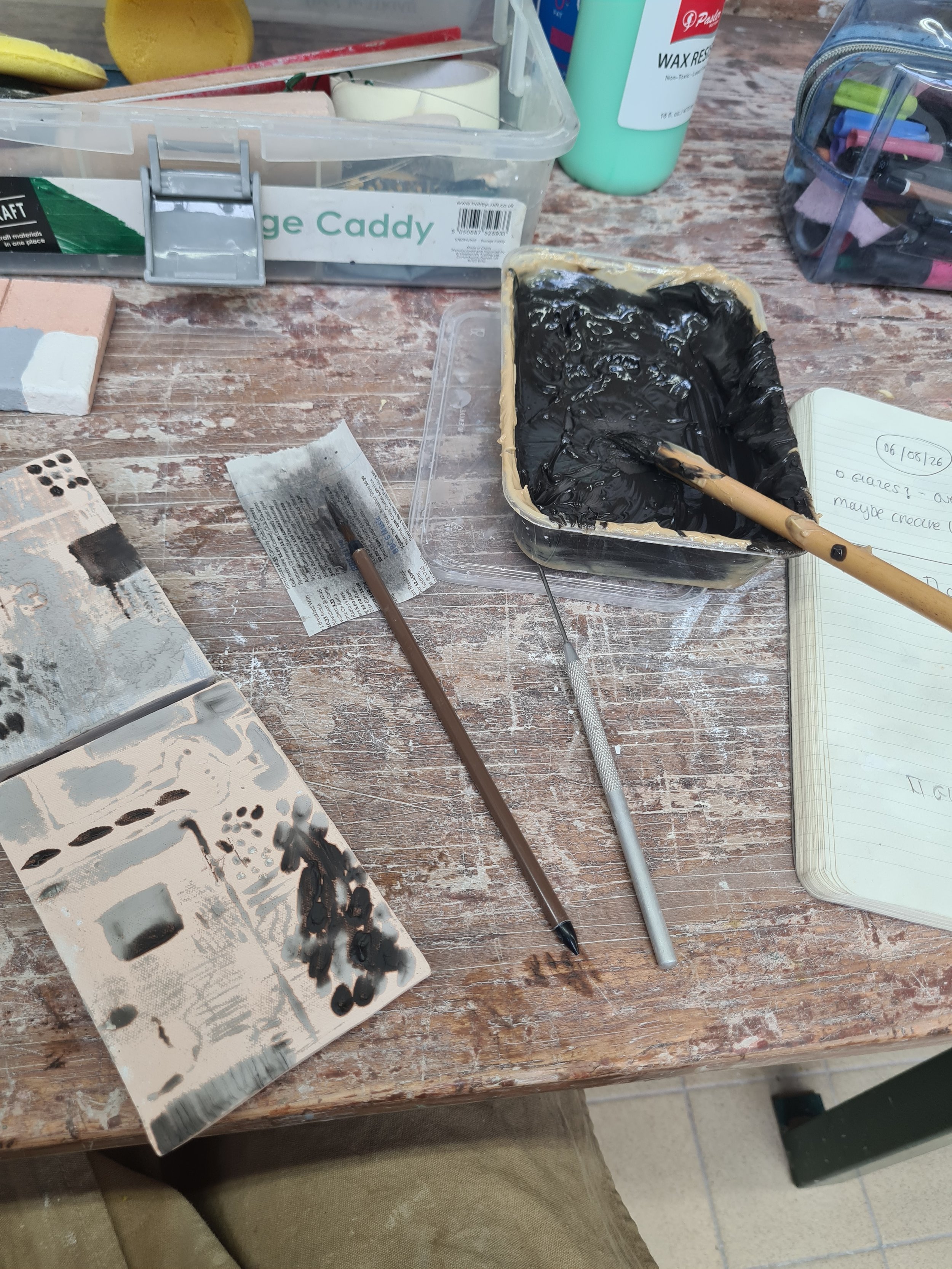
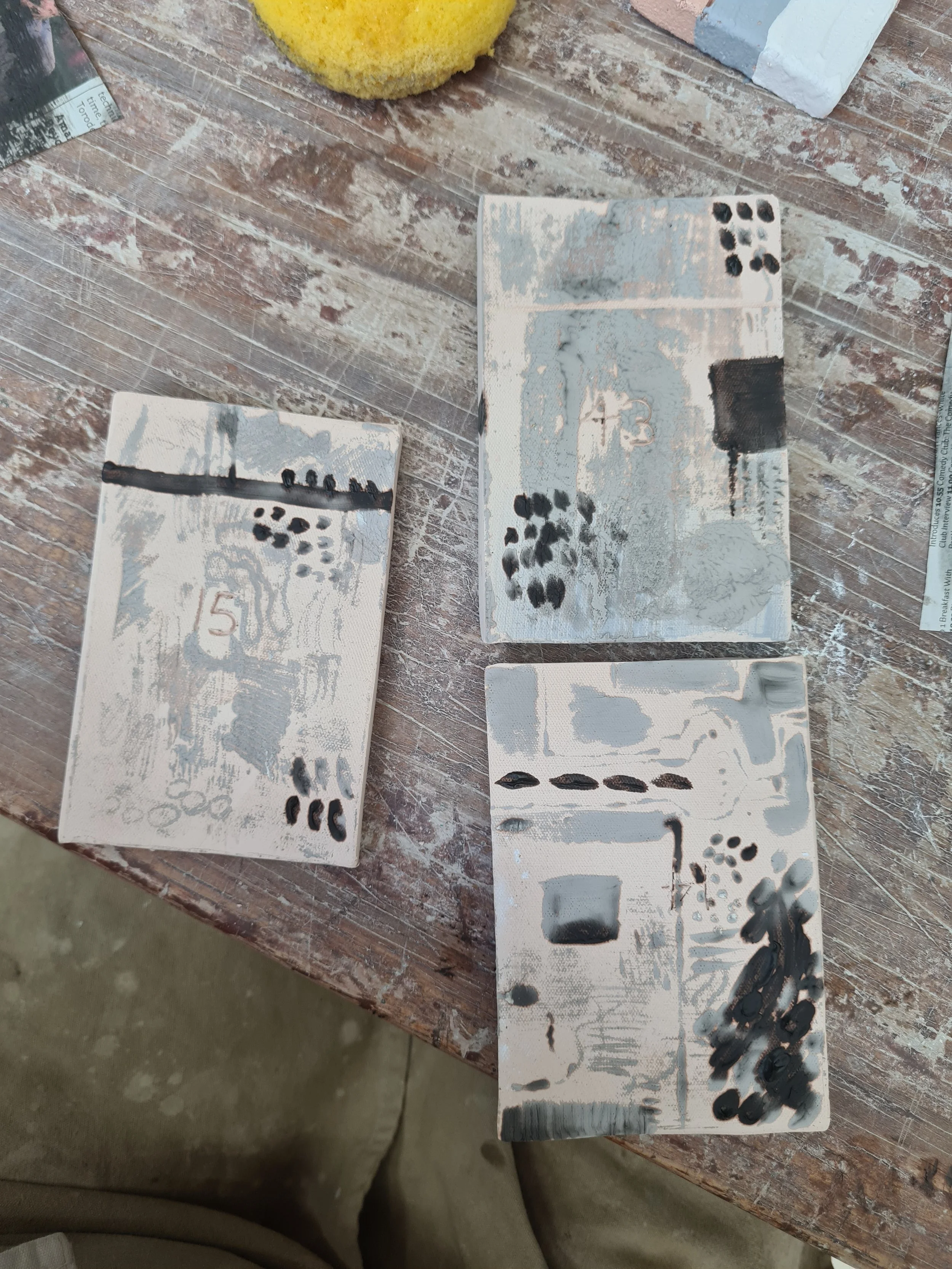
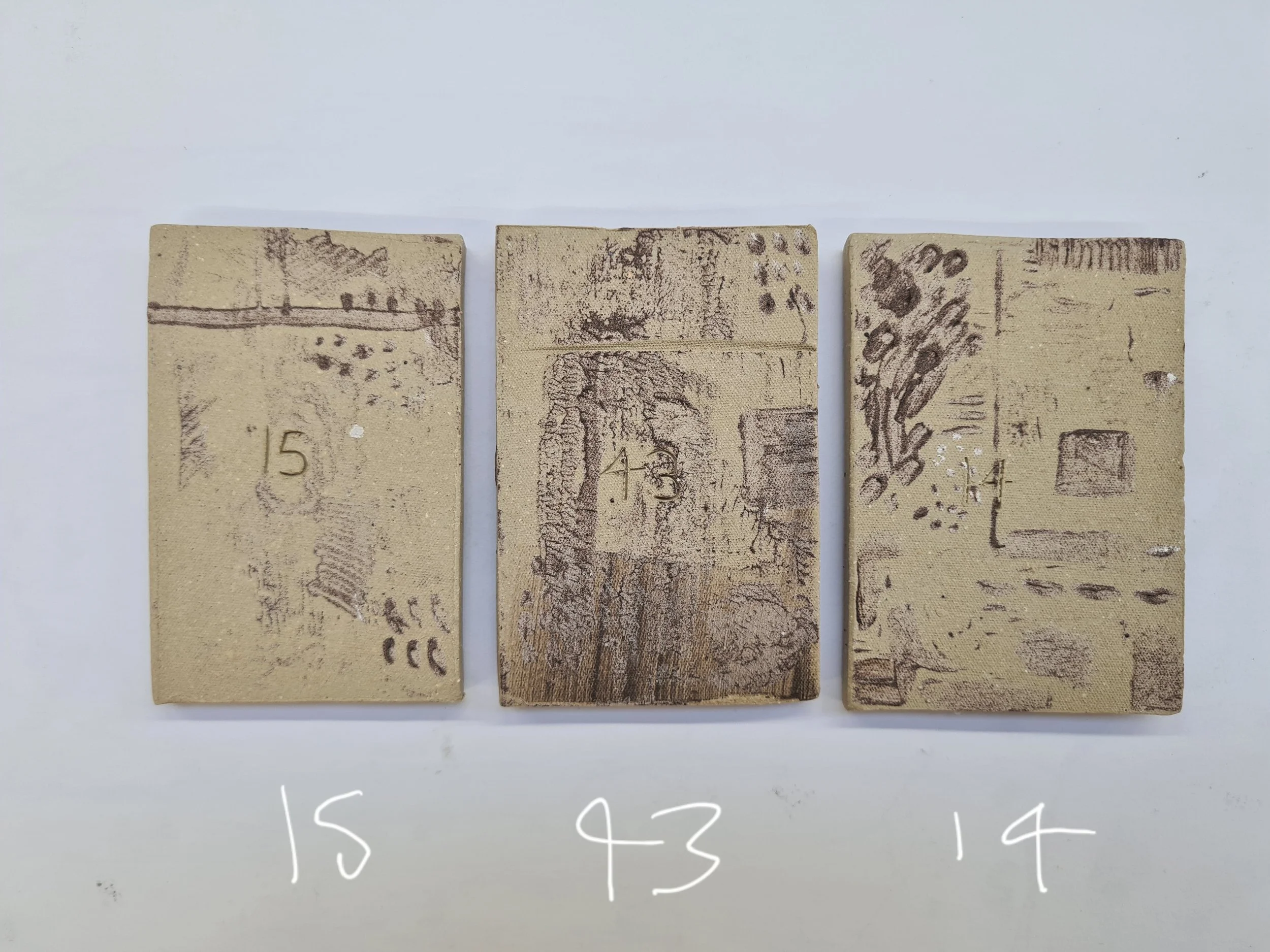
You can see in the images how blobby and difficult it was to apply. Nothing like the ink made with water. Then in the final image you can see how it has burnt away. However, with more manganese added, it could create a texture similar to paint- Maybe interesting to try and apply oxides into those thicker areas.
Overall- this is not an ideal mono-printing mix, but could create some texture or visual interest on my sculptural forms.