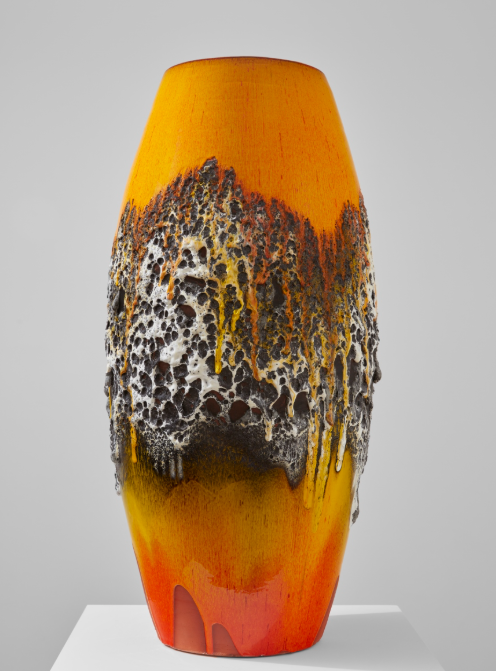
VITAMIN C- Clay & Ceramics by Phaidon
April-August 2026 Semester
A selection of contemporary ceramic artists from Vitamin C that are currently inspiring my practice- such as their use of colour, texture, scale of work or their process to making.
Caroline Achaintre (Pg 19)
During my Fine Art degree, I was able to go to one of her guest lecture’s. Although it was back in 2018, I still remember how I felt after hearing about her work and how inspired I was. She is a ceramic artist from France, but also creates hand-tuffed wall pieces. She creates a lot of ceramic wall pieces as part of her practice but also sculptural work that involves a selective use of colour. She also used leather or similar materials within her work.
Caroline’s work has been described to hold an ‘internal tension’ - A material tension, or how they are displayed on plinths in a collection or in solitude. She uses paper clay for her sculptures, so although it’s a fragile clay to use, her sculptures hold an assertive presence.
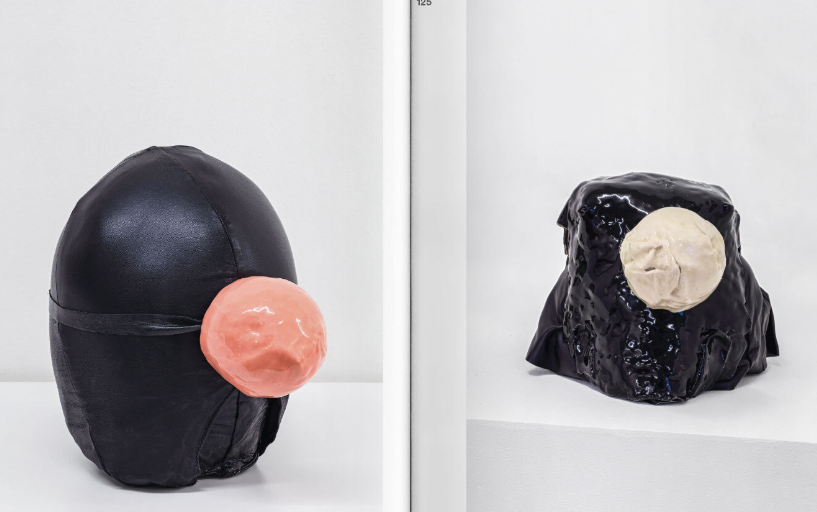
Panto, 2012 (Ceramic and Leather)
Rachel De Joode (Pg 70)
Rachel has pressed the clay into her skin to create a fine imprint, using her fingerprints in some areas also. Her work explores the area between the 3D and the 2D form. She uses inkjet printing to print onto ceramic forms, as the digital world surpresses objects into the 2D. She also pairs these printed surfaces in tangent with bold colours and hangs them from mottled, earthy coloured beams. There’s a relationship between the human touch, the digitalised world and the 2D yet 3D forms that are created. Rachel seems to be finding a grey area in-between these spaces and exploring what that looks like through ceramic sculpture.
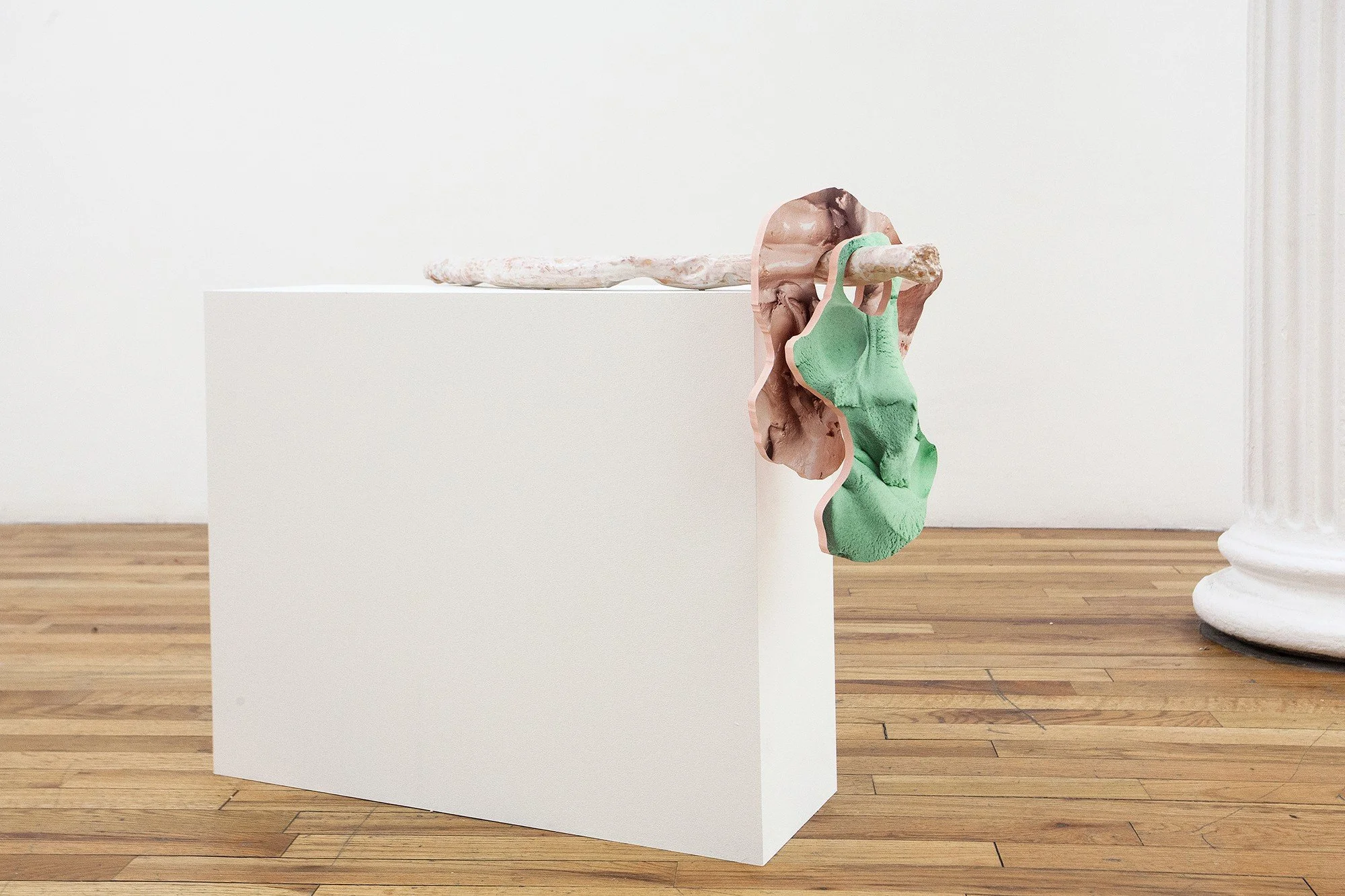
Racheldejoode.com - Soft Inquiry 2015
Mary Heilmann - Pg 117
Taking inspiration from the pacific coastline, Mary creates wall pieces that dissect the landscape using line, selective colour and form. The overlapping ceramic pieces, create depth and layering, yet still hold their simplistic value. I find it interesting how Mary has been really selective about the information she’s taken from the pacific coast and created these ultra-stripped back wall forms.
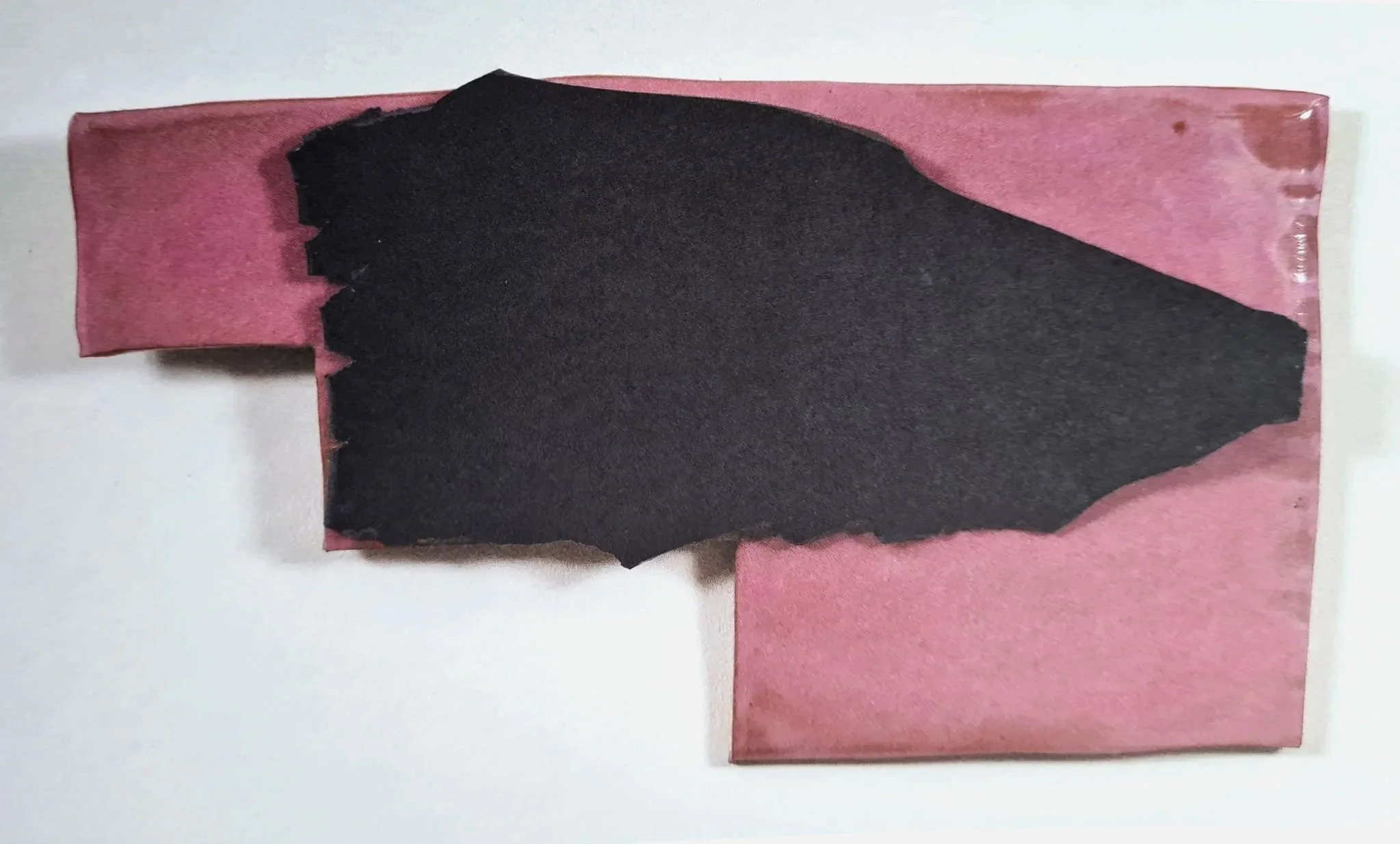
Pink Ocean Black Wave 2015- Pg 117 in Vitamin C book
Liz Larner- Pg 157
Liz’s work sits within the sculptural field of ceramics, with her slab built forms showing a full exploration of the medium. She also uses epoxy resin over some of her ceramics forms oppose to glaze. What I find interesting about her work is that you can see the areas in which the joins are, as shown in the Vitamin C book. Some of her work are wall pieces and they’re all entities of their own. As her career developed, she focuses primarily on wall pieces and has exhibited a wider palette of colour in her work and exploited the clays surface to demonstrate texture.
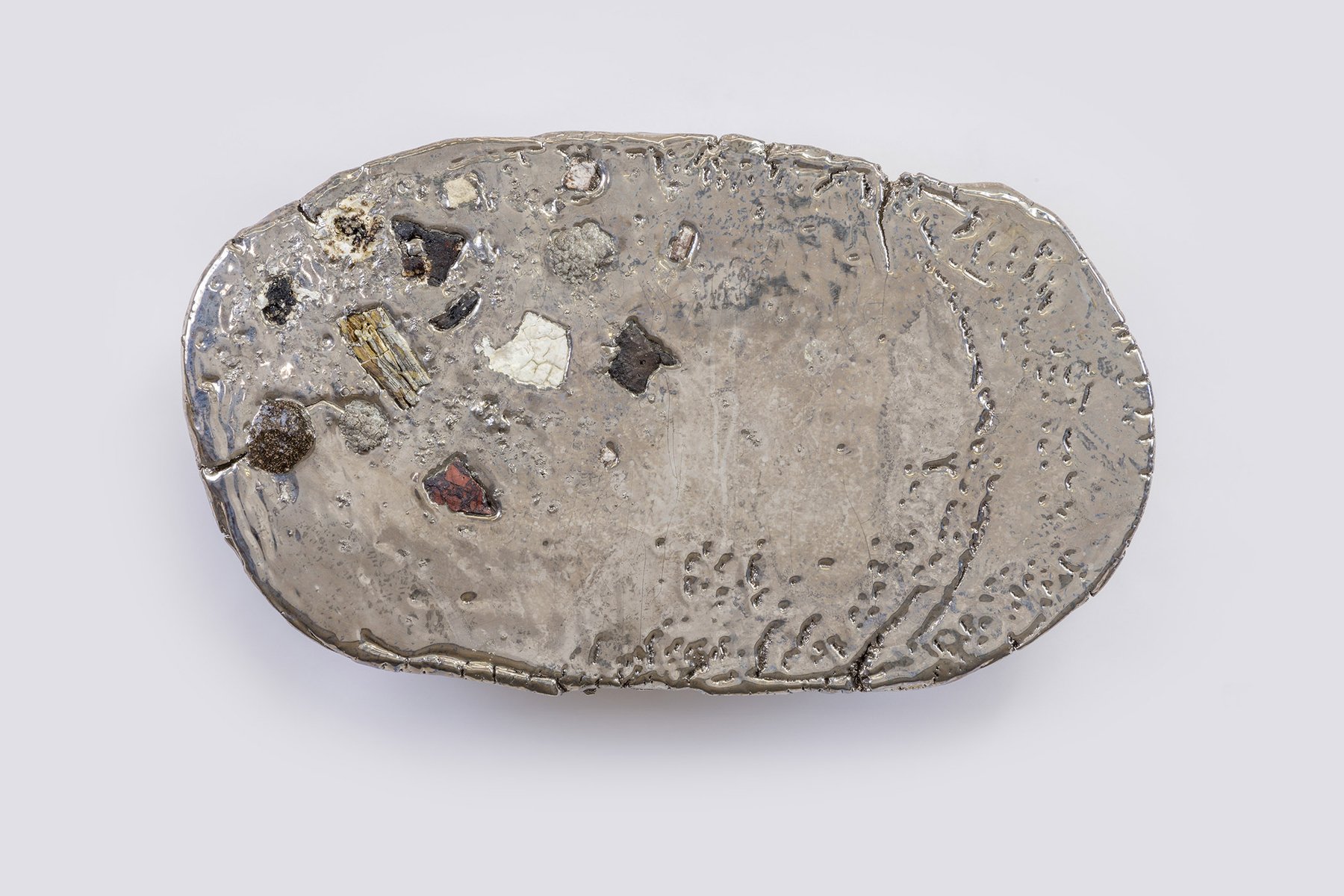
Distomunge 2017- Ceramic, glaze, stone and minerals. reganprojects.com
Marisa Merz- Page 197
Her work spans from her involvement in the Arte Povera radical Italian movement. This translates to ‘poor art’ as her work showcases materials like stones, rope, paper, clay, fabric and other materials not traditionally associated with art. She is famous for her ceramic heads that she began making in the 1980’s. They are non-gendered heads and hold a level of simplicity so they can’t be marginalised into a category. They are sometimes displayed on tall plinths or together. For me, it’s the surface treatment that really resonates. They are unglazed, yet still generate visually intriguing details.
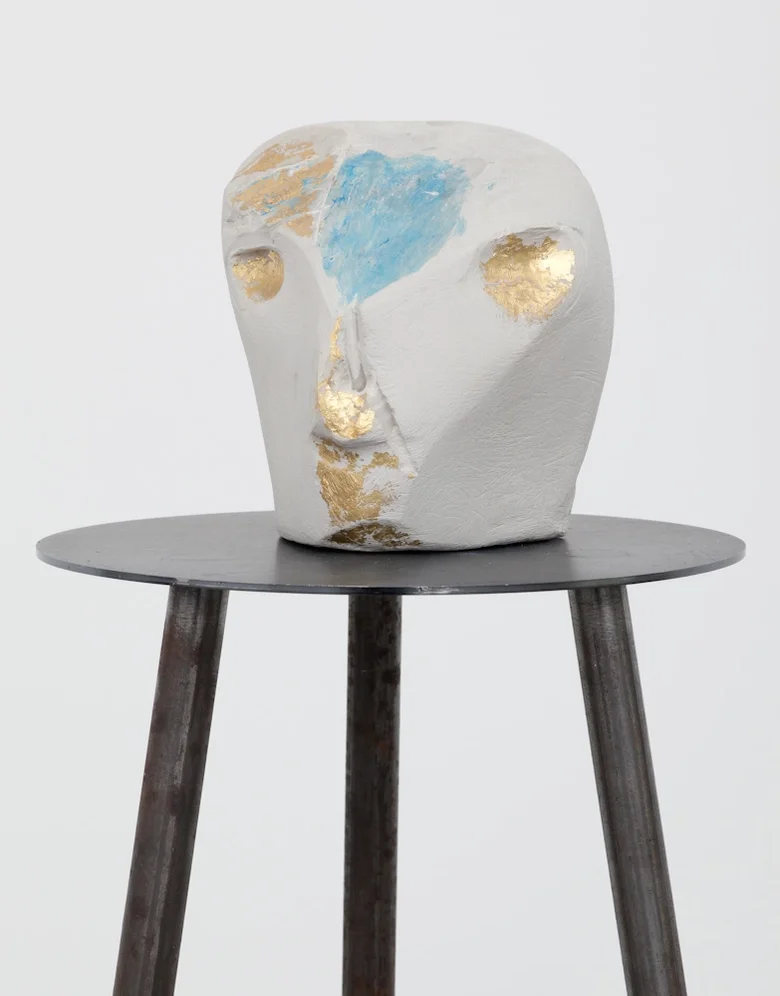
Untitled 2009, Terracotta, paint and gold leaves- thomasdanegallery.com
Ron Nagle- Pg 203
Ron creates relatively small sculptures but they all capture their own very distinct style. Ron has been working in ceramics since the 1950’s and was another key inspiration during my Fine Art Degree back in 2019. He’s studied alongside Peter Voulkos and went on to teach ceramics. Nagle uses super charged colours that go under multiple firings and are finished in China paint. His work is based on drawings, so they have this perceived ‘flatness’ about them despite being 3D. His colour palette and the ability to create these colours in ceramics is inspirational. Although I don’t see my work being this vibrant, I appreciate the level of boldness achieved through colour.
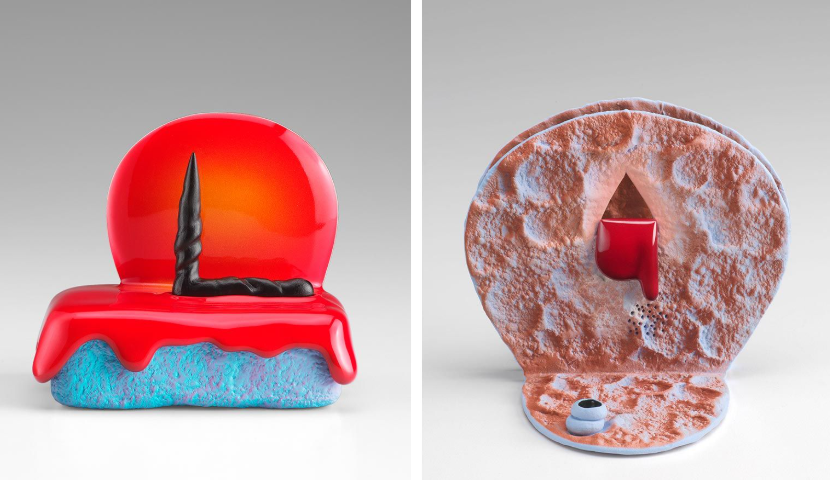
https://www.wallpaper.com/art/on-fire-ron-nagles-ceramics-take-chelseas-matthew-marks-gallery - Handsome drifter 2015 left and Cinnamon Girl 2010 on right.
Anselm Reyle - Pg 247
Reyle creates a series of sculptures in the format of a ceramic vessel, which include strong texture, vivid colour and a dramatic presence. Using volcanic glaze (also known as Fat Lava in western german pottery) creates a densely textured surface, varying in colour. This is paired with a bold background colour, also typically dripping down the vessel. The images within Vitamin C display relatively small scaled work, however his work is large in scale which intensifies the surface details.